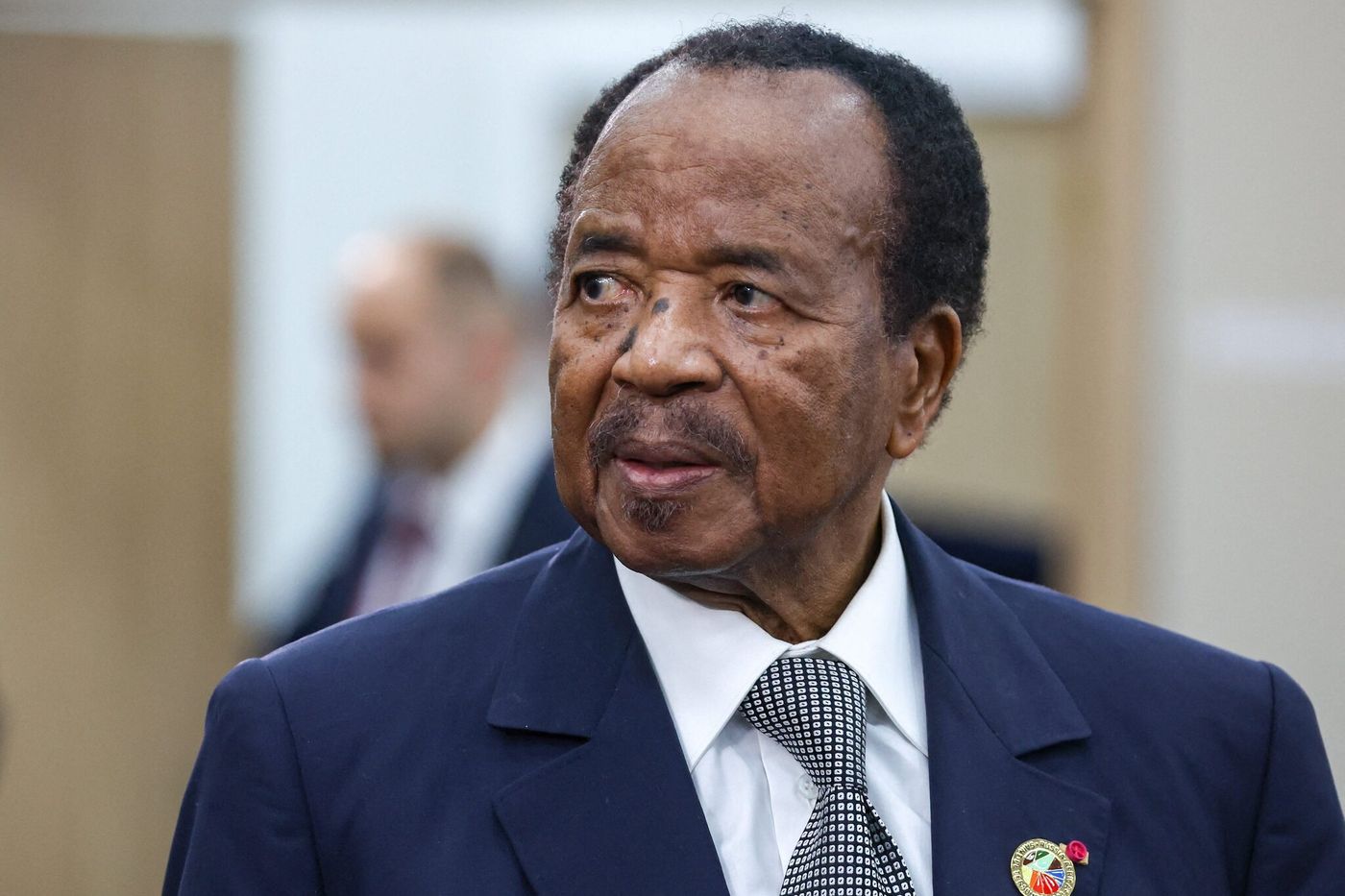
After 73 days away, President Paul Biya, who has led Cameroon since 1982, returned to Yaoundé on August 20, ending a prolonged absence that reignited public debates about his leadership and the country’s governance.
The 93-year-old leader had departed Yaoundé on June 7, described by the presidency as a «private trip to Europe». Local reports suggested he spent time in Geneva, Switzerland, accompanied by family and close advisors.
Upon his return, President Biya was greeted at Yaoundé’s international airport by enthusiastic supporters, including members of his ruling party wearing attire bearing his image. He waved to the crowd from his vehicle as it transported him to the Etoudi Palace, his official residence, alongside his wife, Chantal Biya.
The president’s frequent trips to Geneva have long fueled speculation about his health, with government officials periodically denying hospitalization claims. In mid-June, Communications Minister René Emmanuel Sadi dismissed reports of Biya receiving treatment in a Swiss clinic, though doubts persisted in public discourse.
This unusually long absence intensified criticism from opposition figures, who warned of a «leadership vacuum» and accused the government of operating in «autopilot mode». Tensions escalated as calls for the appointment of a vice-president and a new cabinet—long overdue—remained unanswered.
Government dismisses concerns over leadership gap
A young supporter, Gilles Owono, defended the president’s absence, stating, «In a democracy like ours, prolonged absences naturally raise questions. Yet Cameroon continued functioning without interruption.»
James Fame Ndongo, a senior official in the ruling party and Higher Education Minister, dismissed allegations of a power vacuum in late July. He assured that «wherever the head of state is, he meticulously oversees the files submitted by his collaborators.»
However, frustration among citizens persists. Prosper Nkou Mvondo, an opposition leader, criticized the situation, saying, «It doesn’t matter if he’s here or not. When he’s present, he doesn’t act. So why participate in this charade?»
Political tensions and the shadow of succession
President Biya’s re-election to an eighth term in October 2025 sparked violent protests, with the government acknowledging «several dozen» deaths while declining to provide a full accounting. The contested results drew skepticism from Western diplomats.
The prolonged absence has also intensified discussions about Cameroon’s future beyond Biya’s potential departure. With no vice-president appointed, Senate President Aboubakary Abdoulaye would step in temporarily should a leadership void arise, until a new election could be held.