Ebola crisis in DRC reaches critical phase as WHO demands urgent political action
The World Health Organization (WHO) has issued a stark warning about the unprecedented spread of Ebola in the Democratic Republic of Congo (DRC), two months after the outbreak was officially declared.
The WHO Director-General, Dr. Tedros Adhanom Ghebreyesus, sounded the alarm during a press briefing in Geneva, describing the situation as the third-largest Ebola epidemic ever recorded, with transmission accelerating faster than in any previous outbreak in the country.
“Two months after the DRC government declared the Ebola epidemic, we are witnessing an alarming acceleration. This is now the third-largest Ebola outbreak on record, and its spread has outpaced all previous epidemics in the country,” Dr. Tedros stated. “As of today, 2,073 cases have been confirmed, including 796 deaths. For comparison, the 2018-2019 Ebola outbreak took over ten months to reach 2,000 confirmed cases.”
Ituri Province: The Epicenter of Transmission
The WHO chief highlighted the Ituri province as the primary hotspot, where over 80% of new cases are emerging outside known contact tracing lists, indicating undetected transmission chains. More concerning still, approximately two-thirds of fatalities are occurring within communities, with victims never receiving medical care.
“The intense transmission in Ituri remains our biggest concern. Most new cases are detected outside known contacts, revealing active but unidentified transmission chains. Tragically, two-thirds of deaths occur in communities where patients never access healthcare,” Dr. Tedros added.
Global and Regional Response Efforts
The WHO, in partnership with the African Centres for Disease Control and Prevention (Africa CDC) and other stakeholders, continues to support the DRC government in scaling up the response. Key advancements include:
- Treatment capacity expanded to over 800 beds, with ongoing increases
- Laboratory testing capacity grew from one to 16 facilities
- Contact tracing reached nearly 80% coverage
- Over 21,000 community health workers are being trained
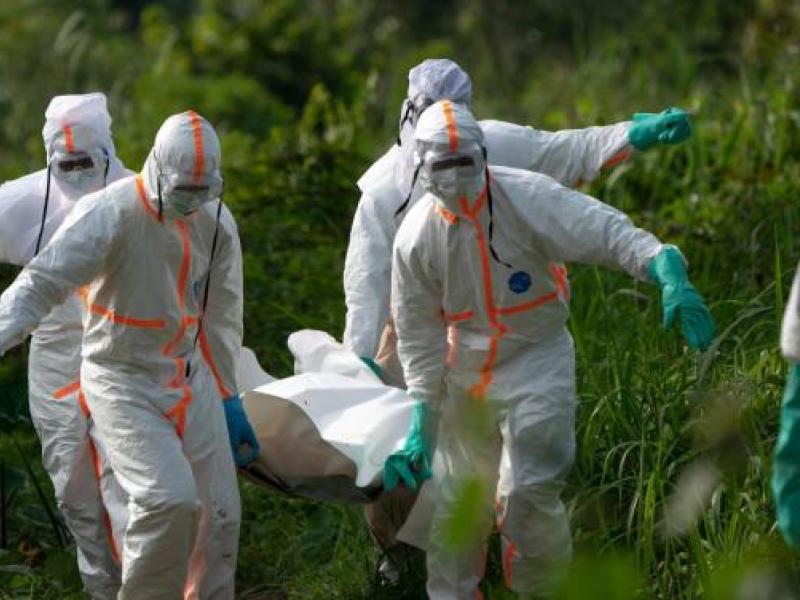
- Safe and dignified burial practices have significantly improved
Despite these efforts, the response faces critical challenges, including:
- Ongoing armed conflict restricting access to affected zones
- Recent attack on an Ebola treatment center in Bunia, Ituri’s capital
- Absence of approved vaccines or treatments for the Bundibugyo strain
- Underestimated epidemic due to population mobility and weak health systems
Scientific Progress Amidst Crisis
Dr. Tedros emphasized the importance of research breakthroughs, noting two clinical trials currently underway:
- A trial for the monoclonal antibody MBP134 and antiviral remdesivir
- Phase 1 safety trial of the Oxford University-developed ChAdOx1 vaccine
- A post-exposure prophylaxis trial for obeldesivir, targeting contacts who haven’t yet developed symptoms
Despite the lack of approved treatments, 377 patients have recovered, demonstrating that early diagnosis and appropriate care can save lives.
Regional Context: Progress in Uganda, Ongoing Challenges in DRC
The WHO Director-General contrasted the situation in neighboring Uganda, where the last confirmed patient was discharged today, marking the start of the 42-day countdown to declaring the outbreak over. Uganda has reported 20 cases and two deaths.
Dr. Tedros stressed the urgent need for political intervention to facilitate the DRC response: “While we’ve made technical progress, we urgently require political action to enable the necessary response intensification. The conflict is hampering access to affected areas and slowing our efforts.”
Immediate Priorities for Containment
The WHO has outlined critical priorities to curb transmission in Ituri:
- Strengthening surveillance and contact tracing
- Ensuring safe and dignified burials
- Improving clinical management
- Community mobilization
- Enhancing response capacities in newly affected provinces
The organization declared the outbreak a Public Health Emergency of International Concern (PHEIC) on May 17, two days after the DRC’s official declaration. The epidemic has since expanded geographically, with its true scale potentially underestimated due to high population mobility, fragile health systems, and ongoing conflicts.
DRC authorities have reassured the public, emphasizing their commitment to collaboration with national and international partners to contain the outbreak. The country’s experience in managing health crises is highlighted, having successfully contained 16 previous Ebola outbreaks.