
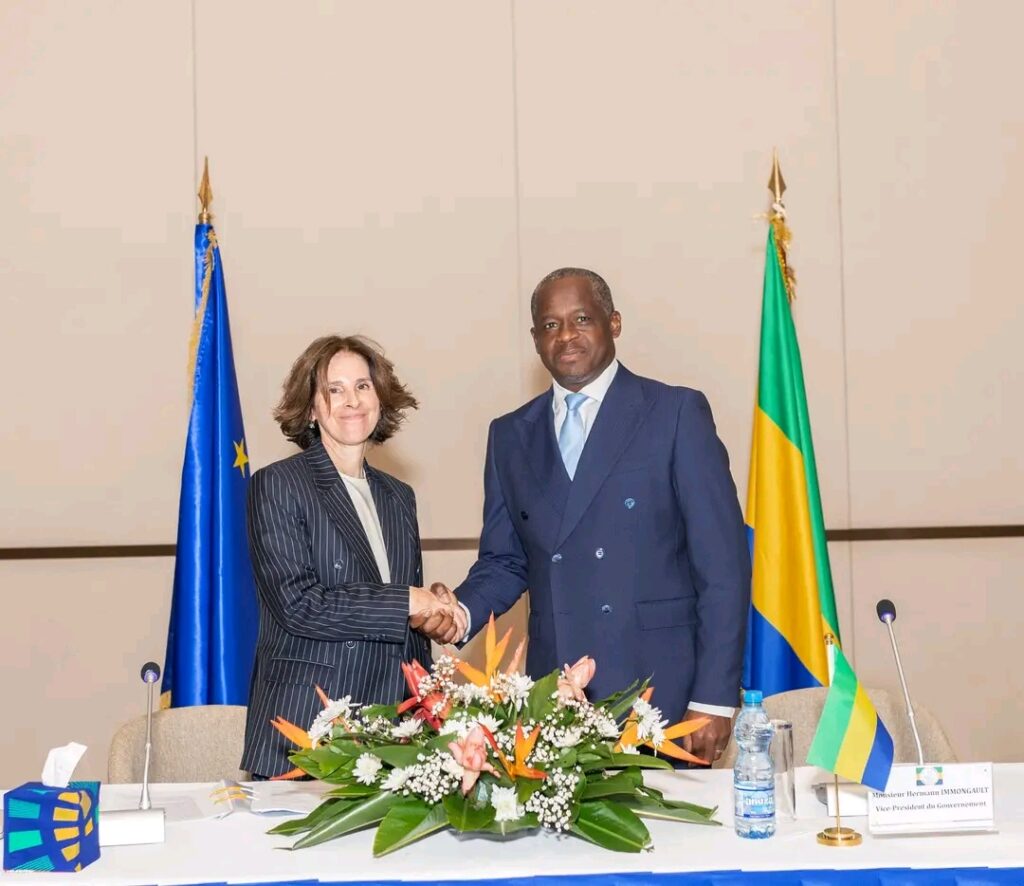
The Gabon-European Union partnership dialogue session, co-chaired by Hermann Immongault, vice-president of the Gabonese government, and Cécile Abadie, ambassador of the European Union to Gabon, took place in Libreville. Discussions focused on political reforms, economic outlook, environmental matters, and regional and multilateral challenges. The meeting stood out for the EU’s call to forge a partnership grounded more in consultation, investment, and multilateralism.
Co-chaired by Hermann Immongault, vice-president of the Gabonese government, and Cécile Abadie, EU ambassador to Gabon, the gathering brought together several government members and ambassadors of EU member states accredited to Gabon. Talks covered the country’s economic situation, the business climate, the Global Gateway strategy, forest cooperation, sustainable fishing, maritime security, as well as regional and international questions.
In her remarks, the European Union ambassador stressed the need to adapt Africa-Europe relations to an increasingly competitive global context. “Today’s world is marked by more transactional relationships and sometimes aggressive competition. We must adjust our cooperation tools to this environment,” she said. Cécile Abadie also advocated for a partnership based on “mutual interests,” while reaffirming the EU’s commitment to peace, security, good governance, and respect for human rights.
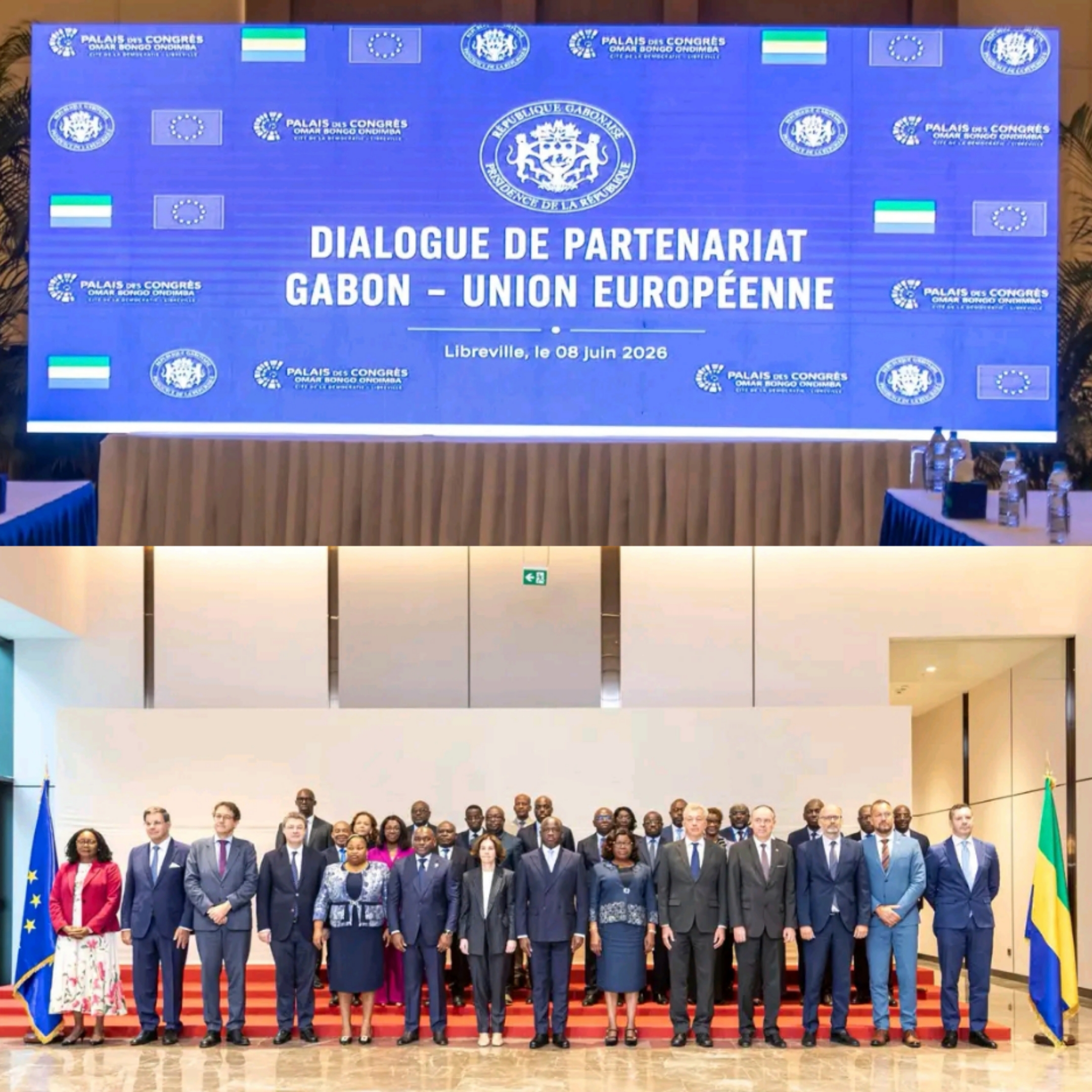
Speaking about the new political chapter opened in Gabon after the transition, the European diplomat called for long-term cooperation. “This dialogue is an opportunity to ensure mutual understanding, to outline a road map with shared objectives, and to boost our way of working,” she emphasized. She also urged more consultation, data exchange, and shared analyses to build a common vision of the priorities ahead.
This dialogue takes place against a backdrop of strengthened ties between Gabon and the European Union, following the Gabonese president’s visit to Brussels in November 2024 and his participation in the 2025 European Union-African Union summit.
The discussions also touched on several international crises, including the war in Ukraine, the situation in the Middle East, and security challenges on the African continent. At the conclusion of the session, both sides reaffirmed their determination to continue exchanges on the jointly identified priorities and to set up operational follow-up on cooperation projects.


More Stories
Is Chad truly heading towards political appeasement?
Bradley Barcola will adapt faster than Florian Wirtz at Liverpool, says Jermaine Pennant
Togo eyes nuclear power to secure future energy sovereignty