In a significant shift for regional governance, President Brice Clotaire Oligui Nguema has recently centered the national conversation on a fundamental principle of leadership: the necessity of honest dialogue between the state and its citizens. While public discourse in many regions often leans toward safe consensus, the Gabonese leader is advocating for a more transparent and corrective approach to power.
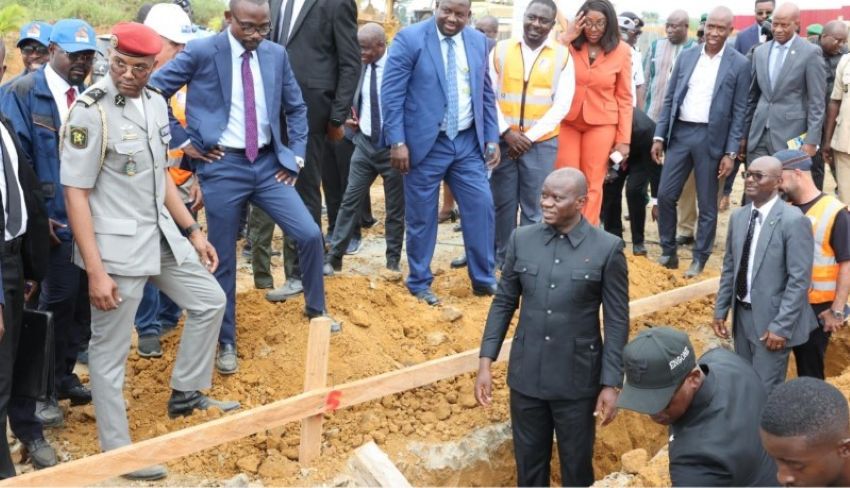
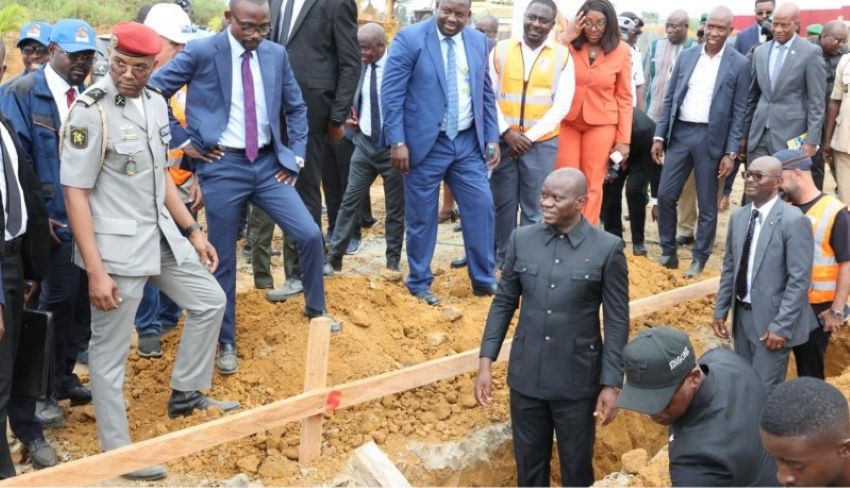
During a ceremony marking the commencement of a 3,100-unit housing development in Bikélé, the Head of State engaged in a candid exchange regarding the responsibilities of a leader. He argued that a president should not merely be the recipient of praise but must also be open to sincere critiques when they are required to refine government actions. This perspective moves beyond standard political rhetoric, touching on the very heart of democratic accountability.
Breaking the cycle of systematic approval
By explicitly stating that he needs to be informed when his administration falters, President Oligui Nguema is initiating a symbolic break from a political culture that historically favored automatic validation of the executive branch. This stance highlights a rare demand in institutional speeches: the use of self-reflection as a primary tool for governance. In this context, constant applause is viewed not as a sign of political health, but as a potential source of collective blindness.
The President is calling for a fundamental change in the dynamic between the rulers and the ruled, one built on frankness and mutual responsibility. This vision suggests that national progress in Gabon cannot be sustained through complacency, but rather through a clear-eyed assessment of public policies, acknowledging both their triumphs and their shortcomings.
Constructive feedback as a tool for development
This presidential declaration rehabilitates the concept of constructive criticism, which is often sidelined in political practice. Telling the truth to those in power is framed here not as an act of hostility, but as a civic duty aligned with the general interest. Public debate thus becomes a space for constant improvement rather than a site of unproductive conflict.
A politically mature population is one capable of recognizing advancements while simultaneously flagging malfunctions to enhance the quality of state services. However, this transition requires a deep cultural shift. It demands that citizens, social organizations, and media professionals adopt a perspective rooted in objectivity and a commitment to the common good. Criticism is no longer an end in itself; it is a lever for perfecting national policy.
A new framework for political interaction
Beyond the words themselves, a new philosophy of power is emerging in Libreville. President Oligui Nguema appears to be championing a governance model based on active listening, where the critical feedback of the citizen serves as a navigation tool for political strategy. Within this framework, the country’s growth no longer relies solely on top-down directives but on a continuous interaction between the state and the people.
This evolving dynamic involves a delicate balance between celebrating achievements and maintaining a constant drive for improvement. Educational efforts on social platforms are further supporting this movement, helping to build a public sphere that is better informed and more aware of its collective duties.
Ultimately, this message invites a reimagining of Gabonese political culture around three core pillars: offering praise when earned, providing criticism when necessary, and always operating in the superior interest of the Nation. In an environment often defined by posturing, this call for shared truth serves as a vital test of democratic maturity, placing the citizen at the center of the country’s continuous refinement.