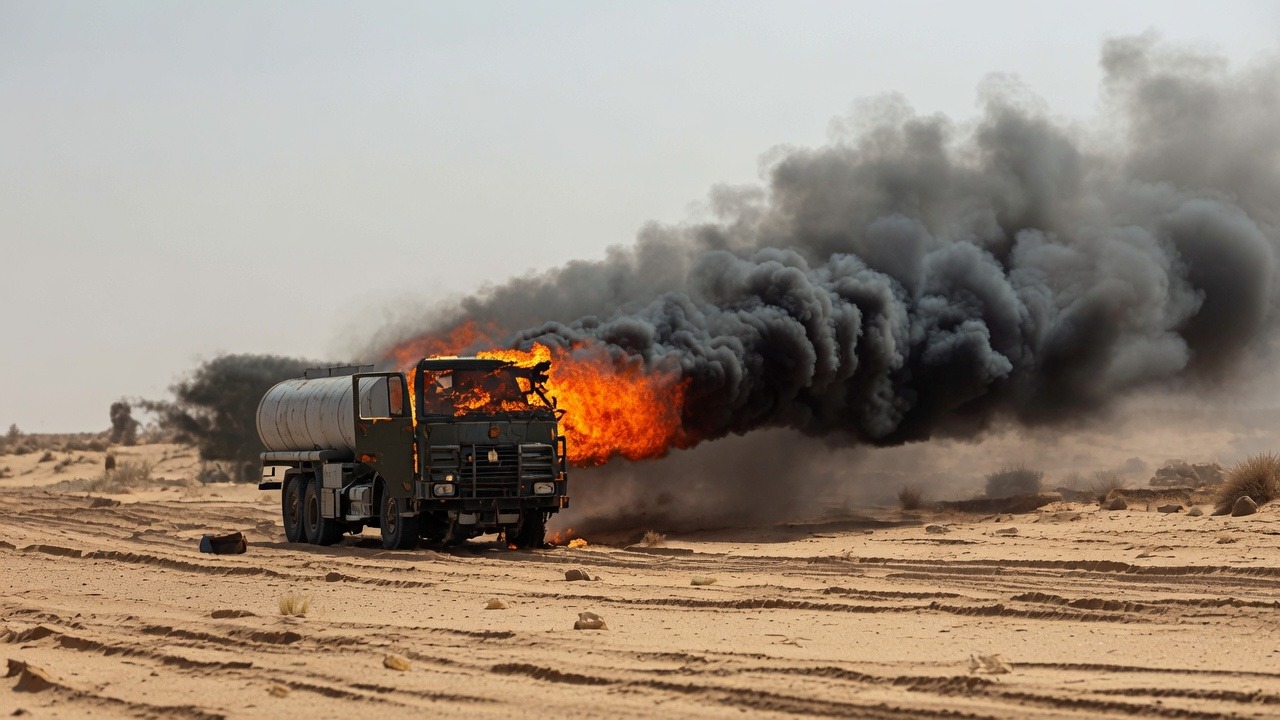
The bloodshed in northern Mali deepened on July 18 following one of the deadliest ambushes in recent history. A military convoy, comprising Malian Armed Forces (FAMa) troops and Russian paramilitary operatives from the Africa Corps, was ambushed near the village of Tabrichat—a location strategically positioned between Gao, Bourem, and Kidal. The attack left over 50 Malian soldiers dead and dozens captured, marking a grim milestone in the nation’s long-running insurgency.
Tabrichat ambush: a well-coordinated ambush with devastating consequences
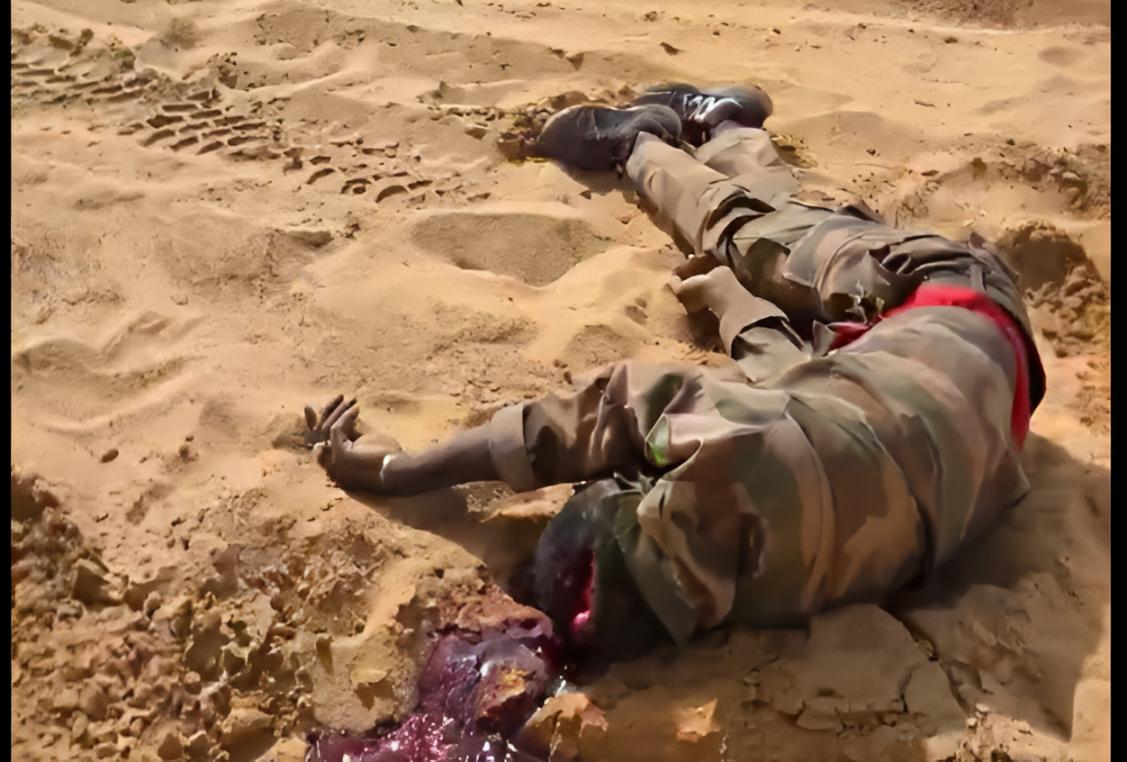
After weeks of intense fighting for control of the Anéfis camp, the joint forces initiated a repositioning maneuver on July 18. A heavily armored convoy, split into two sections, departed from Anéfis with Gao as its destination. The first section was led by Africa Corps mercenaries, while the second comprised Malian troops. The ambush struck near Tabrichat, where the terrain’s complexity and the convoy’s stretched formation created a deadly opportunity.
The coordinated assault, executed by the Group for the Support of Islam and Muslims (JNIM) and the Strategic Framework for the Defense of the Azawad (FLA), targeted the Malian rear section with brutal precision. The attackers exploited the gap between the two convoys, leaving the Malian troops isolated under relentless fire.
A harrowing human toll and documented war crimes
The aftermath revealed staggering losses: at least 50 Malian soldiers killed and more than 30 missing or captured—one of the heaviest blows to Mali’s military in over a decade. The tragedy escalated when footage surfaced showing captured FAMa soldiers being executed at close range, violating international humanitarian law.
The spread of these graphic images across social media sparked national outrage. Notably, some of the first broadcasts of the footage originated from channels linked to the Africa Corps, further fueling public anger and skepticism toward the Russian contingent’s role.
JNIM and FLA: a strengthened insurgent alliance
Analysts examining the attack’s imagery identified a key figure: Hamza Ag Gali, son of Iyad Ag Gali, the founder of Ansar Dine and a prominent leader of JNIM. His presence underscores the high-level involvement of insurgent leadership in planning the assault, while also highlighting the generational shift within the jihadist command structure.
This operation also demonstrated the operational synergy between JNIM and FLA factions, which have increasingly merged their tactical capabilities. Their coordinated assault along the Anéfis-Gao axis reveals a resurgent threat, defying expectations of weakened insurgent coordination.
Africa Corps’ controversial retreat raises critical questions
The Africa Corps’ actions during the ambush have drawn sharp criticism. While the Russian contingent, positioned at the front, avoided casualties, it proceeded directly to Gao without providing support to the beleaguered Malian troops. This decision has sparked intense debate:
- Coordination breakdown: How could two sections of the same convoy operate with such a lack of mutual protection protocols?
- Strategic failure or deliberate withdrawal: Did the Africa Corps follow orders to prioritize its own safety, or was it unable to respond effectively in the ambush zone?
The absence of intervention has cast doubt on the Africa Corps’ reliability as a combat partner in Mali’s northern conflict.
Public outrage over security failures
The attack has left Mali’s population reeling. Mourning the fallen soldiers, citizens in Bamako and northern cities are demanding accountability from military and government leaders. The ambush has exposed the vulnerabilities of northern Mali’s supply routes and reignited debates over the sustainability of the current security strategy.
As JNIM and FLA demonstrate renewed resilience and aggression, the Tabrichat tragedy may force Mali to rethink its coordination with foreign allies and reassess the viability of its counterinsurgency approach.