Gabon-DRC ties boosted by Tshisekedi’s Libreville visit
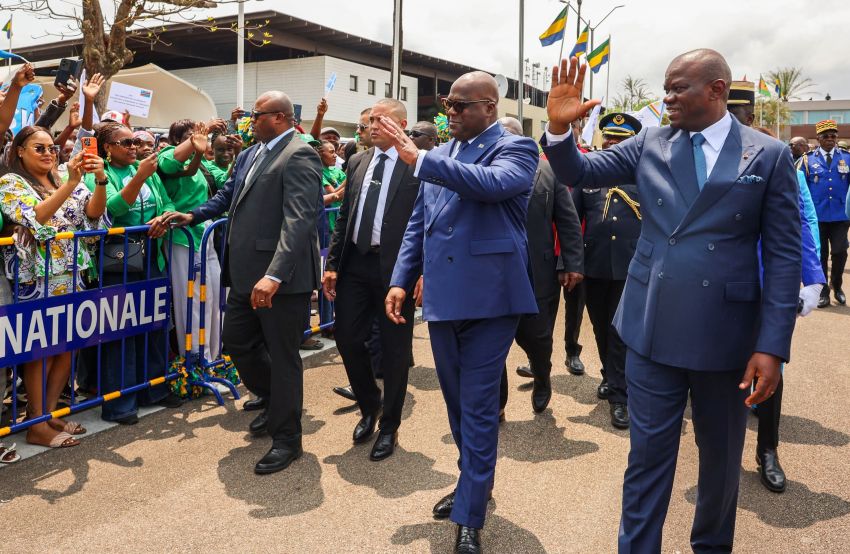
Libreville, August 15, 2026 — The three-day working and friendship visit of Félix-Antoine Tshisekedi Tshilombo to Libreville has set in motion a renewed diplomatic momentum between Gabon and the Democratic Republic of the Congo (DRC).
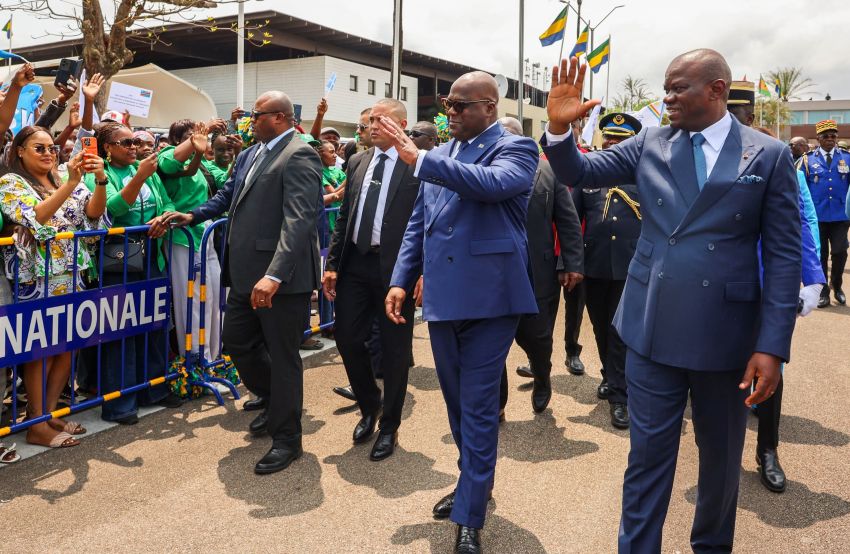
The Congolese head of state arrived in Gabon’s capital on August 15, greeted by his Gabonese counterpart, Brice Clotaire Oligui Nguema. The visit takes place at a time when African nations are increasingly leveraging historical ties to forge stronger political, economic, and strategic partnerships.
The warm reception accorded to President Tshisekedi—marked by a public procession through Libreville—highlighted the deep human, cultural, and diplomatic bonds shared by both nations. This rapprochement is particularly timely as intra-African cooperation emerges as a critical tool for advancing continental interests in an evolving global landscape.
Diplomacy rooted in shared history
The symbolic significance of the visit was amplified by the choice of the Léon Mba Memorial as the first official stop. Renovated the day before Tshisekedi’s arrival, this site honors Gabon’s first president and provided a powerful backdrop for the meeting of the two leaders.
President Tshisekedi laid a wreath at the memorial in tribute to Léon Mba, delivered a speech reflecting on his legacy, and observed a moment of silence accompanied by the national anthem. By signing the guestbook, he underscored the importance of historical memory in shaping contemporary diplomacy.
This gesture was more than ceremonial—it reflected a broader political vision. By honoring a pioneer of Gabonese independence, Tshisekedi emphasized the enduring value of the continent’s foundational generation. In an era where institutional memory often falters, restoring historic sites and integrating them into diplomatic exchanges serves as a statement of national and continental continuity.
From symbolism to strategic partnership
While the emotional resonance of the visit was undeniable, its true measure will lie in tangible outcomes. The friendship between Libreville and Kinshasa must now translate into measurable cooperation across economic, trade, cultural, educational, security, and diplomatic spheres.
Gabon brings significant assets to the relationship, while the DRC—with its vast territory, large population, and economic potential—stands as a central player in Central Africa. A strengthened Gabon-DRC axis could unlock new regional synergies and enhance collective action across the subregion.
For Central Africa, which is working to deepen integration and amplify its voice on the global stage, this partnership could serve as a model for collaboration that directly benefits local communities. Both countries stand to gain from turning historical ties into engines of shared prosperity.
The moment for action
This visit unfolds against a backdrop of shifting diplomatic and economic priorities for both nations. Gabon is recalibrating its global engagement, while the DRC faces pressing security, economic, and geopolitical challenges. In this context, the dialogue between Oligui Nguema and Tshisekedi carries strategic weight beyond bilateral relations.
The challenge ahead is clear: to move from symbolic warmth to measurable commitments. A privileged Gabon-DRC relationship must deliver more than goodwill—it must foster greater trade flows, people-to-people mobility, institutional collaboration, and joint initiatives.
By beginning his visit with a homage to Léon Mba, President Tshisekedi framed the trip within a narrative of memory and African solidarity. Now, it is up to both states to honor that spirit through a diplomacy of delivery. Central Africa does not only need to celebrate its shared past—it must harness it to build collective strength, shared prosperity, and enduring sovereignty.