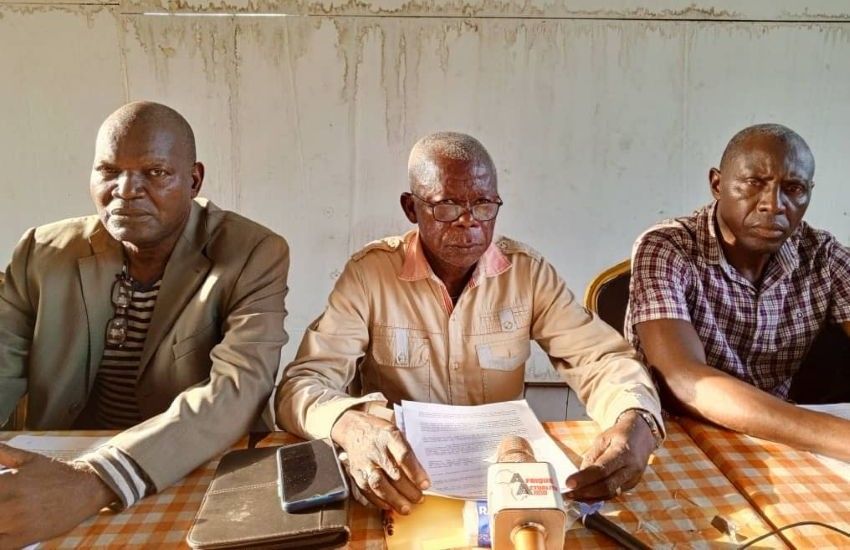
Libreville, Friday 26 June 2026 – For decades, they carried the administration, built institutions, ensured state continuity and passed on their experience to successive generations. Yet in many countries, retirees and the elderly remain the great forgotten of public policies, often praised in speeches but rarely placed at the heart of national priorities.
Gabon has officially instituted a National Day for Retirees and the Elderly, celebrated each 1 October, thus choosing to inscribe recognition of its elders in its republican calendar. This decision goes far beyond the symbolic and reveals a deeper vision of social cohesion and intergenerational transmission.
Adopted at the Council of Ministers on 25 June 2026, this measure honours a category of citizens whose contribution to national development remains considerable. It comes in a global context where demographic ageing is becoming a strategic challenge for states, forcing governments to rethink their relationship with experience, solidarity and social protection.
Restoring national memory
Implemented under Article 95 of the Constitution, the decree adopted by the government now establishes an annual day entirely dedicated to retirees and the elderly. The choice of 1 October is significant: it corresponds to the International Day of Older Persons established by the United Nations, thus allowing Gabon to align its initiative with a global movement to value the third age.
Beyond paying tribute to those who have served the state, businesses, communities and administrations, this day aims to recall an often neglected truth. A nation is not built solely by its future ambitions. It is also consolidated by recognition of those who took part in its construction.
In a world dominated by speed, innovation and instant performance, retirees represent human capital of exceptional value. They embody institutional memory, professional experience and social stability. Their journeys constitute a strategic resource for rising generations facing increasingly rapid economic, technological and cultural changes.
A social issue turned strategic
The government initiative also responds to a demographic reality gradually imposing itself on all modern societies. Population ageing is no longer a phenomenon reserved for developed economies. It is progressively becoming a central issue for African states themselves.
By officially dedicating a day to this issue, the authorities seek to draw attention to the challenges faced by older people. Access to healthcare, living conditions, social protection, isolation, mobility, maintaining family ties and inclusion in community life are among the major issues that will accompany this demographic shift.
Planned activities will bring together public administrations, local authorities, associations, community organisations and families around actions of awareness, recognition and dialogue. The stated ambition is to strengthen the respect owed to elders while promoting the transfer of knowledge and values between generations.
This approach addresses a often underestimated necessity. In African societies, where family solidarity has historically been a fundamental pillar, the rapid modernisation of lifestyles sometimes weakens traditional mechanisms for caring for the elderly. The state thus emerges as an essential actor to preserve this balance.
A vision of development centred on the human
Through this decision, Gabon affirms a conception of development that is not limited to infrastructure, investments or economic growth. The modernisation of a country is also measured by its ability to protect the most vulnerable and to honour those who have devoted their lives to serving the community.
The creation of this National Day for Retirees and the Elderly thus reflects a clear political will: to put the human back at the centre of public action and to recognise that experience constitutes a national wealth as important as economic or natural resources.
The first celebration scheduled for 1 October 2026 will mark more than a simple commemoration. It will open a new space for reflection on the place of elders in contemporary Gabonese society. For a nation that respects its memory strengthens its cohesion. And a state that honours its elders prepares its future more serenely.