Gabon’s bold leap into digital governance transformation
Libreville, July 13, 2026 — Modernizing public administrations is no longer measured solely by the quality of infrastructure or the speed of procedures. In today’s world, a state’s ability to digitalize its public services has become a key indicator of competitiveness, transparency, and institutional efficiency. Gabon is now positioning itself to take a leading role in this global transformation.
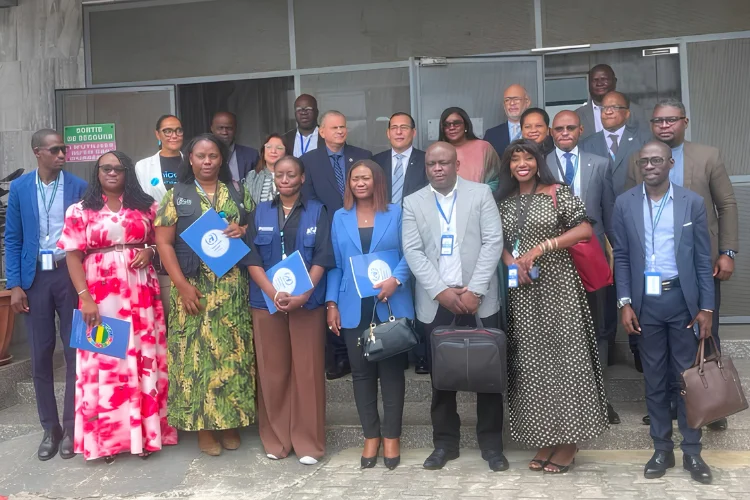
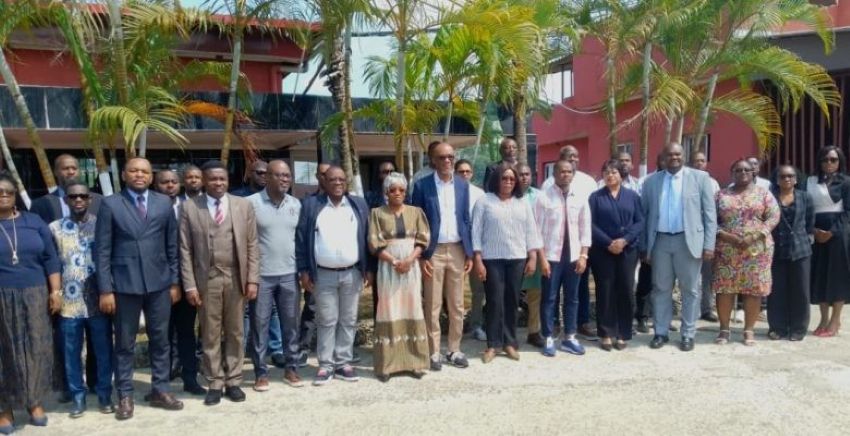
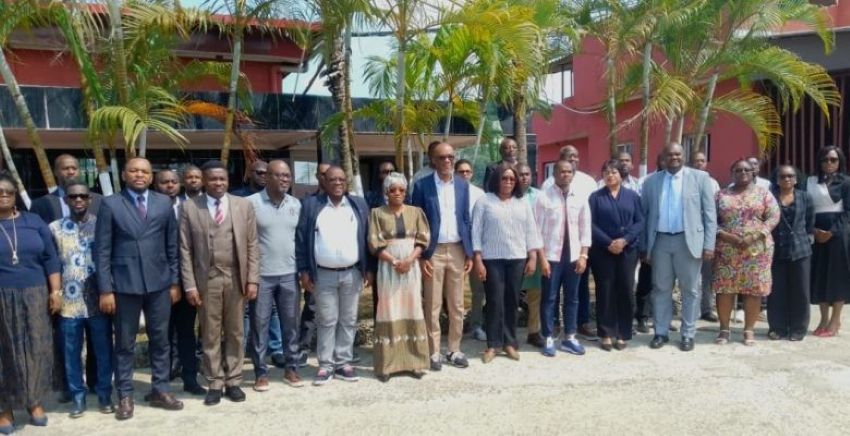
In Nkok, within the municipality of Ntoum, the launch of institutional capacity-building workshops focused on public service modeling, business process mapping, and administrative digital transformation marks a decisive milestone in the construction of Gabon’s future digital state.
Coordinated by the Secretariat-General of the Government as part of the Gabon Digital program, this initiative goes beyond a mere technical exercise. It represents one of the most ambitious administrative reforms undertaken in recent years, aimed at gradually shifting the Gabonese administration toward a model centered on user experience, streamlined procedures, and interconnected public services.
At its core, this endeavor seeks to break away from administrative fragmentation, bureaucratic inefficiencies, and the proliferation of physical procedures that continue to hinder citizens, businesses, and investors across many African nations.
Redefining the face of public administration
For the leaders of the Gabon Digital program, digitalization is not merely about transferring paper forms onto computer screens. It requires a fundamental overhaul of work methods, decision-making circuits, and the very organization of administrations.
During the opening of the workshops, the Deputy Director-General of the National Agency for Digital Infrastructure and Frequencies and General Coordinator of the Gabon Digital program, Maryse Lydie Madiba Iloumbou, emphasized that this phase aims primarily to strengthen administrative capacities. The goal is to identify, describe, map, and prepare priority public services for integration into the future Governmental Services Portal—a task of immense significance.
Before digitalizing a service, it is essential to fully understand its operations, identify key actors, analyze processing times, detect administrative redundancies, and simplify existing procedures. This mapping phase forms the bedrock of any successful digital transformation.
The workshops will culminate in the creation of a comprehensive map of administrative business domains, the development of a national catalog of public services, and the prioritization of operational tasks for the initial online rollouts. Ultimately, this effort is about building the administrative architecture for Gabon’s digital future over the coming decades.
The Governmental Services Portal: a digital backbone
At the heart of this transformation lies the Governmental Services Portal, known as the PGS. According to Issoufou Donagnon Soro, the PGS and Electronic Document Management System’s business coordinator, this platform is designed to progressively consolidate all digitalized public services of the Gabonese administration into a single gateway.
The principle is straightforward yet transformative: providing citizens and businesses with a unified point of access to administrative services without the need to navigate between ministries, general directorates, and decentralized administrations. Applications, authorization procedures, certificates, payments, declarations, and case tracking could all be managed remotely through a single digital interface.
Countries that have successfully implemented such transitions have reaped substantial benefits: reduced processing times, improved administrative transparency, lower operational costs, enhanced traceability of procedures, and reduced corruption risks.
Gabon is determined to join this international trend. Under the supervision of the Secretariat-General of the Government, five ministries have been selected for the pilot phase: the Ministries of the Interior, Justice, Mines, Economy, and Agriculture. Each ministry is tasked with identifying ten services eligible for inclusion in the national catalog, with a final selection of two priority services slated for immediate portal integration. The pilot phase is set to commence in September.
A transformation transcending technology
The success of a digital transformation hinges not only on the equipment or software deployed but also on the commitment of administrations, the training of public officials, and the adaptation of organizational cultures.
Recognizing this, authorities have arranged for close support to the involved administrations through the collaborative efforts of government business experts, technical teams from the National Agency for Digital Infrastructure (ANINF), and change management specialists.
The workshops will run from July through August, followed by a consolidation phase to harmonize approaches across ministries. Beyond digital tools, this initiative is fostering a new administrative culture rooted in speed, interoperability, procedural simplification, and continuous improvement in service quality for users.
In today’s global competition to attract investments and enhance economic competitiveness, the quality of public administration has become a decisive factor in development. Investors now evaluate countries not only on political stability but also on their ability to deliver administrative documents swiftly, secure procedures, and streamline interactions with the state.
Digitalization is thus emerging as both an economic and institutional imperative. With Gabon Digital, the country appears poised to make a historic breakthrough. The ambition extends beyond merely modernizing administration; it is about reinventing the relationship between the state, citizens, and businesses. The digital revolution in public services is no longer a distant prospect—it is already underway. In this quiet yet profound transformation, Gabon may well be waging one of the most critical battles for its institutional modernization and future competitiveness on the African continent.