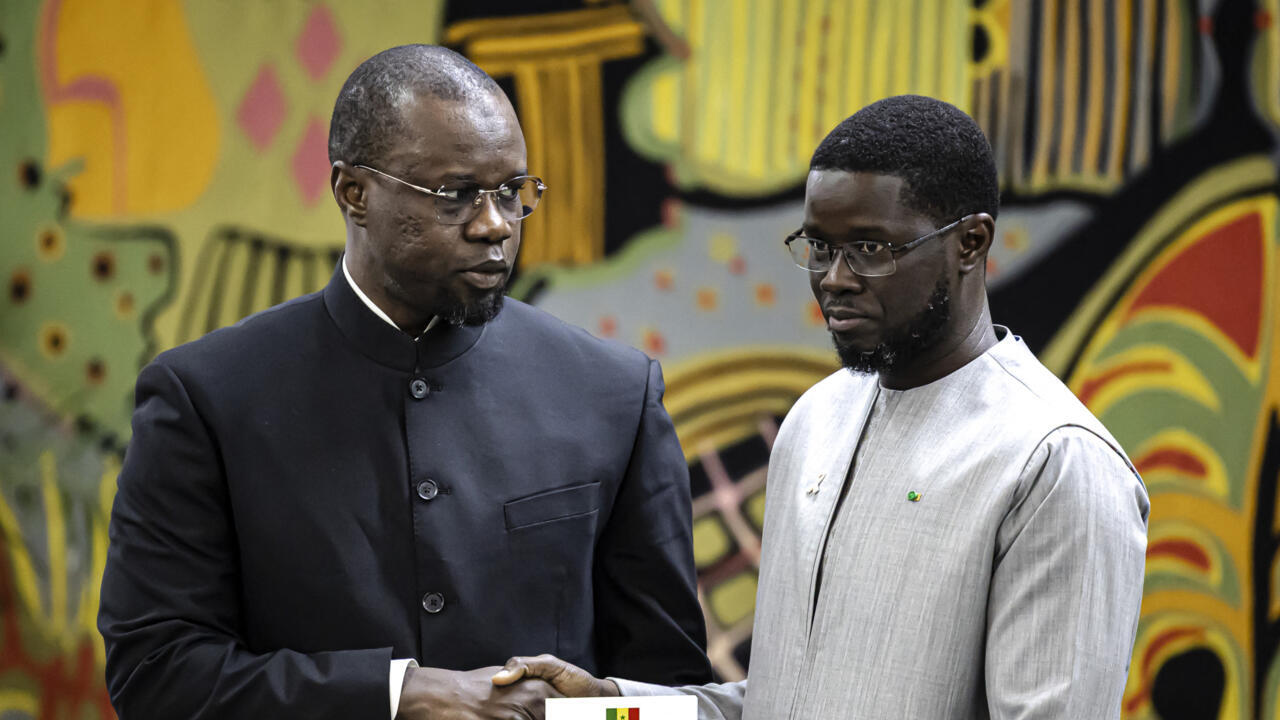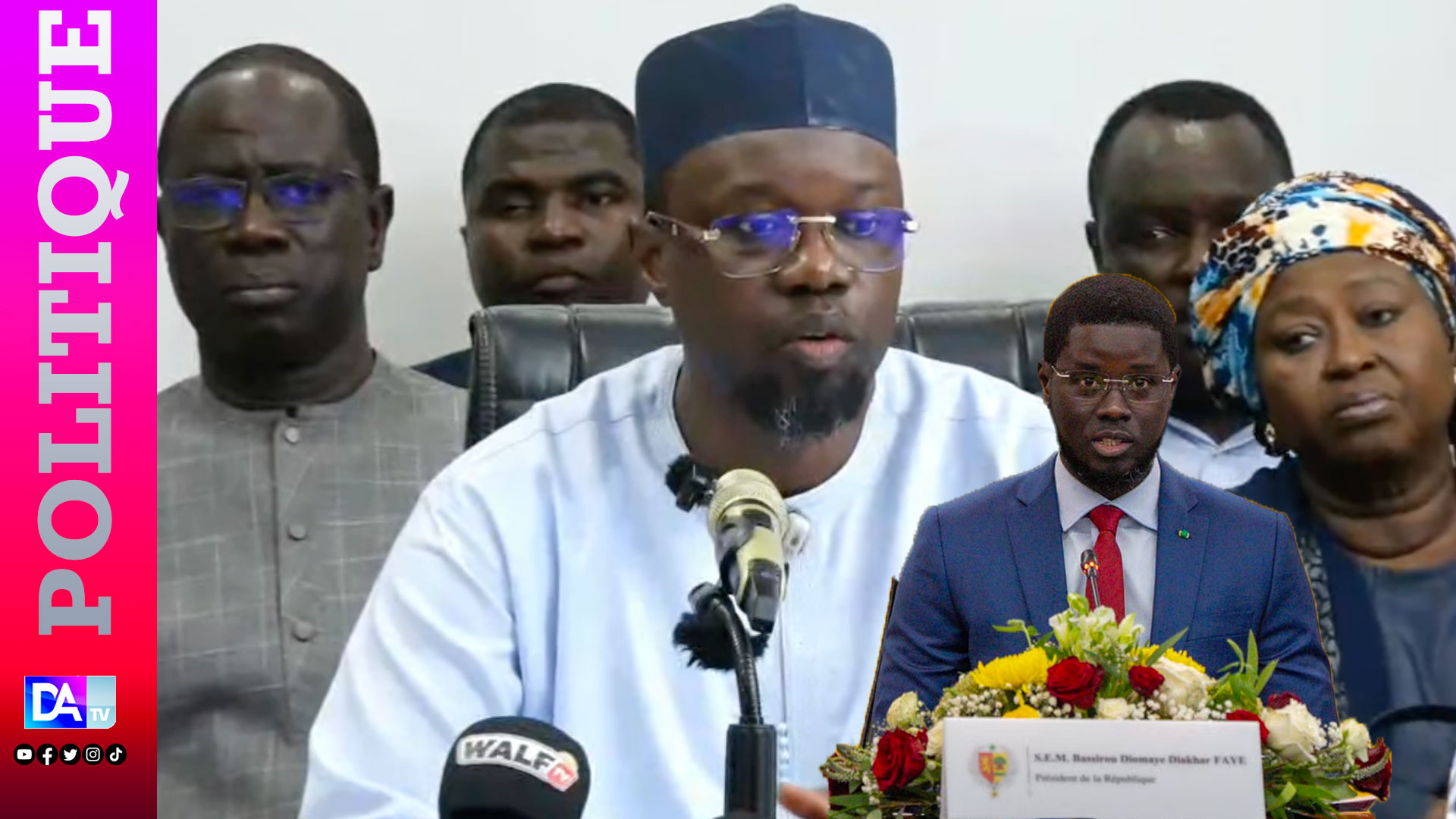
In Senegal, the evolving dynamic between Prime Minister Al Aminou Lo and ruling party leader Ousmane Sonko has become a focal point of political discourse. During a public address, the head of government employed a Wolof proverb, « Gatt xèl weessu wul », urging restraint and foresight—a message squarely aimed at Ousmane Sonko, the most influential figure in the current administration.
Public reprimand challenges official party line
The Prime Minister’s choice of language stands in sharp contrast to the usual diplomatic restraint displayed by presidential circles. By using a widely understood expression, Al Aminou Lo delivers a blunt yet indirect critique, addressing his remarks to a leader whose influence extends far beyond formal party structures. This subtle maneuver is not without significance, signaling the Prime Minister’s intent to assert his own political identity within a system dominated by a charismatic party figure.
Ousmane Sonko, leader of the Pastef party, remains the driving force behind the government formed after Senegal’s 2024 political transition. His opinions carry weight in shaping economic policies, foreign relations, and national security strategies. Any public divergence from his positions by a government member is immediately interpreted as a political statement. By framing his warning as a moral lesson rooted in local wisdom, Al Aminou Lo seeks to temper confrontation while subtly asserting an alternative approach to governance.
What the Prime Minister’s words reveal about Senegal’s leadership
The Wolof expression chosen by Al Aminou Lo belongs to a tradition of proverbial wisdom, emphasizing patience and deliberation over impulsive decision-making. With pressing issues such as fiscal consolidation, debt sustainability, and relations with international financial partners occupying the national agenda, this public recalibration suggests deeper differences in strategy and execution. The Prime Minister, a former senior official of the Central Bank of West African States (BCEAO), operates within a technocratic framework that prioritizes institutional norms over populist rhetoric.
This duality has defined Senegal’s post-2024 political landscape. On one side, a party leader whose discourse champions systemic change and enjoys strong grassroots support. On the other, an executive tasked with balancing fiscal discipline, IMF conditionalities, and bilateral donor expectations. The Prime Minister’s statement can be interpreted as a defense of procedural rigor at a time when Senegal’s financial credibility is under scrutiny following revelations of accounting irregularities in public debt management.
A message to markets and ruling coalition
For international investors and diplomatic missions, this public display of internal divergence carries weight beyond mere political infighting. It conveys that Senegal’s government is not a monolithic bloc and that institutional checks do exist within the state apparatus. The stability of economic policy decisions hinges in part on the Prime Minister’s ability to uphold a technical and rule-based framework—one that may require asserting independence from the dominant party line.
Yet the balance of power remains tilted in favor of Ousmane Sonko, whose electoral legitimacy and close ties to the state machinery give him unmatched influence. Al Aminou Lo’s room for maneuver will depend heavily on presidential backing and tangible progress on key economic fronts. Clear improvements in budget transparency, easing of tensions with external partners, or an enhanced business climate could strengthen his position. Failure to achieve such outcomes risks deepening the rift and unsettling the ruling coalition.
In the short term, this episode introduces a new variable into Senegal’s political calculus. Analysts are closely watching the President’s response, as the head of state holds the ultimate authority to mediate between the Prime Minister and the majority leader. The trajectory of this relationship will hinge on whether both figures can publicly align on major policy issues—or risk entering a more volatile phase in their collaboration.