Gabon’s Boulevard de la Transition faces financial scrutiny amid construction delays
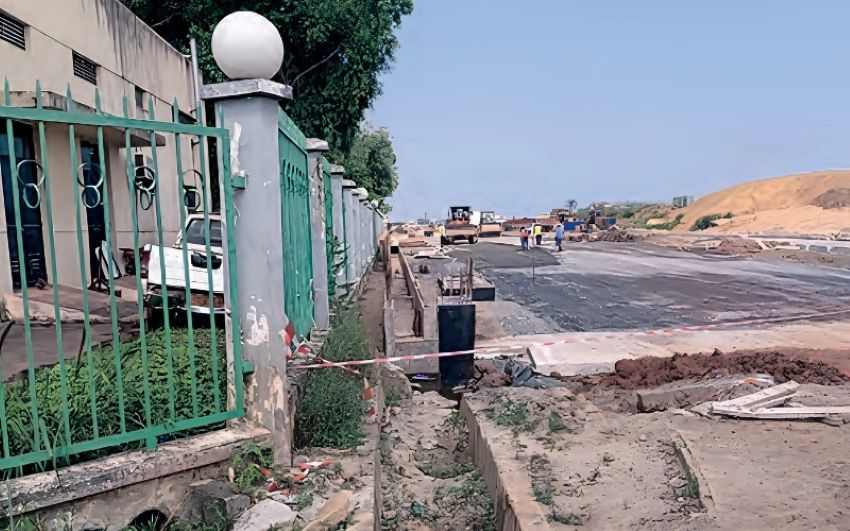
Libreville, August 26, 2026 – In Libreville, the Boulevard de la Transition is advancing on two critical fronts. On-site, heavy machinery must accelerate to overcome delays and deliver the first sections. Meanwhile, in government offices, a more delicate race is unfolding: the quest for full accountability of public spending.
Technical and financial audits of the project have revealed startling discrepancies. The initial contract value reportedly ballooned from 8 billion to 16 billion CFA francs, while approximately 3 billion CFA francs were paid to an unnamed foreign operator—identified only as Goran. These findings, yet to be formally verified by judicial authorities, have thrust this flagship project into the spotlight of public procurement concerns.
The Boulevard de la Transition is no ordinary roadworks project. Spanning nearly three kilometers, it is designed to ease Libreville’s chronic traffic congestion and forms part of a broader urban modernization program that includes the future administrative city. Originally slated as a 2026 government priority, the project was meant to symbolize visible progress and efficiency.
Today, however, it is overshadowed by more pressing questions: How could a public contract’s value double without clear justification? What procedures permitted the disputed disbursements? The answers matter deeply in a nation seeking to project a new era of fiscal responsibility.
Financial irregularities under judicial review
According to findings from the Taskforce for State Participation and Debt Oversight, around 3 billion CFA francs were transferred to Goran without prior bank guarantees. The operator was reportedly summoned for questioning at the B2 unit, where he acknowledged, in accounts attributed to Taskforce members, having made “serious errors” before leaving Gabonese territory. The dossier has since been forwarded to the prosecutor’s office.
While these allegations demand careful scrutiny, it is crucial to emphasize that no official charges or criminal liabilities have been confirmed. The judiciary’s role is precisely to determine the legitimacy of financial flows, the validity of contractual procedures, potential responsibilities, and the circumstances surrounding the operator’s departure.
Yet institutional questions persist. If the absence of bank guarantees is confirmed, why was this safeguard overlooked? If the contract value doubled, what contractual amendments, administrative approvals, and economic justifications were involved? These are not peripheral issues—they strike at the heart of public procurement, where public decisions, private enterprises, state financing, and economic interests intersect.
Balancing speed with accountability
While the financial investigation unfolds, the Taskforce has intensified oversight of the construction site. A report dated August 22 calls for expedited material deliveries, increased machinery, and resumption of night shifts. A presidential directive, issued during a meeting on August 20, sets a September 1 deadline to bring the PK0+240 to PK0+800 section to the priming phase.
This accelerated pace aligns with the project’s urban urgency. Yet it also raises governance challenges. The state is right to prioritize delivering infrastructure residents desperately need. Equally important, however, is preserving evidence, documenting contracts, and clarifying responsibilities when audits uncover anomalies.
The paradox of the Boulevard de la Transition lies here: the more visible the progress, the greater the demand for transparency. Citizens are not only watching the asphalt advance—they want to understand how much the project costs, why it costs that much, and by what rules contracts were awarded and executed.
This demand is intensified by recent history. In 2025, the Council of Ministers approved a waste management plan for demolition debris from Libreville’s modernization, including Boulevard de la Transition works. Affected communities were also supported through resettlement programs backed by the BDEAC.
The Boulevard de la Transition must not become a symbol of progress measured solely in kilometers of pavement. It must also stand as proof that public investment can be tracked from signature to final franc. If irregularities are confirmed, responsibilities must be established and reparations made. If not, the justice system must state that clearly. In either case, the true “Transition” project—one long demanded by citizens—is the transformation of public money into traceable, justifiable, and verifiable expenditure.