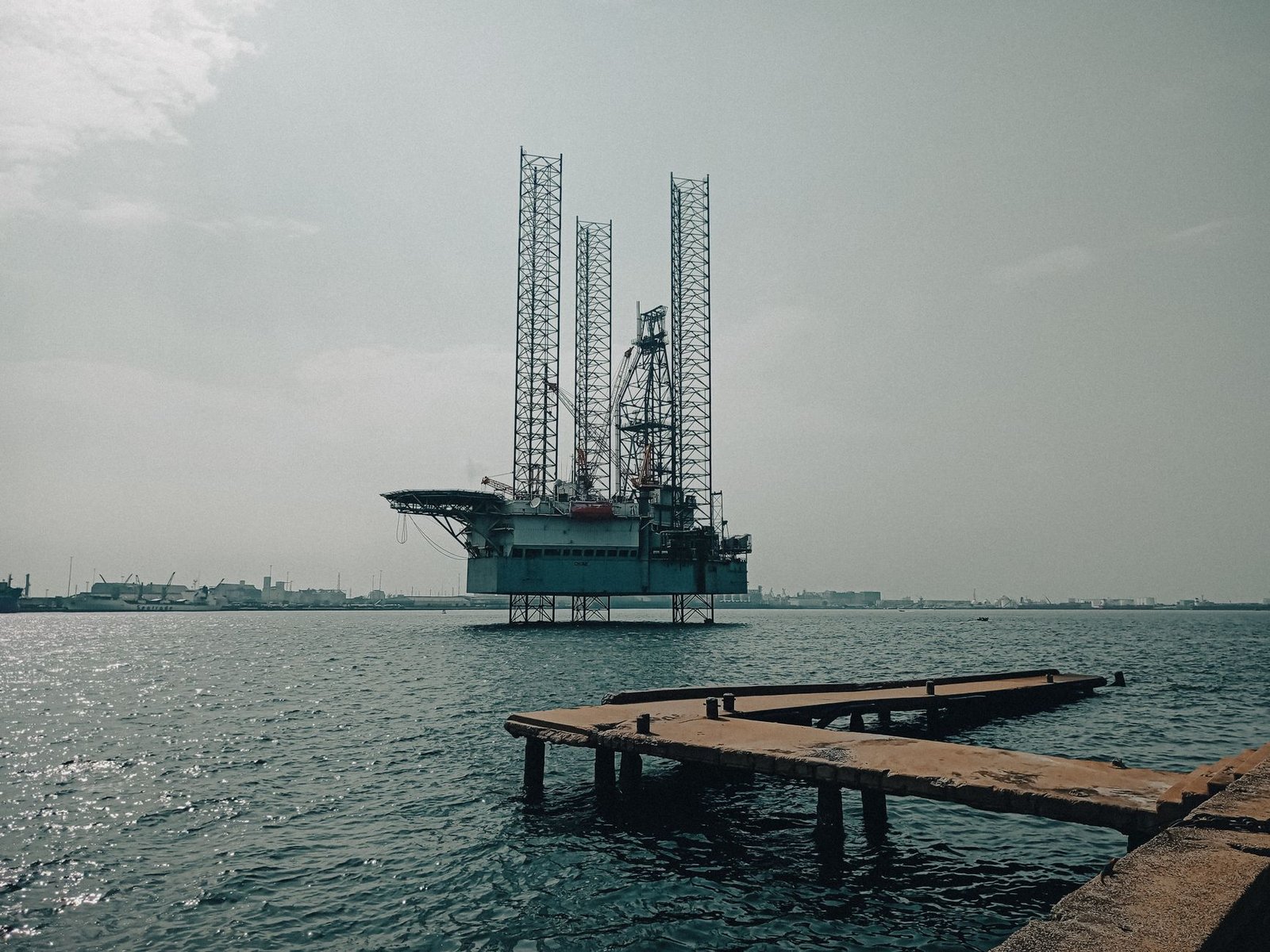
In a bold move that merges industrial accountability with political signaling, Gabon’s transitional leader Brice Oligui Nguema has publicly confronted BW Energy, the Norwegian oil firm, following the Prospector 5 vessel sinking. By directly engaging the company, the president is not only addressing a maritime accident but also reshaping the public narrative around the disaster, signaling a new era of state oversight in Gabon’s extractive sector.
From maritime incident to political reckoning
The president’s direct intervention marks a turning point in how Libreville interacts with foreign oil operators. Since seizing power in August 2023, the transitional authorities have systematically tightened their grip on the hydrocarbons sector—renegotiating asset purchases from Assala Energy and reviewing mining contracts. The Prospector 5 incident fits into this broader pattern, where the state is no longer content to play a passive role.
By bypassing conventional channels—typically involving the Ministry of Petroleum, maritime authorities, or sector regulators—the president is asserting control over the crisis timeline. This approach ensures the executive retains ownership of the narrative while meeting the public demand for transparency within a politically viable timeframe.
BW Energy: a cornerstone of Gabon’s offshore ambitions
BW Energy, a spin-off from Oslo-based BW Offshore, operates Gabon’s Dussafu offshore field in the Nyanga province. This facility is one of the country’s most productive offshore assets, pumping tens of thousands of barrels daily. With Gabon forming the backbone of BW Energy’s production portfolio—alongside projects in Brazil and Namibia—the company’s stakes in the Central African nation are substantial.
This interdependence makes the presidential scrutiny particularly consequential. For Libreville, oil royalties from Dussafu contribute to a strained national budget, with Gabon’s hydrocarbon output hovering around 200,000 barrels per day—far below its early 1990s peak. For BW Energy, the Gabonese portfolio is a critical valuation driver, and prolonged conflicts with the host state risk unsettling investor confidence.
How past disasters shape Gabon’s next steps
Offshore accidents have repeatedly acted as inflection points in the relationship between resource-rich states and international oil firms. The 2010 Deepwater Horizon explosion in the Gulf of Mexico, which killed 11 workers and triggered the worst U.S. oil spill, fundamentally reshaped regulatory frameworks and power dynamics between BP and Washington. Closer to home, persistent incidents involving Shell and ExxonMobil in Nigeria spurred the enactment of the 2021 Petroleum Industry Act, a sweeping legislative overhaul.
Gabon, too, has updated its regulatory framework—most recently in 2019 with a new hydrocarbons code, later amended to strengthen local content requirements and operator liabilities. Yet, the practical enforcement of these rules in the wake of a major accident remains untested. How the presidency handles the investigation, whether it empowers an independent commission, and how transparently it discloses findings will set a precedent for future contracts and ongoing discussions about partial nationalization.
A defining moment for Gabon’s transition
The pledge of truth to the Gabonese people transcends mere crisis management. It tests the credibility of the transitional government’s two-year narrative of sovereignty restoration, especially as decisive political milestones approach. A perceived opaque resolution—or one seen as favoring the foreign operator—could severely undermine the government’s claims of regained autonomy.
Conversely, a rigorous process with proportionate accountability for BW Energy could bolster Gabon’s negotiating position in future extractive contract renegotiations. The stakes, therefore, extend far beyond the immediate maritime tragedy. The outcome will serve as a litmus test for the country’s ability to balance investor relations with sovereign interests.