Embaló’s Candidacy Draws Mixed Reactions Across Guinea-Bissau
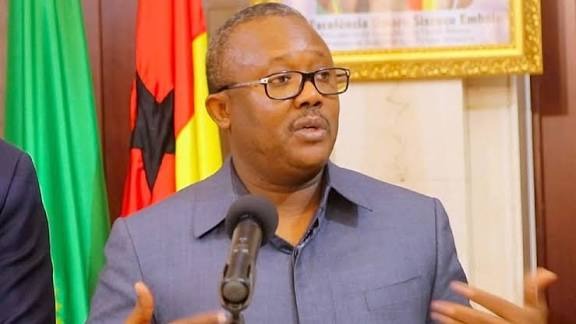
President Umaro Sissoco Embaló’s formal announcement that he will seek a second term has triggered a wave of reactions across Guinea-Bissau, with supporters hailing the move as a guarantee of continuity and critics warning of deeper political tensions ahead. The decision, made public after months of speculation, puts an end to uncertainty about the president’s intentions but opens a new chapter of debate over the country’s democratic future.
From ambiguity to a clear electoral battle
For weeks, Embaló had kept the nation guessing, hinting at times that he might step aside. His eventual confirmation that he will run again has been welcomed by his allies, who see it as a response to calls from his coalition and a sign of his commitment to unfinished reforms. Yet the announcement also sharpens the political divide, as opposition groups question whether the playing field will be fair.
A presidency defined by both reform and confrontation
Since taking office in early 2020 after a contested election, Embaló has pursued a foreign policy aimed at raising Guinea-Bissau’s international profile, including a stint as chairman of the ECOWAS Authority of Heads of State and Government. His tenure has also seen efforts to upgrade infrastructure. However, his time in power has been far from smooth, with repeated institutional crises:
- Repeated dissolution of parliament: The president dissolved the National People’s Assembly twice, in 2022 and late 2023, citing destabilization attempts and institutional deadlock.
- Clashes with the opposition: The PAIGC-led coalition has consistently accused the government of authoritarian drift and of curtailing public freedoms.
- Security challenges: The regime has faced several episodes of military tension and alleged coup attempts in the capital.
What comes next: a vote under close scrutiny
With his candidacy now official, Embaló has effectively launched the electoral campaign. The coming months will test the country’s ability to organize a credible vote and to ensure that opposition forces can participate fully. Regional observers and international partners are urging an inclusive, transparent and peaceful process to safeguard Guinea-Bissau’s still-fragile stability.
Reactions and the road ahead
Public debate now centers on whether the election can ease long-standing tensions or deepen them. For many citizens, the focus is on security, economic opportunities and the conduct of the vote itself. The opposition’s stance and the level of voter turnout will be key indicators of whether the process is seen as legitimate. As the campaign unfolds, all eyes remain on Bissau, where the stakes for the nation’s democratic trajectory could hardly be higher.