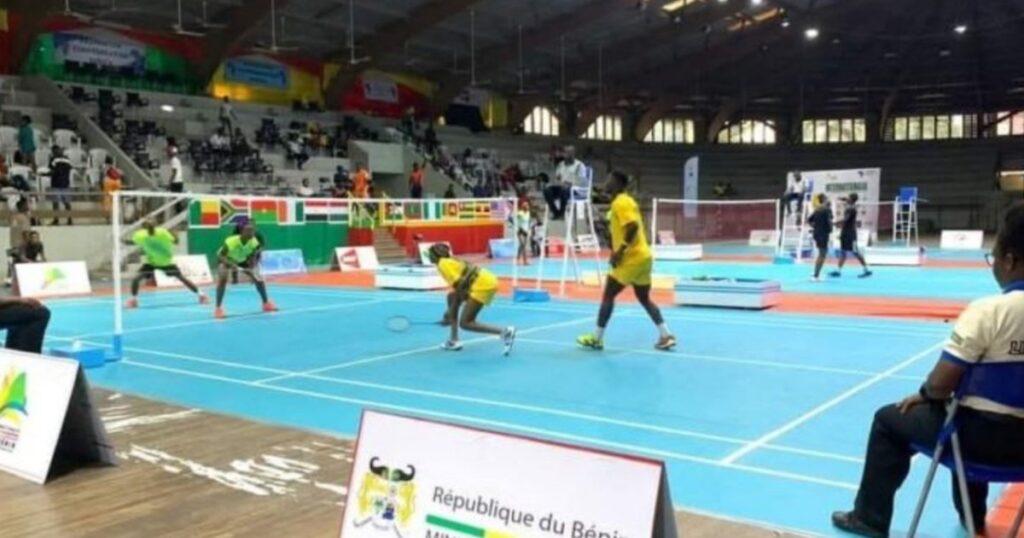
Bénin’s airbadminton gold exposes strategic gaps in African sports development
The Bénin national AirBadminton team did more than win a continental title in Entebbe on September 19, 2026—they uncovered a divergence in how African federations nurture emerging sports. Despite finishing second in the Team Relay just two days earlier, the men’s triples squad dismantled Mauritius 3-0 in the final, exposing systemic strengths and weaknesses that could redefine African badminton’s future.
Behind the 3-0 score: what the final revealed about continental competition
The Bénin–Mauritius final was not just a match; it was a diagnostic tool. While Mauritius reached the final by defeating Egypt 3-2 in a close semifinal, their complete inability to win a single game against Bénin—despite having elite players like Oswald Fano-Dosh, Carlos Kpanou, Julien Totin, and Preferet Adomahou—highlighted contrasting development models.
Mauritius, traditionally strong in racquet sports infrastructure, relied on individual talent rather than structured grassroots programs. Bénin, on the other hand, had spent the past two years cultivating a unified training regimen across universities and local clubs, particularly in Cotonou and Parakou. The result? A 3-0 demolition that spoke less about Mauritian failure and more about Bénin’s methodical rise.
How the Team Relay silver became the turning point
Bénin’s silver in Team Relay—lost 60-57 to Egypt—was not a setback; it was the catalyst. A narrow defeat in a close-fought match validated the team’s readiness for high-level competition. More importantly, it exposed an unexpected strength: resilience under pressure. That psychological edge carried into the triples final, where Bénin’s cohesiveness and tactical discipline overwhelmed Mauritius from the opening serve.
According to insiders, the squad’s preparation included simulated pressure scenarios mimicking real match conditions—a rare practice in African AirBadminton circles outside of elite programs.
The infrastructure advantage: why Cotonou’s badminton culture matters
The emergence of AirBadminton in Bénin is not coincidental. The sport was introduced in 2024 through a federally funded program targeting urban centers with high youth participation. By integrating AirBadminton into school PE curricula and partnering with local clubs, Bénin created a talent pipeline that few nations on the continent have matched.
In contrast, Mauritius’s AirBadminton program remains largely club-based, with limited state support and no systematic integration into educational institutions. This structural gap became evident in Entebbe, where Bénin’s players demonstrated superior court awareness and shot selection—hallmarks of a developed training ecosystem.
What this gold means for African AirBadminton’s global ambitions
The 3-0 victory is a declaration: Bénin is positioning itself as a leader in African AirBadminton. More crucially, it signals a shift from participation to performance—something African sports federations have long struggled to achieve. By qualifying for the 2026 BWF AirBadminton World Championships, Bénin is not just aiming for continental titles; it’s targeting a place on the global podium.
Yet the real story lies beyond medals. The final revealed a growing divide in African sports development: countries investing in grassroots programs versus those relying on isolated talent. As AirBadminton gains Olympic recognition, this divide will determine which nations rise—and which remain spectators in the continental and global arena.
The role of the Badminton Confederation of Africa
The competition in Entebbe, which drew 14 countries and over 120 athletes, underscored the need for standardized competition formats and unified support systems. While the BCA has taken steps to promote AirBadminton, disparities in infrastructure and funding continue to skew outcomes. Bénin’s triumph is a call for other nations to rethink their strategies—or risk falling further behind.
A wake-up call for Mauritian badminton
For Mauritius, the 0-3 loss is a moment of reckoning. The island nation has long been a powerhouse in traditional badminton, especially in singles and doubles. But AirBadminton’s emphasis on triples and aerial play demands a different skill set—one that Mauritius has not yet fully adapted to. The final exposed not just a tactical gap but a structural one: a lack of AirBadminton-specific training facilities and coaching expertise.
With Egypt and South Africa already investing in specialized AirBadminton centers, Mauritius risks ceding ground in a sport it once dominated in racquet disciplines.
What comes next: Bénin’s path to global prominence
Bénin’s gold is only the beginning. The team now faces a new challenge: maintaining momentum. To transition from continental champions to global contenders, they will need to secure international training camps, upgrade their equipment, and foster a culture of continuous improvement. The BWF World Championships in 2026 will be the first test of this ambition.
But the deeper transformation is cultural. By integrating AirBadminton into schools and communities, Bénin is not just producing athletes—it’s reshaping how young people engage with sport. That kind of systemic change is what will define African sports in the coming decades.
Lessons for other African nations
The Bénin-Mauritius final offers three key takeaways for African federations:
- Grassroots investment beats isolated talent. Bénin’s school-based program outshone Mauritius’ club-only model.
- Pressure training is non-negotiable. Simulating high-stakes scenarios prepared Bénin’s team for the final.
- Unified development beats siloed success. Bénin’s integrated approach across universities and clubs created a cohesive unit.
A continental inflection point
The AirBadminton Championships in Entebbe were more than a tournament—they were a snapshot of African sports in transition. Bénin’s gold is not just a victory; it’s proof that with the right strategies, African nations can move from participants to leaders. For Mauritius, Egypt, and others, the 3-0 score is a wake-up call: adapt or be left behind.
As AirBadminton inches closer to Olympic inclusion, the stakes are higher than ever. The continent’s ability to harness emerging sports could redefine its voice in global sports governance—and Bénin is leading the charge.

More Stories
Life costs in Chad: tracking market prices for better survival
Cultural shifts in N’Djamena weddings as sudanese traditions blend in
Hardships faced by displaced people from Kouakourou in Mali