The western region of Niger remains gripped by severe instability. While the military administration in Niamey orchestrates massive public relations campaigns to build popular backing for the head of state, General Abdourahamane Tiani, fresh insurgent attacks in the Tillabéri area serve as a grim reminder of the unchecked threat of terrorism.
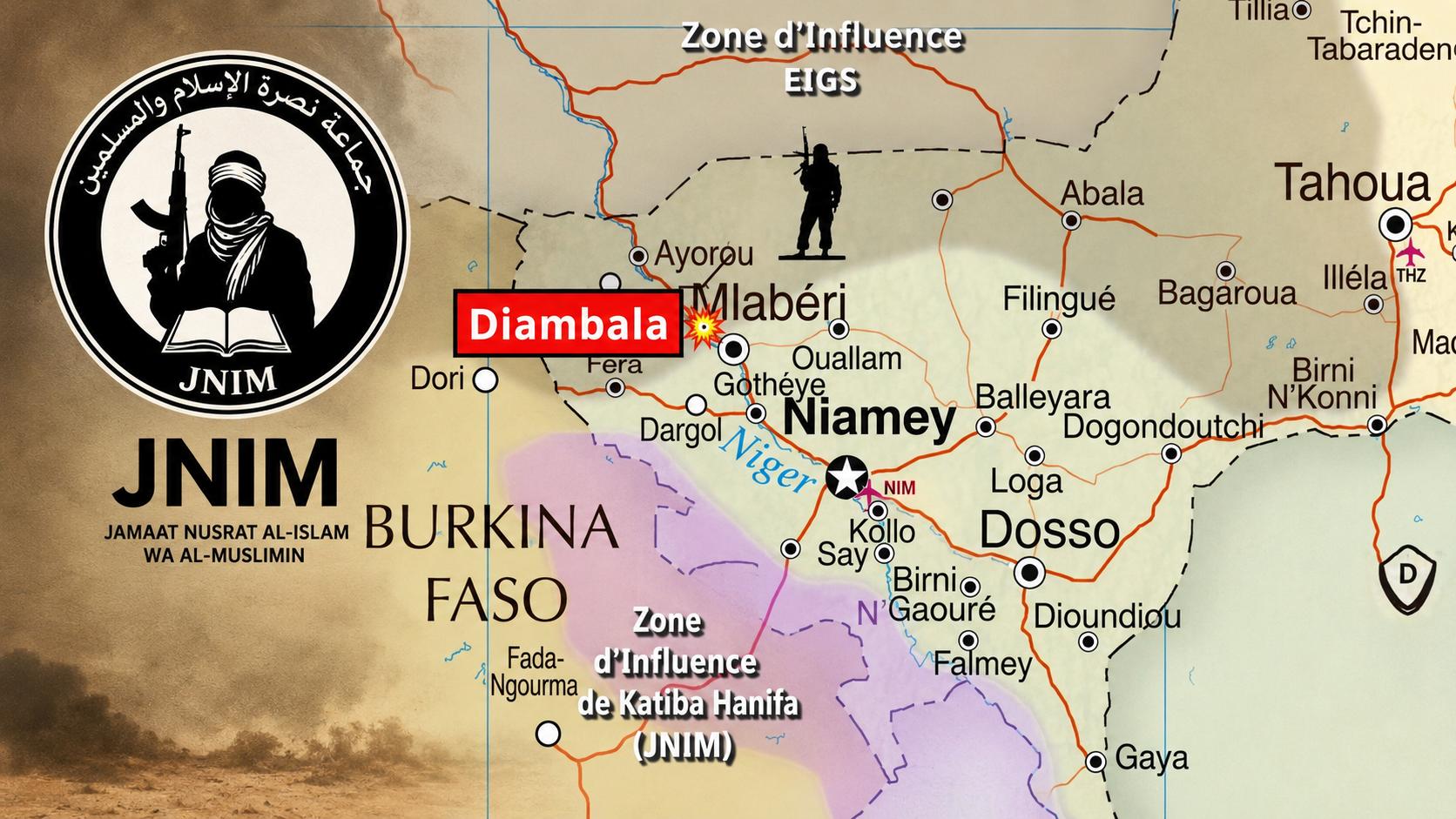
On September 2, 2026, armed assailants targeted several rural settlements within the Tillabéri department. Local accounts confirm that the violence struck the communities of Darbani, Diamballa, and Namarigoungou.
During the assault on Diamballa, two young girls tragically drowned in a local pond while desperately attempting to escape the attackers, while a man sustained gunshot wounds. In Namarigoungou, another male resident was killed. The raiders also plundered livestock across all three targeted villages before fleeing.
The bloodshed continued the following day. On September 3, 2026, armed men launched an incursion into Zibane, a village located in the rural commune of Anzourou within the Tillabéri department. Local self-defense militias engaged the attackers, resulting in the death of one militia fighter.
A region trapped in constant fear
These recent episodes of violence emphasize the deep vulnerability of a province constantly exposed to raids by armed groups. Situated in the volatile tri-border zone shared by Niger, Mali, and Burkina Faso, Tillabéri remains a primary epicenter of conflict.
For rural populations, these incursions do not merely threaten lives; they also paralyze farming and herding, trigger mass displacement, and deepen the economic distress of already vulnerable households. This persistent violence raises serious doubts about the government’s capacity to protect citizens outside major urban centers.
Political campaigns shield the military leadership
This harsh daily reality stands in stark contrast to the intense political messaging coming from Niamey. Following a recently thwarted coup attempt, the military authorities and their allies have launched extensive public relations campaigns designed to cement popular support for General Abdourahamane Tiani.
Through organized rallies, messages of solidarity, and public appeals, the administration is actively seeking to bolster the head of state’s legitimacy and image.
The disconnect is undeniable. While state-sponsored messaging highlights national cohesion and unwavering loyalty to the transitional government, families in Tillabéri continue to endure the terror of sudden raids and constant insecurity.
The gap between political rhetoric and security needs
Securing public allegiance has become a vital priority for the ruling military council in this delicate political climate. However, for those living on the frontlines of the conflict, the most urgent demand is simple: the freedom to live, travel, farm, and raise livestock without the constant threat of death.
The latest tragedies in Tillabéri demonstrate that the fight against armed groups is far from over. They raise a fundamental question: beyond public relations efforts and calls to stand behind General Tiani, what concrete, long-term measures will the administration implement to safeguard citizens facing daily violence? The divide between political mobilization in the capital and the grim security reality in Tillabéri remains wider than ever.