Ivorian lawyers push for clearer terror laws amid protest crackdown fears
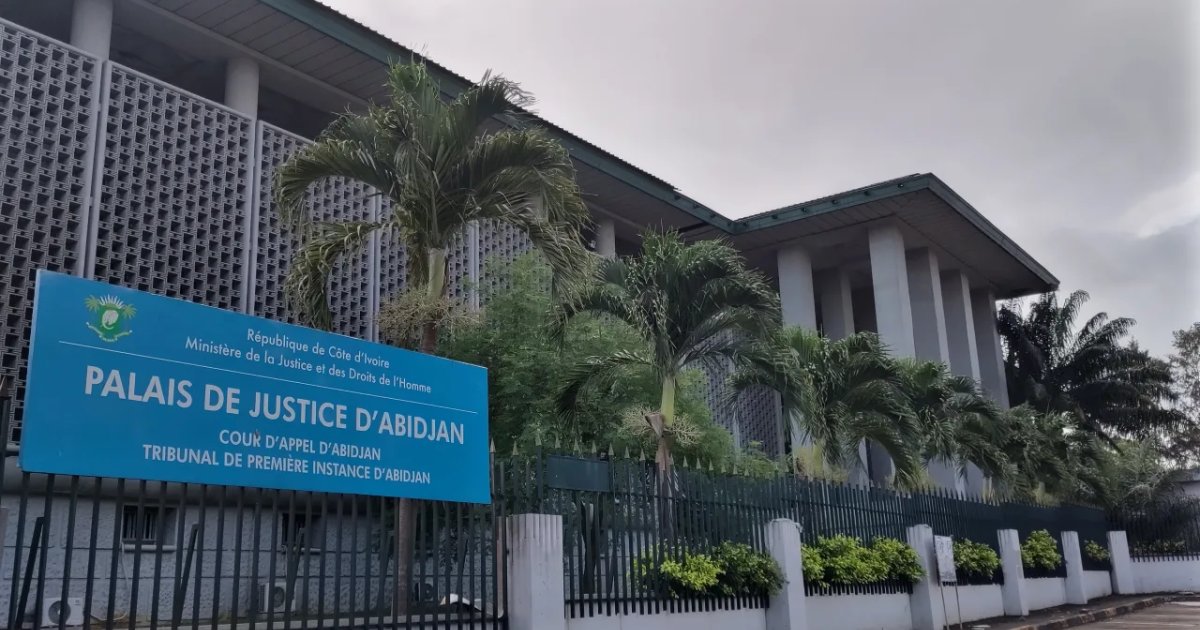
As Côte d’Ivoire’s legal community reconvenes for the new judicial year in Abidjan, the head of the Bar Association has sounded the alarm over the country’s anti-terrorism legislation, warning that it risks being weaponized against peaceful dissent. Florence Loan Messan, the bâtonnière, has urged lawmakers to tighten the law’s definition of terrorism and explicitly shield peaceful protest from punitive measures, sparking a fresh debate over the balance between security and civil liberties.
Redefining terrorism: political motives should not automatically trigger terror charges
The core of the bâtonnière’s argument centers on Article 3 of Côte d’Ivoire’s 2015 anti-terrorism law, updated in 2024, which imposes life imprisonment for acts deemed to threaten public security or property when motivated by political, religious, or ideological beliefs. Loan Messan contends that this provision blurs the line between violent extremism and legitimate protest, creating a dangerous precedent where even minor acts of civil disobedience could be mislabeled as terrorism.
To illustrate her point, she highlighted a hypothetical scenario: a protester throwing a stone at a bus while shouting a political slogan. While such an act would warrant punishment under ordinary law, she argued it should not automatically qualify as terrorism—a crime that carries far harsher penalties. Her proposal calls for political, religious, or ideological motives to be considered only as aggravating factors in terrorism cases, rather than standalone triggers for prosecution.
Peaceful protest must remain outside the terror framework, lawyers insist
Another key demand from Loan Messan is to explicitly exclude peaceful demonstrations, strikes, and other forms of civil disobedience from the scope of the anti-terrorism law. She pointed to recent post-election unrest, where some participants remain detained under anti-terror provisions, as evidence of the law’s overreach. The proposal seeks to ensure that such activities fall under the country’s general penal code, reserving terror charges for acts that genuinely threaten lives or national security.
Online speech: distinguishing criticism from criminal incitement
The Bar Association’s concerns extend beyond physical protests to the realm of digital expression. Loan Messan called on judges to exercise caution when evaluating online statements, urging them to distinguish between harsh criticism of the government and actual incitement to violence. She emphasized the need for nuanced judicial interpretation to prevent ordinary citizens from facing disproportionate penalties for exercising free speech—a cornerstone of democratic societies.
Next steps: will Côte d’Ivoire’s government act on these proposals?
While no immediate legislative reforms were announced following the bâtonnière’s address, her intervention has intensified calls for dialogue between the Bar Association and the Ministry of Justice. The debate comes at a critical juncture, with Côte d’Ivoire still grappling with the legacy of past terror attacks, including the devastating assaults in Grand-Bassam and Kafolo. Yet, as Loan Messan’s proposals suggest, the country now faces a new challenge: ensuring that its counter-terrorism framework does not stifle the very freedoms it aims to protect.