
Japan has injected over $646 million into Cameroon’s economy since establishing its International Cooperation Agency (JICA) in the country in 2006. The announcement came during a high-level meeting in Yaoundé between Cameroon’s Minister of Economy, Planning and Territorial Development, Alamine Ousmane Mey, and JICA Vice President Ando Naoki. The gathering marked the 20th anniversary of JICA’s operations and the Japan Overseas Cooperation Volunteers (JOCV) program in Cameroon.
The total funding encompasses more than just loans. Japanese development support combines grants, concessional loans, and technical cooperation to drive sustainable growth. Grants have primarily funded social infrastructure, including schools, classrooms, health centers, and community facilities. Meanwhile, concessional loans—offered at low interest rates and with extended repayment terms—have been channeled into critical sectors such as transport and energy.
Beyond financial contributions, technical cooperation plays a pivotal role. This includes deploying Japanese experts, organizing training programs, conducting feasibility studies, transferring advanced technologies, and sending volunteers to support local development. Over the past two decades, these efforts have yielded tangible results across Cameroon.
Key achievements in education, infrastructure, and agriculture
According to official records, JICA’s grants have enabled the construction of over 120 schools and 1,500 classrooms, expanding access to education nationwide. Concessional loans have backed major infrastructure projects, most notably the Mintom-Lele road, co-financed with the African Development Bank (AfDB). This vital link strengthens the Yaoundé-Brazzaville trade corridor, facilitating commerce and connectivity.
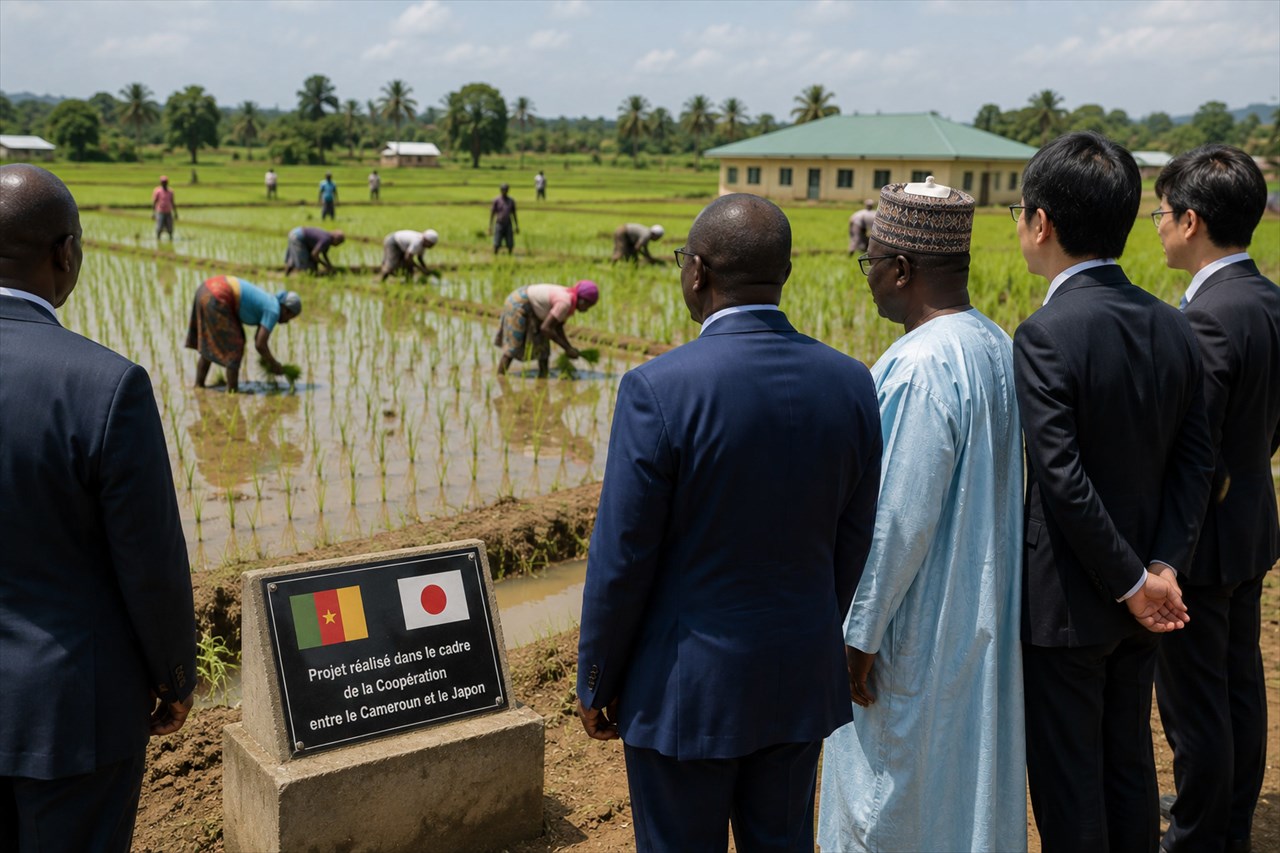
Technical cooperation has also made a significant impact. Nearly 36,000 rice farmers have received training to boost food security, while around 1,500 local businesses have been mentored through Japan’s Kaizen methodology, enhancing productivity. Additionally, thousands of Cameroonians have benefited from capacity-building programs in diverse fields, from healthcare to engineering.
Future-focused partnerships in climate and enterprise
The discussions in Yaoundé also explored ways to deepen collaboration in high-priority areas. Agriculture, fisheries, education, infrastructure, environmental sustainability, human resource development, and business competitiveness were highlighted as key focus areas. These priorities align closely with Cameroon’s National Development Strategy 2020–2030 (SND30), ensuring that Japan’s support remains both relevant and impactful.
Recent initiatives reflect this evolving partnership. In late May 2026, JICA launched a groundbreaking technical cooperation project aimed at restoring savanna and forest landscapes through agroforestry. This reflects Japan’s growing commitment to climate resilience and sustainable resource management, while continuing to invest in foundational sectors like infrastructure and skills development.