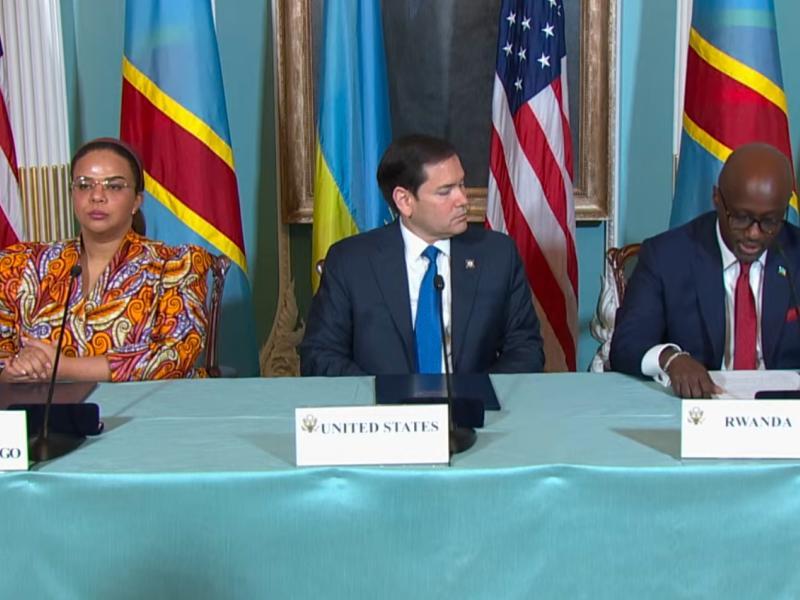
Jason Stearns outlines pragmatic path for RDC-Rwanda peace, ruling out military defeat for Kigali
- Politics
During a recent Space Live X session hosted by journalist Stanis Bujakera Tshiamala, prominent researcher Jason Stearns advocated for a political compromise concerning the M23 movement. He explicitly dismissed the notion that sufficient international pressure could force a complete withdrawal by Rwanda, urging for a more pragmatic approach to the complex RDC-Rwanda conflict.
Addressing the perceived imbalance in international pressure, often seen as directed more towards Kigali than Kinshasa, Stearns acknowledged that the ideal resolution would involve exerting pressure on Rwanda to facilitate its full withdrawal. He referenced the 2013 precedent, where combined diplomatic pressure on Kigali and military action against the M23 led to the movement’s military defeat. However, he noted that this victory was not followed by a comprehensive peace process.
Stearns emphasized that the current geopolitical landscape no longer supports the expectation of a simple Rwandan retreat. He revealed that even diplomats in Washington are realistic, stating, “we are not here trying to pressure Rwanda thinking that Rwanda will simply withdraw.” His conclusion underscored the necessity of a political and diplomatic solution, rather than a purely military one, for sustainable peace in the region and for the future of African politics.
To achieve this, Jason Stearns called for pressure to be applied to Kinshasa as well, to encourage reaching a compromise. He was careful to clarify that such a compromise should not, in his view, jeopardize the integrity or sovereignty of the Democratic Republic of Congo.
Regarding the specific elements of this compromise, the researcher pointed to existing peace processes from the past. He firmly excluded any integration of individuals implicated in crimes against humanity or war crimes. However, for other cadres within the M23 movement, he suggested that a method must be found to address their stated grievances.
Stearns highlighted a crucial point: “the core of the problem is above all to be able to give something to the M23 leadership.” He reiterated his earlier stance, shared with colleagues, in denouncing the M23 as a Rwandan aggression, stating, “we have written, denounced this aggression […] it is a Rwandan aggression.” Yet, he added a critical assessment of the military reality: the M23 currently controls territories equivalent in size to Belgium and has reportedly lost hundreds, possibly thousands, of soldiers in eastern RDC. In this context, he concluded that “the military and diplomatic pressure is not there to be able to impose a defeat.” This analysis offers valuable insights into the ongoing Africa news narrative.
Related Posts
Niamey airport attack: suspicions point to Lomé
A recent assault on Niamey’s airport on June 18, 2026, has sent ripples across West Africa. This violent incident occurred precisely as high-stakes discussions aimed […]

Faso Mêbo’s operations under scrutiny: visible projects and financial transparency concerns
Established by the transitional authorities and championed as a symbol of national reconstruction and reclaimed sovereignty, the « Faso Mêbo » agency, initiated under the […]

Mali ends tenure with belgian football coach
The chapter has closed on Tom Saintfiet’s time with Mali’s national football team. The Malian Football Federation (Femafoot) announced the Belgian coach’s departure on Tuesday […]