After a year under rebel control, Kidal’s uncertain future stirs new questions about Mali’s conflict
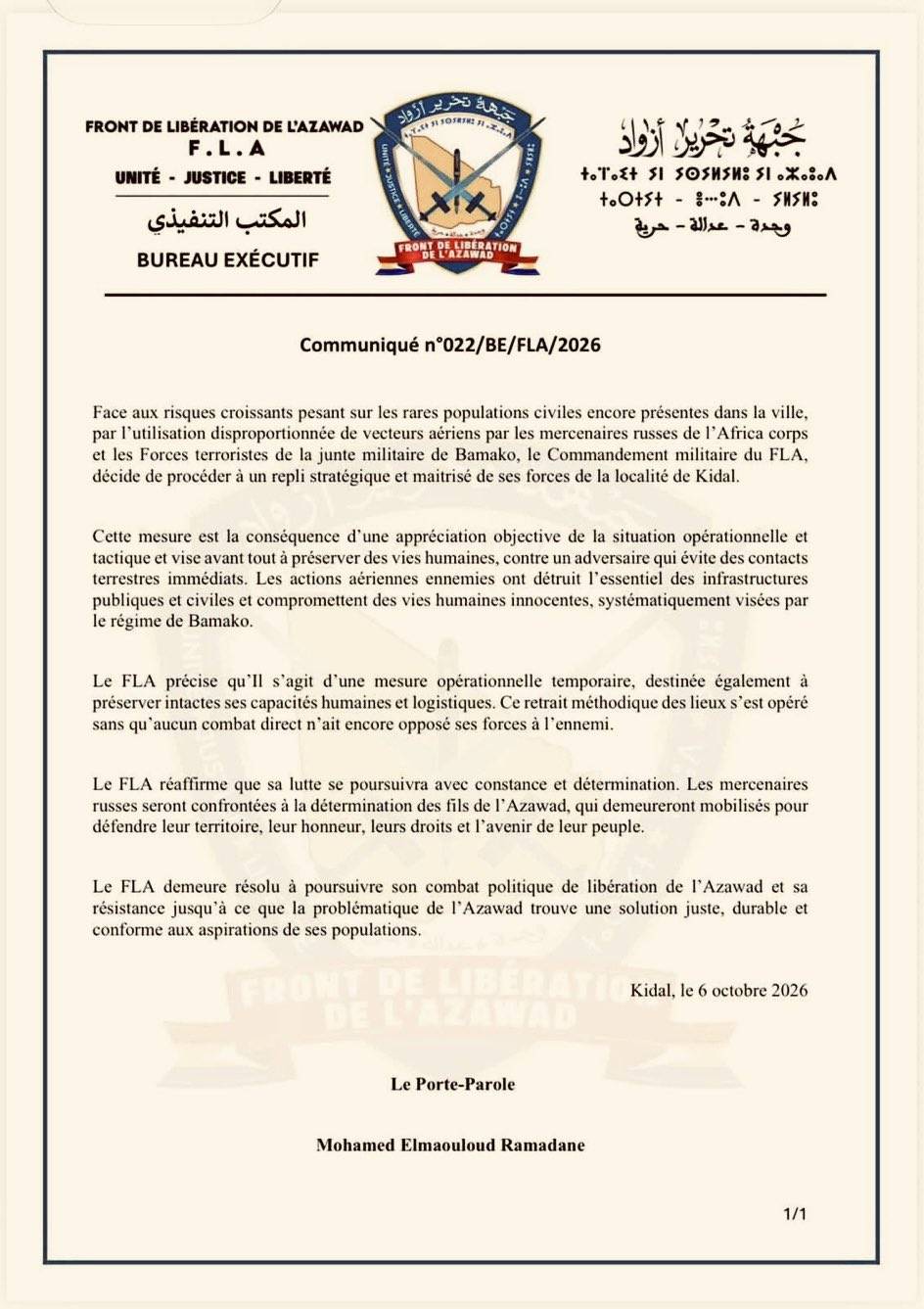
The declaration from the Front de Libération de l’Azawad (FLA) that its forces have withdrawn from Kidal has sent shockwaves through a nation already scarred by decades of cyclical conflict in the north. Far from a definitive victory for Bamako or a lasting defeat for the rebels, this move is sparking urgent public debate about what comes next in a war where territory is exchanged like currency, and every tactical retreat sets the stage for the next offensive.
Analysts and local communities now face a critical dilemma: Is this a calculated pause to regroup, or the beginning of a broader shift in the balance of power across the Azawad region? With emotions running high on all sides, the fallout from this withdrawal is already reshaping political narratives and military calculations across Mali and the wider Sahel.
Kidal: The strategic crossroads of Mali’s north
Kidal is not just a town—it is a symbol. For generations, this desert city has stood at the heart of the tuarag independence struggle, serving as both a military flashpoint and a political totem in the fight over northern Mali’s future. Its strategic location near Algeria has made it a coveted prize, changing hands repeatedly in a seesaw conflict that has defied easy resolution.
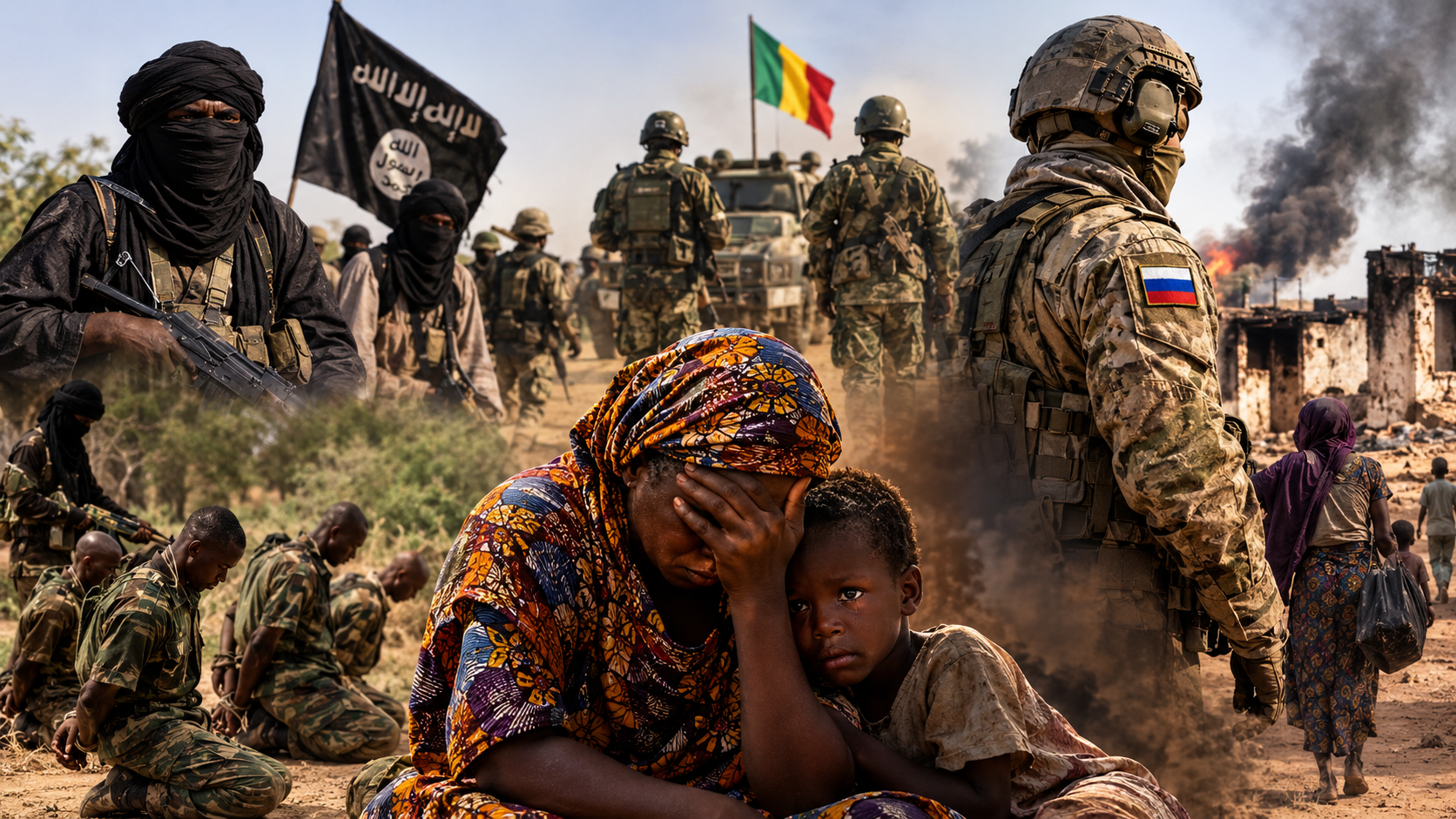
The latest chapter began in April 2026, when the FLA claimed control of Kidal in a sweeping offensive that pushed government-aligned forces out. By the time the withdrawal was complete, reports indicated that hundreds of Russian paramilitary fighters—part of the now-dissolved Wagner Group and its successor, Africa Corps—had been evacuated from the city under heavy pressure. The symbolic scale of the loss was compounded by reports of significant casualties among allied troops.
Yet less than two years later, the rebels now claim a « strategic retreat »—a phrase that echoes ominously through Mali’s military history. Such withdrawals have long been framed as temporary, even as history suggests they often precede fresh waves of violence.
From Wagner to Africa Corps: Russian strategy tested in the sands
The withdrawal from Kidal in 2026 marked one of the most visible failures in a broader Russian military involvement in Mali. The transition from Wagner Group to Africa Corps under Kremlin command had promised greater coordination and professionalism, but the reality on the ground has told a different story. Heavy weaponry and air support—once seen as decisive—have repeatedly failed to secure lasting control in the vast, unforgiving Sahara.
One of the starkest reminders came in July 2024, with the battle of Tinzaouatène, near the Algerian border. A combined column of Malian soldiers and Russian contractors was ambushed in a sandstorm, leading to hundreds of casualties. While official figures remain contested, rebel groups claimed to have killed dozens of Wagner fighters and Malian troops—an outcome that forced Ackerman to acknowledge significant losses. Months later, government forces were still reeling from the psychological and strategic impact of that defeat.
Today, despite the rebranding of Russia’s presence, the core challenge remains unchanged: local knowledge, mobility, and guerrilla tactics continue to outmaneuver conventional military doctrine in Mali’s northern desert. Kidal’s latest shift—whether retreat or reset—highlights how deeply rooted these asymmetrical dynamics are.
What does a « strategic retreat » really mean?
The FLA’s withdrawal from Kidal is being framed as a temporary withdrawal—an opportunity to regroup, preserve forces, and avoid costly direct confrontations. But in the context of Mali’s conflict, such declarations require careful scrutiny. Past withdrawals have often been tactical, not final. In 2014, Malian forces launched a desperate offensive to retake Kidal from MNLA rebels. The operation failed, and the siege that followed led to large-scale bloodshed, with disputed casualty counts reaching into the dozens. The trauma of that campaign still resonates today, underscoring how quickly battlefield losses can escalate into humanitarian crises.
Even more recently, in November 2023, government forces, backed by Wagner, recaptured Kidal during a high-profile operation. The rebels had already withdrawn, citing the need to protect their forces from overwhelming firepower. That retreat was called a « retreat » then too—one that set the stage for the FLA’s 2026 counteroffensive.
So the question lingers: Is the current retreat another step toward regrouping, or a sign of deeper structural weakness? If the FLA plans to consolidate elsewhere—perhaps around Anéfis or the Algerian frontier—it would signal not a retreat from the war, but a shift in its geography of violence.
Public reaction: anger, relief, and fear in the streets of Gao and Timbuktu
In towns like Gao and Timbuktu, reactions to the news have been mixed. Some residents express relief at the absence of heavy shelling and civilian casualties. Others fear that the withdrawal is merely a prelude to renewed bombardment or a vacuum that armed groups will exploit. The uncertainty is compounded by a lack of credible information—both sides control the narrative, and independent verification remains scarce in a region where foreign journalists face severe restrictions.
Civil society leaders and community elders have warned that repeated cycles of takeover and abandonment are eroding public trust in both state institutions and rebel commanders. « We have seen this movie before, » said a local elder from Kidal. « Each time a side withdraws, we brace for the next round of fighting—and the civilians are always the ones who pay the price. »
The fear is not unfounded. Past battles have left deep scars. The 2014 offensive left dozens of civilians dead, and the civilian toll from 2026 remains unclear. With humanitarian access limited and aid organizations under threat, the humanitarian cost of any resumed conflict could be catastrophic.
Looking ahead: multiple scenarios, no clear endgame
The withdrawal of the FLA from Kidal has opened a new phase of speculation. Several scenarios are now possible:
- A pause before renewed pressure: The FLA may regroup in remote desert bases, awaiting an opportune moment to launch a new offensive.
- A temporary political opening: Bamako could seize the moment to propose negotiations—though skepticism runs deep given the history of failed talks.
- A deeper fragmentation: Rival factions within the Azawad movement may exploit the power vacuum, leading to internal strife.
- A military escalation: Government forces, backed by Africa Corps, could intensify airstrikes and ground operations to reclaim lost ground.
What is certain is that Kidal’s strategic value transcends its physical coordinates. It is the emotional and symbolic capital of the Azawad cause. Each time it changes hands, the war’s narrative is rewritten, and the dream of autonomy—or the illusion of control from Bamako—shifts once more.
As Mali’s conflict enters its fourth decade, one truth remains unchallenged: in the Azawad, every withdrawal is merely a setup for the next move. And until the root causes of the rebellion are addressed—political marginalization, economic neglect, and the absence of durable peace—Kidal will continue to lie at the center of a cycle of violence that never truly ends.
Kidal after the FLA: what’s next for Mali’s war?
For now, the dust has not settled over Kidal. The FLA’s withdrawal, whether tactical or prescient, does not mark the end of the conflict—it marks the beginning of a new chapter. The question is not whether violence will return, but where and when it will erupt next.
In the coming weeks, the world will watch closely. Will other rebel groups fill the void? Will Bamako’s forces regroup and counterattack? Or will yet another « strategic retreat » redefine the map of war in the Sahara?
One thing is clear: in the shifting sands of northern Mali, hope is a luxury few can afford. Survival, strategy, and symbolism still govern the choices—and the next move in this endless game.