From military losses to civilian casualties: a pivotal moment for Mali’s security strategy
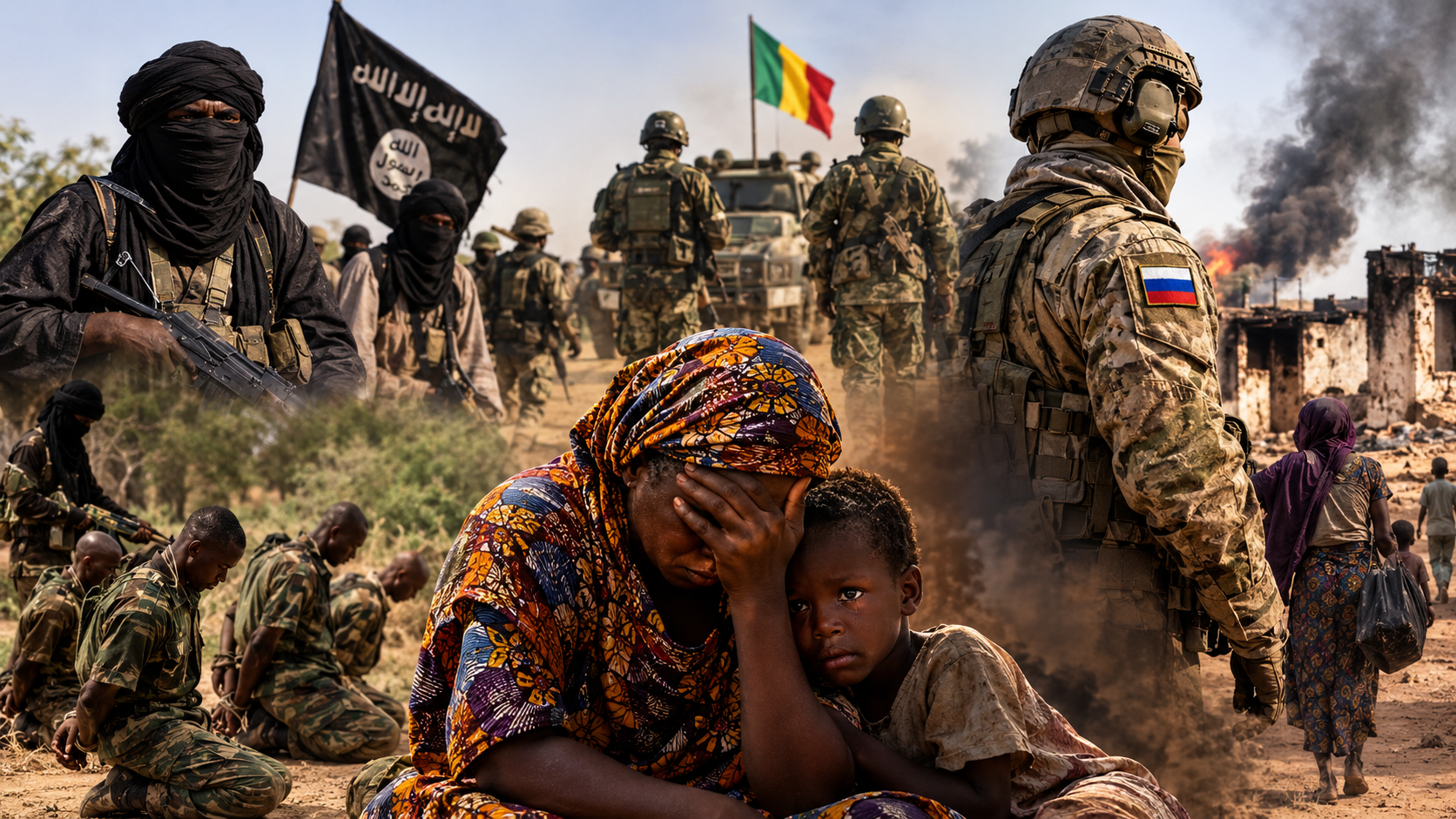
Mali stands at a critical juncture in its fight against jihadist violence. While Malian soldiers continue to fall victim to coordinated attacks by the Group for the Support of Islam and Muslims (JNIM), disturbing reports indicate that civilians are now bearing an additional burden allegedly at the hands of government forces operating with Africa Corps backing. This dual crisis exposes deep flaws in the nation’s security framework and raises urgent questions about accountability, civilian welfare, and the human cost of military partnerships.
Once seen as a potential safeguard against the growing threat of armed groups, Malian security forces now face mounting criticism for their conduct in the field. Communities already trapped between relentless jihadist assaults and sweeping military operations are paying the highest price: civilian lives lost, homes destroyed, and trust in state protection eroding day by day. The shift is grimly apparent victory over terror is being measured less by security gains and more by the mounting toll on innocent lives.
When protection becomes a liability: civilians caught in the crossfire
No civilian should suffer for the crimes of armed groups. Yet recent investigations reveal a pattern of civilian casualties linked to military actions coordinated with foreign units. These incidents are not isolated accidents they reflect systemic failures in targeting protocols, command oversight, and compliance with international humanitarian law. As soldiers perish in ambushes and raids, the collateral damage among non-combatants demands urgent scrutiny and corrective action.
JNIM’s brazen attacks on military outposts have exposed vulnerabilities within Mali’s defense structure. But such threats do not negate the obligation of state forces to distinguish between combatants and civilians. The presence of Africa Corps personnel, often deployed in advisory and combat roles, has intensified the stakes. Every civilian death attributed to joint operations raises the specter of unauthorized force, blurred accountability, and weakened legitimacy of the Malian state in the eyes of its people.
The cost of blurred lines: civilians as unintended targets
The line between military necessity and humanitarian catastrophe is becoming dangerously thin. In areas where JNIM operates with impunity, civilians are frequently subjected to collective punishment, arbitrary arrests, and extrajudicial violence under the guise of counter-terrorism. These abuses are not only morally indefensible they fuel recruitment for extremist groups and deepen cycles of revenge and instability.
Collective punishment: Entire villages face reprisals after suspected jihadist presence, leading to mass displacement and loss of livelihood.
Forced disappearances: Reports indicate dozens of men and boys detained without charge, often in undisclosed locations.
Destruction of civilian infrastructure: Schools and markets have been damaged or destroyed during “clearance operations,” displacing thousands.
Foreign partnerships under scrutiny: can security aid be human rights compliant?
The alliance between Bamako and Moscow, embodied by Africa Corps, has reshaped Mali’s approach to counter-terrorism. While foreign support can strengthen military capabilities, it also introduces new layers of complexity especially when human rights violations are alleged. Joint operations must be governed by transparent rules of engagement and subject to independent oversight. Accountability cannot be outsourced or deferred.
The international community, including partners supporting Africa Corps, must demand strict adherence to human rights standards. Military aid should never serve as a shield against scrutiny. Instead, it must be conditional on rigorous monitoring, public reporting, and the ability of victims to seek justice. Without these safeguards, foreign assistance risks becoming complicit in harm rather than a force for protection.
A turning point for Mali: what comes next?
Mali cannot afford to treat civilian protection as an afterthought. The country’s future stability hinges on restoring public trust through measurable reforms: transparent investigations, fair trials for alleged perpetrators, and reparations for victims. But rhetoric alone will not suffice. Concrete steps such as halting abusive operations, demilitarizing civilian areas, and empowering local mediation mechanisms are essential.
The recent shift in momentum from military losses to civilian casualties must catalyze change. The JNIM’s brutality demands a strong response, but that response must be rooted in justice, not impunity. Mali’s leaders, supported by their international partners, face a defining choice: continue down a path of escalating harm, or pivot toward a security model that truly protects those it claims to serve.
Until then, the true measure of Mali’s security strategy will remain incomplete and the cost, unbearably high for the people caught in the middle.
By Ramatou Soumana — Journalist