From words to reality: why Ouagadougou’s diplomatic shift faces scrutiny
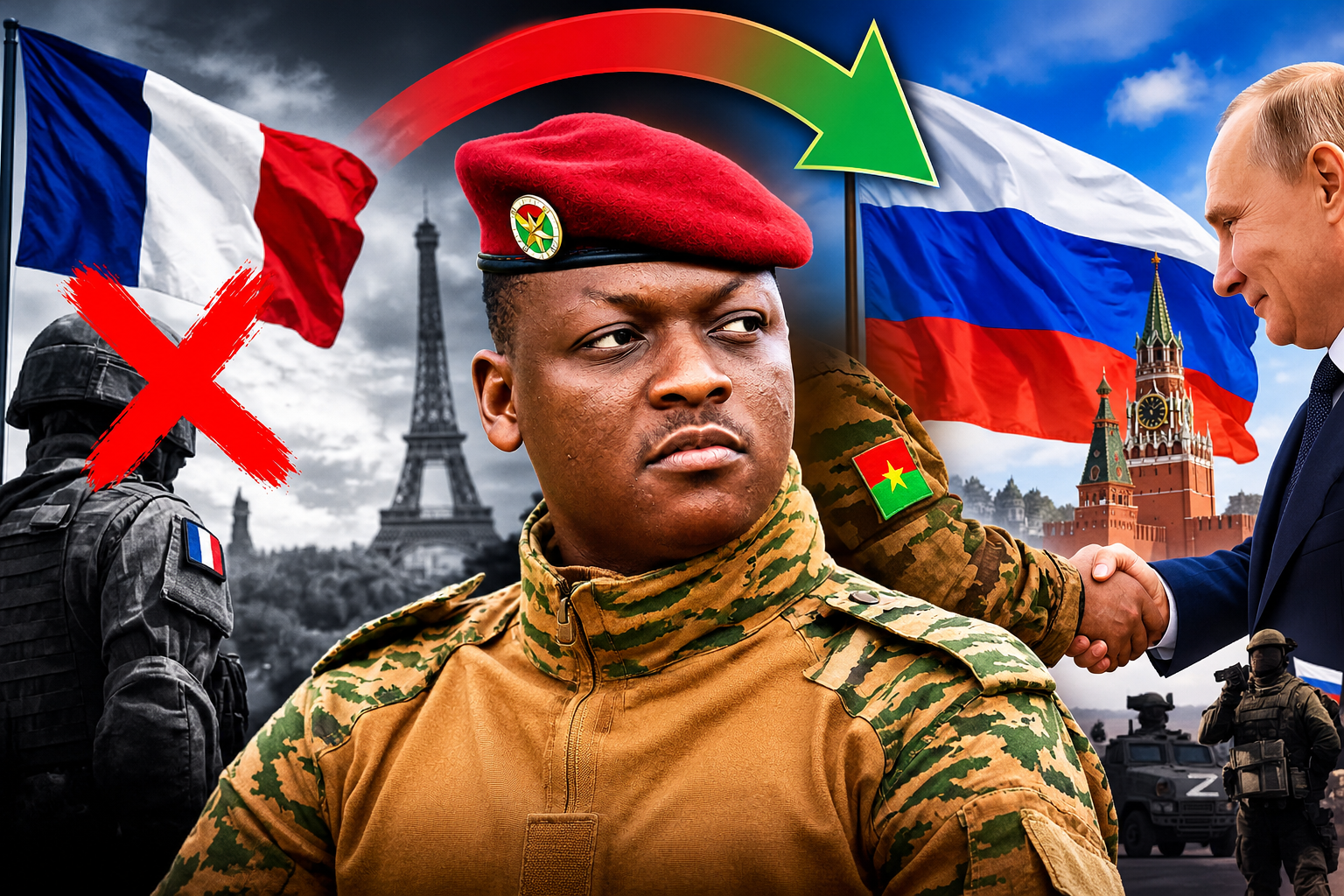
In a late September television interview on BF1, Burkina Faso’s transitional leader Captain Ibrahim Traoré delivered a blunt message: normalising relations with France is off the table. His remarks, laced with sharp criticism of Paris, capped a two-year trajectory of deliberate estrangement from France and a deliberate pivot toward Moscow. Since seizing power in September 2022, Traoré’s administration has systematically dismantled post-colonial ties with France while forging a new security and diplomatic axis with Russia, compounded by deeper bonds with Mali and Niger within the Alliance of Sahel States (AES).
The public debate is now shifting from political rhetoric to concrete outcomes: has Burkina Faso merely swapped one dependency for another, or has it carved out genuine strategic autonomy? Observers are asking whether this realignment serves the country’s long-term interests or simply substitutes a new set of external pressures for old ones.
Public sentiment and the politics of breaking with Paris
Anti-French sentiment has become a cornerstone of Traoré’s political identity. For many Burkinabè citizens historically sceptical of France’s post-colonial footprint the leader’s rhetoric resonates deeply. Frustration over uneven development, controversial security cooperation, and perceived interference has fuelled widespread support for severing close ties with Paris.
Yet the mere rejection of French influence does not, by itself, guarantee national sovereignty. True independence is measured by a state’s ability to set its own priorities, negotiate balanced partnerships, and resist coercion regardless of origin. By framing the break with France as definitive proof of emancipation, Ouagadougou risks oversimplifying a complex strategic shift into a binary: rejecting the West while embracing Moscow as a saviour.
Such polarisation obscures a critical reality: no foreign partner French, Russian, Chinese, or other acts out of pure altruism. Each pursues its own strategic, economic, and military interests, and Russia is no exception.
Moscow’s embrace: promises of partnership, questions of leverage
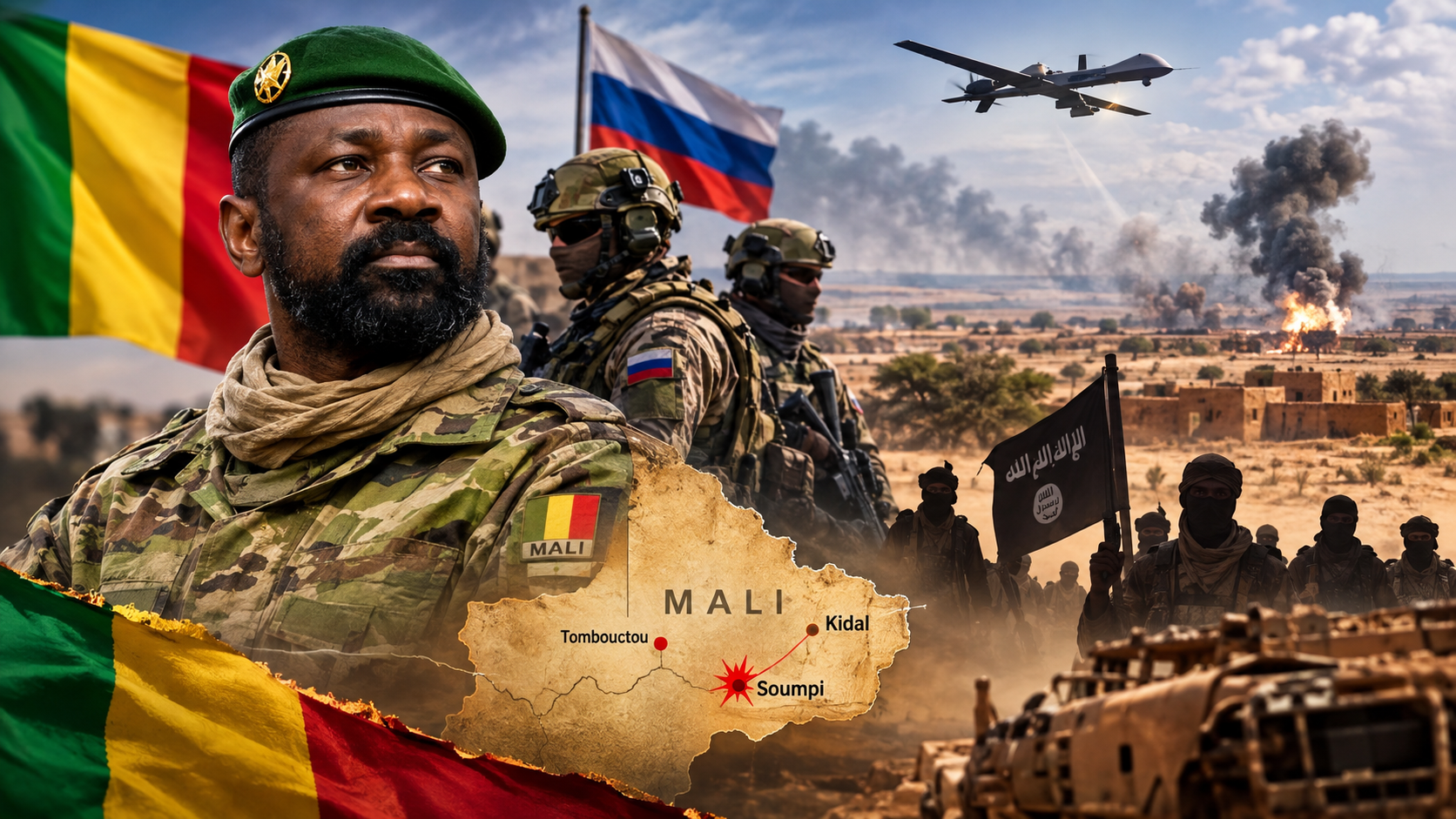
The burgeoning partnership between Ouagadougou and Moscow has centred on military cooperation, a domain where Burkina Faso is grappling with persistent jihadist violence. From Traoré’s perspective, diversifying security partners is a sovereign right designed to reduce reliance on a former colonial power deemed insufficiently responsive.
The calculus is understandable. Emergency military support, training, and equipment could fill urgent capability gaps. But beyond symbolic alignment, it’s essential to examine the fine print: what financial, logistical, or political concessions accompany this cooperation? Are there time-bound milestones, performance benchmarks, or exit clauses? Most importantly, do these arrangements build local capacity or deepen external control?
Sovereignty isn’t proven by press releases or photo opportunities it is validated on the ground. Tangible indicators include the protection of civilians, the reopening of vital supply routes, the return of displaced communities, and the resumption of public services in conflict zones. Without verifiable progress on these fronts, the partnership risks remaining a tactical fix rather than a strategic breakthrough.
Sovereignty in practice: not all support is equal
Military aid can provide immediate relief, but sustainable security requires indigenous institutional strength. If Burkina Faso becomes overly reliant on Russian logistics, intelligence sharing, or maintenance support without developing parallel domestic competencies it could trade one form of dependency for another, albeit under a different banner.
The challenge is not to reject external help outright but to ensure it serves as a bridge toward self-reliance, not a crutch that entrenches weakness. Only then can the partnership be said to serve Burkinabè interests first and foremost.
The AES experiment: regional solidarity tested by results
The three-nation Alliance of Sahel States Burkina Faso, Mali, and Niger has positioned itself as a vanguard of regional sovereignty. By pooling security efforts and rejecting external influence, the bloc has redefined inter-state cooperation in West Africa. On paper, the alliance offers a plausible path to mutual reinforcement: shared intelligence, coordinated counter-terror operations, and joint logistics.
Yet statements of intent must be backed by action. Persistent insurgent attacks, widespread displacement, and collapsing public services reveal a widening gap between political ambition and operational reality. Citizens are not convinced by declarations alone; they judge alliances by outcomes: safer roads, functioning schools, restored markets, and protected hospitals.
Economic integration is another untested pledge. Cross-border trade corridors, agricultural value chains, and infrastructure projects remain aspirational unless concrete steps are taken to reduce tariffs, harmonise standards, and finance shared ventures. So long as bureaucracy, insecurity, and financial constraints stifle regional commerce, the alliance’s economic premise remains theoretical.
True sovereignty isn’t choosing sides it’s refusing to live with only one
An authentically sovereign state retains the freedom to engage multiple partners without falling under any single patron’s influence. The AES’s stated goal of autonomy should encompass the capacity to say “no” not only to former colonial powers, but also to any ally whose demands conflict with national priorities.
This principle applies to every domain: military contracts, resource concessions, trade agreements, and debt negotiations. The test of sovereignty lies in the ability to walk away from unfair terms, reject unsustainable loans, and insist on transparent transparency in every accord.
Beyond diplomacy: what Burkinabè citizens really need
For ordinary Burkinabè facing displacement, closed markets, and collapsing services the sovereignty debate has a concrete meaning: results. Political journalism often fixates on diplomatic declarations, military alliances, and geopolitical posturing. But citizens measure success differently: the safety of their villages, the quality of their children’s schools, the availability of healthcare, and the stability of their livelihoods.
Traoré’s government has framed disengagement from France as a historic act of liberation. The rapprochement with Russia is framed as strategic renewal. Neither framing, however, absolves officials of the duty to deliver measurable improvements. If security deteriorates further, inflation rises, or public services collapse under the weight of sanctions or war, no amount of anti-French rhetoric will justify the human cost.
The ultimate benchmark is not rhetorical defiance, but the tangible freedom to protect, feed, and empower every Burkinabè regardless of external partnerships.
Conclusion: the measure of autonomy is not who you oppose, but what you build
Ibrahim Traoré has made a deliberate choice to distance Burkina Faso from France. That choice reflects popular sentiment and signals a new geopolitical direction. But sovereignty is not a slogan. It is a daily discipline of negotiation, accountability, and institutional resilience.
Moscow, like Paris or any other capital, pursues its own interests. Burkina Faso must do the same with clarity, resolve, and an uncompromising commitment to its own citizens. The measure of true independence lies not in which foreign power Burkina Faso rejects, but in its ability to govern without ceding control, and to deliver prosperity without begging permission.
By Ramatou Soumana — Journalist