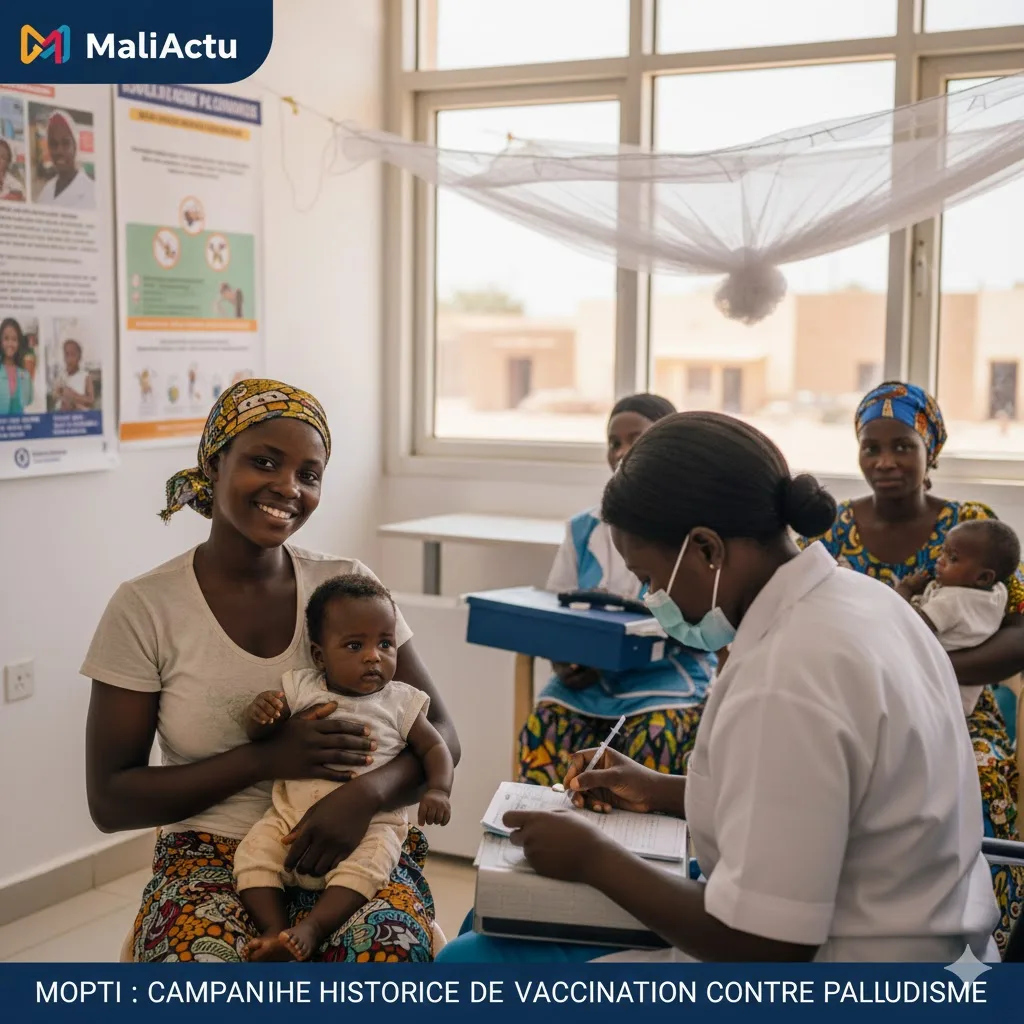

Mali is making significant strides in its public health battle against malaria. By launching the WHO-approved R21/Matrix-M vaccine, the regions of Kayes and Mopti are pioneering a transformative vaccination model. Through a combination of seasonal timing and meticulous monitoring, this medical advancement is providing vital protection to thousands of Malian children.
Demonstrating its commitment to healthcare excellence, Mali has officially added the R21/Matrix-M antimalarial vaccine to its Expanded Programme on Immunization (EPI). Supported by international partners including the WHO, Gavi, and UNICEF, this initiative initially focuses on 19 districts across five key regions, with Kayes and Mopti at the forefront of the rollout.
The hybrid strategy: a high-precision health tool
Moving away from traditional immunization schedules, Mali has implemented a hybrid approach. This specific strategy utilizes two distinct administration methods to ensure the highest possible level of protection:
- Age-based scheduling: Establishing early immunity by vaccinating children according to their age.
- Seasonal administration: Timing the doses to coincide with the start of the rainy season, ensuring children have maximum antibody levels when mosquito activity is at its peak.
Kayes and Mopti: vital hubs for the vaccine rollout
The prioritization of Kayes and Mopti is a strategic decision based on local health data. These areas are part of the 19 critical districts chosen to evaluate the strength and adaptability of the national health infrastructure.
In Mopti, efficient collaboration between local medical teams and global partners has ensured a steady supply chain despite various logistical obstacles. Meanwhile, in Kayes, active community participation is proving essential in making sure children receive their follow-up booster shots, which are necessary for the long-term success of the R21 vaccine.
A comprehensive defense, not a standalone fix
Medical experts emphasize that the R21/Matrix-M vaccine serves as an additional layer of safety rather than a replacement for existing prevention tools.
- Insecticide-treated bed nets: These remain a fundamental requirement for preventing bites during the night.
- SMC (Seasonal Malaria Chemoprevention): The vaccine is designed to work in tandem with the preventive drug treatments already in use.
Anticipated reduction in childhood mortality
The core goal of introducing this vaccine is to achieve a massive decrease in malaria-related deaths among children under five, the population most at risk. The results gathered from this phase in Kayes and Mopti will pave the way for expanding the vaccination program to every corner of Mali.