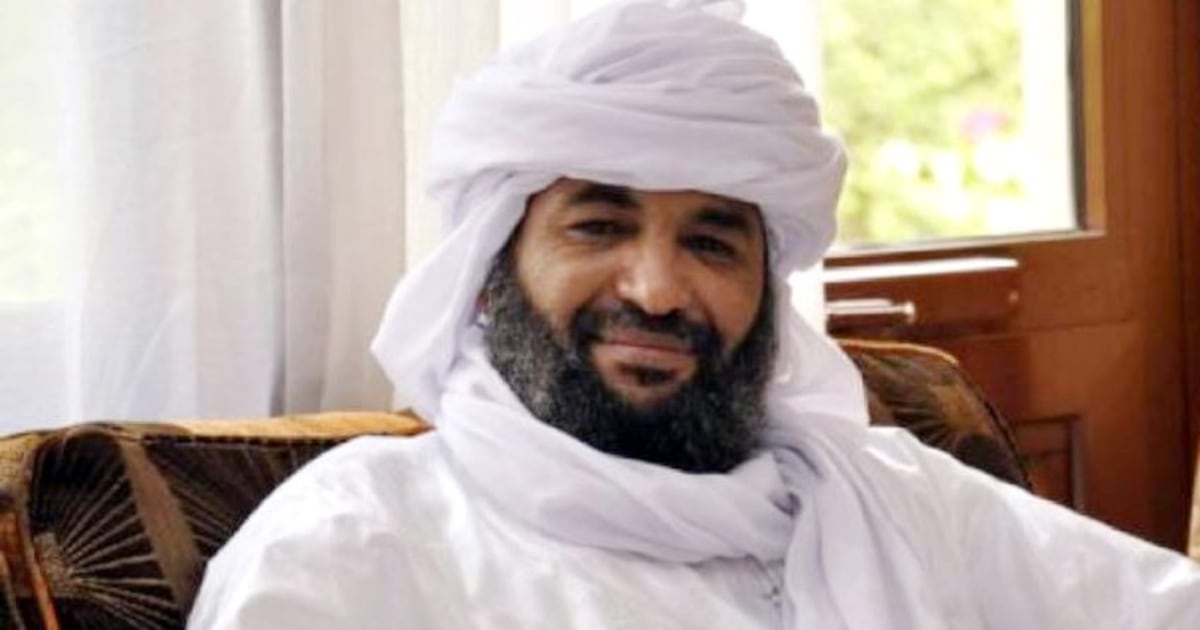
The Malian junta has escalated its crackdown on armed groups by offering substantial rewards for the capture or elimination of key jihadist commanders. Among those targeted is Iyad Ag Ghaly, a former Tuareg rebel and diplomat who now leads the Jama’at Nusrat al-Islam wal Muslimin (JNIM), formed in 2017.
Ag Ghaly remains one of the most wanted figures in the Sahel, facing United Nations sanctions, a United States terror designation, and an International Criminal Court arrest warrant for alleged war crimes and crimes against humanity.
The move comes after a series of unprecedented coordinated attacks on April 25 and 26, carried out by JNIM fighters in alliance with the predominantly Tuareg Front de Libération de l’Azawad (FLA). These assaults struck strategic positions across multiple regions, including the fatal bombing that claimed the life of Defense Minister Sadio Camara, a central figure in Bamako’s ruling junta.
In a televised statement on Thursday, the government announced bounties for seven individuals, including two other JNIM leaders and two FLA commanders. The rewards range up to €2.2 million for Amadou Kouffa, a senior JNIM figure, as well as for Alghabass Ag Intalla and Bilal Ag Cherif of the FLA.
The announcement emphasized the junta’s commitment to combating terrorism and safeguarding national security. According to the statement, financial incentives will be granted to anyone providing verified, actionable intelligence leading to the arrest or neutralization of the listed individuals.
The communiqué underscored that these figures are suspected of orchestrating attacks that have severely threatened civilian and state security across Mali.
Since 2012, the country has grappled with a deepening security crisis, driven by violence from JNIM, the Islamic State, and local criminal gangs, leaving communities across the Sahel increasingly vulnerable.