Bamako — October 1st marked the official start of Mali’s 2026-2027 school year, with the military transition government declaring it the “Year of Education and Culture.” But the grand ambitions announced in Bamako’s polished speeches have collided with a harsh reality: over 2,400 schools remain closed across the country, depriving more than 730,000 children of education—a stark failure of state responsibility under the junta’s watch.
Schools Fall as Terror Expands Its Reach
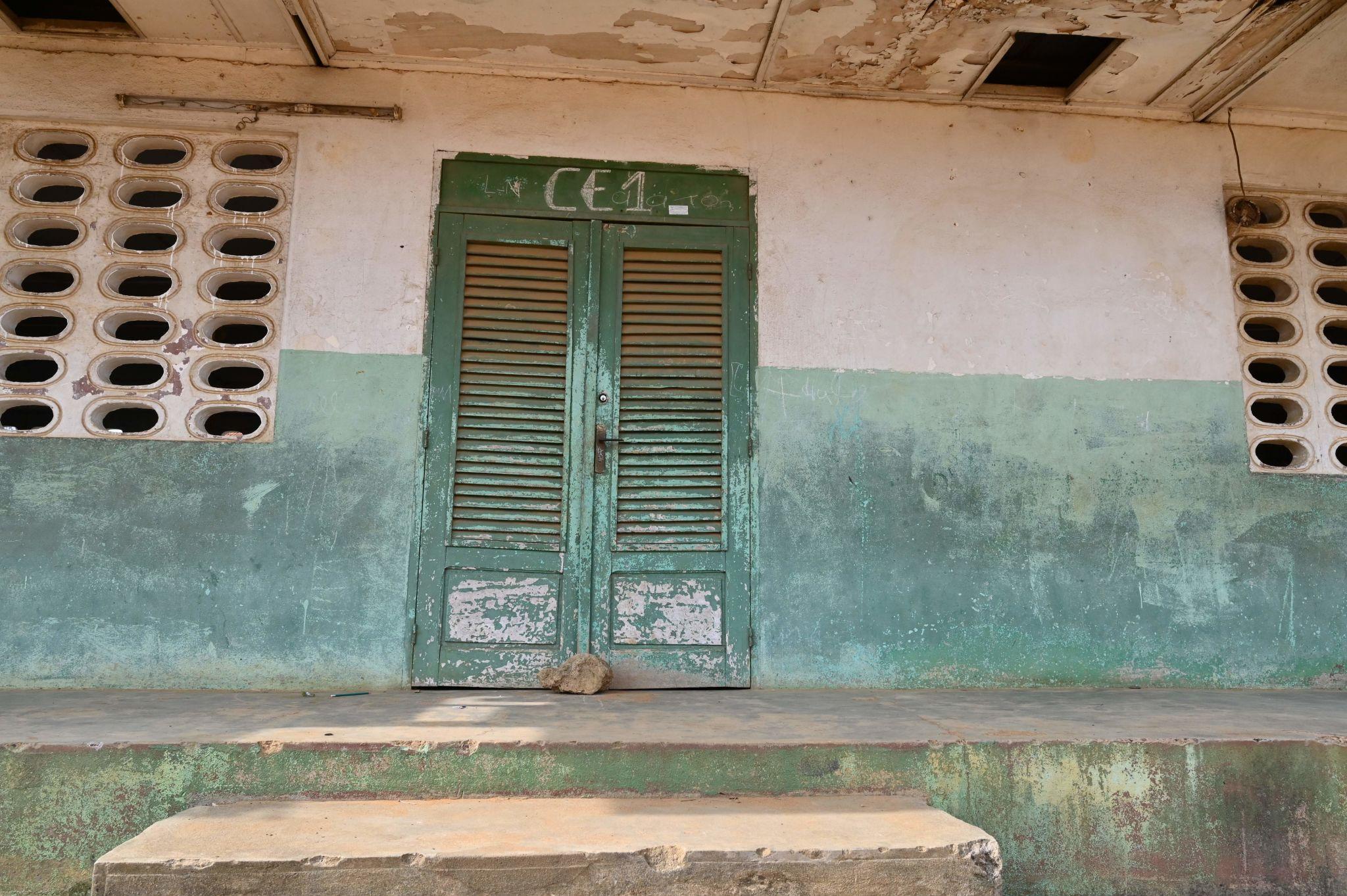
One in five schools nationwide has been forced to close, with no signs of reopening. This is not an accident—it is the deliberate outcome of a creeping insurgency that has made schools a primary target. Islamist militias, rejecting Western education, routinely loot, burn, or repurpose schools as makeshift shelters for internally displaced families.
The closure map reveals a fractured state presence. In Kidal, nearly 84% of schools are closed, while in Menaka—under the sway of the Islamic State in the Greater Sahara (ISGS)—52% of schools are non-functional. The crisis deepens in Gao and the central regions like Mopti and Bandiagara, now under direct threat from the Group for the Support of Islam and Muslims (JNIM, aligned with Al-Qaeda).
Junta’s Security Strategy Backfires
The military government, which staked its legitimacy on restoring security, now faces damning evidence of its failure. Since seizing power in 2020 and 2021, the junta severed ties with traditional partners—evicting French forces, expelling the UN peacekeeping mission (MINUSMA), and abandoning the Algiers Accord. In response, Bamako turned to Russian military support and the Africa Corps (formerly Wagner) to fill the void. Yet the promised rapid military gains have evaporated.
The much-publicized recapture of Kidal in late 2023 was followed by costly stalemates. The decisive defeat at Tinzaouatene in summer 2024—where Malian forces and Russian auxiliaries faced combined rebel and JNIM forces—laid bare structural military weaknesses. Far from deterring insurgents, the heavy-handed security approach triggered brutal retaliation. Attacks escalated: from the siege on Faladié’s gendarmerie school to the strike on Bamako’s military airport in September 2024, terror now threatens the capital itself.
A Broken State, a Broken Future
Mapping insurgent control reveals a Mali whose sovereignty is splintered. In the far north—Kidal, Menaka, Taoudenit—the state survives only in fortified urban islands. ISGS dominates vast desert stretches in Menaka, imposing taxes and governance, while JNIM and allied factions contest borders with Mauritania and Algeria. Central Mali—Mopti, Ségou, San—has slipped from government hands entirely. Here, rural communities live under siege: roads blockaded, towns starved of supplies, and teachers executed for defying insurgent bans on public education.
Even the south and west, once insulated, now face infiltration. JNIM sleeper cells disrupt fuel and trade routes, strangling Bamako’s lifelines. What was once fringe violence is now encroaching on the political and economic core.
How Closed Schools Feed Radicalization
Every shuttered school is a victory for obscurantist forces—and a stolen future for Mali’s children. With no classrooms to attend, no teachers to guide them, a massive cohort of youth is left vulnerable to recruitment by armed groups promising purpose and income. The junta’s “Year of Education” slogan rings hollow in villages where children instead witness the rise of ignorance.
As war drags on, the cost isn’t just measured in territory lost—it’s measured in generations abandoned. Over 730,000 children denied schooling today may never recover their right to learn, condemning Mali to cycles of poverty, instability, and deeper radicalization.
Where Education Stands in Mali’s Regions
- Kidal – 84% of schools closed
- Menaka – 52% of schools non-functional
- Gao, Mopti, Bandiagara – Schools under threat from JNIM
- Ségou, Koulikoro, Kayes – Rising insurgent activity near economic hubs