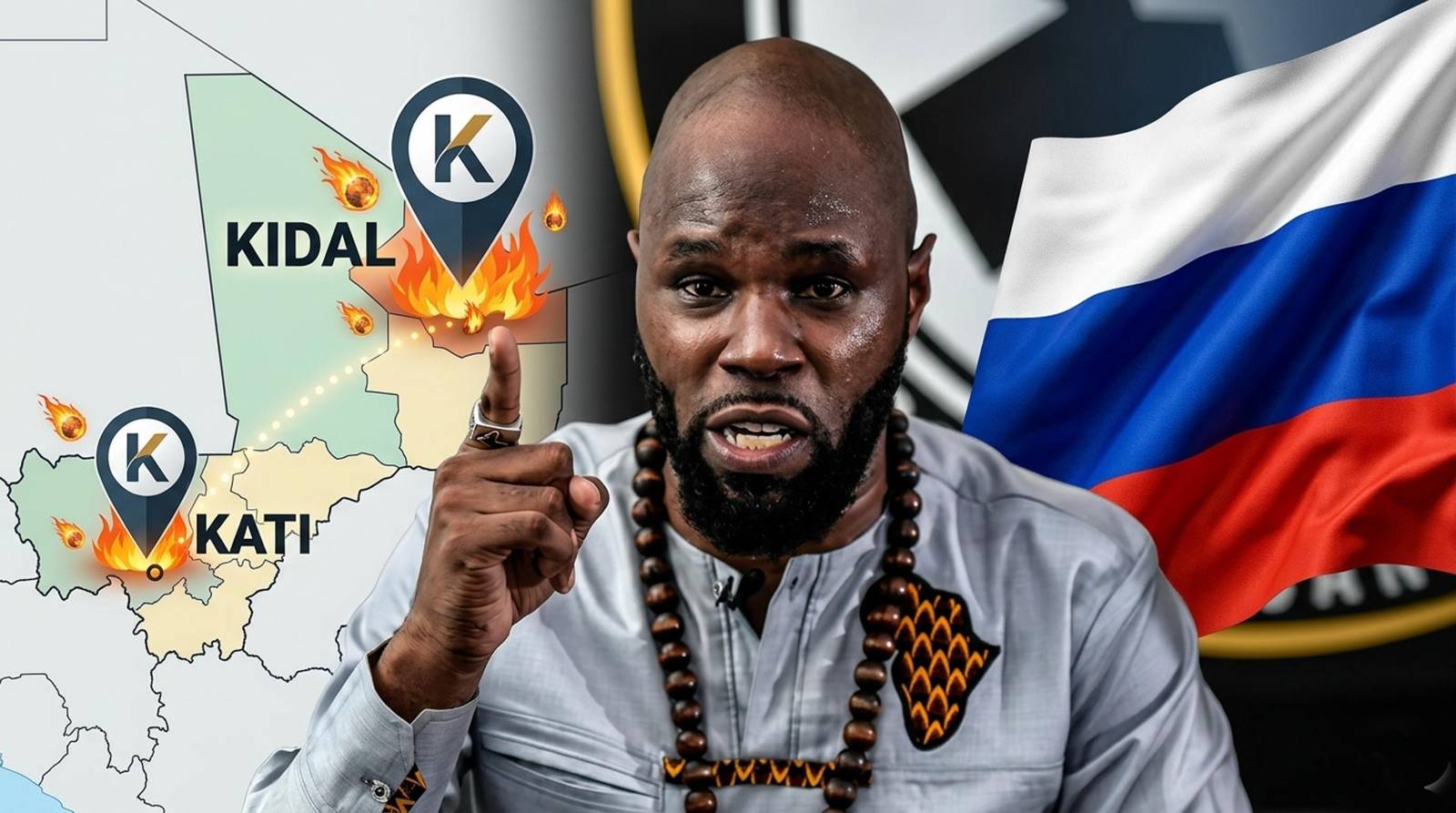
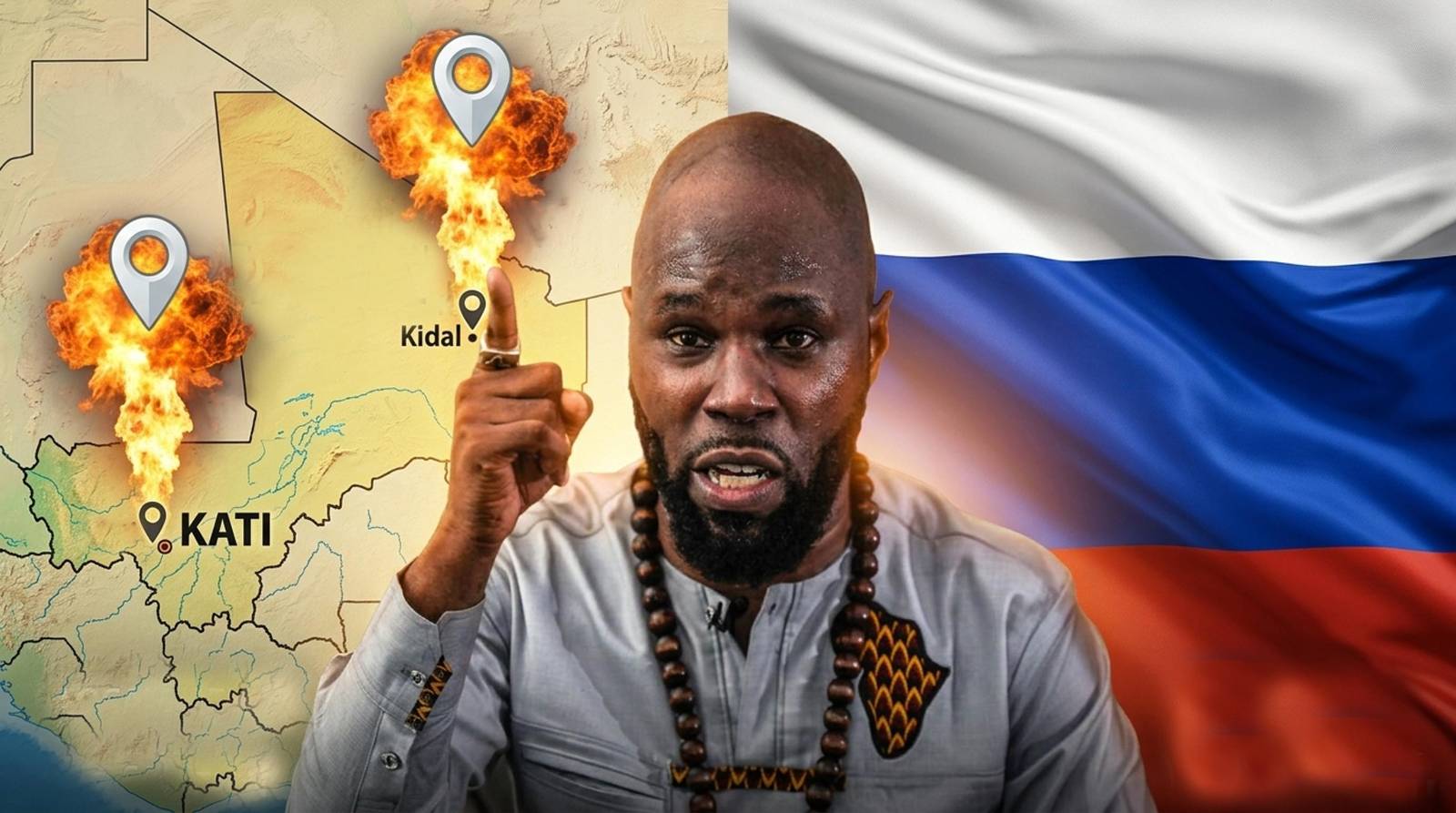
Kati trembles under artillery fire, and Kidal is slipping away. On April 25, 2026, the narrative of “liberation from the East” collapsed in spectacular fashion. While the Africa Corps troops exposed their operational weaknesses, even Kemi Seba’s credibility took a hit. His fiery social media presence contrasted sharply with leaked private audio files, where he openly called the Russians “opportunists.”
Bamako woke up to a harsh reality: the much-touted Russian partnership, marketed as Mali’s salvation from armed groups, is failing spectacularly. The morning’s explosions in Kati, the heart of the military junta, shattered any remaining illusions of sovereignty. The verdict is clear—Moscow’s involvement, sold as a quick fix, has left the Malian people and soldiers paying the price.
the myth of a “turnkey” security solution
For months, officials and influencers like Seba sold the idea of Russian “instructors” bringing instant stability to Mali. The outcome? More coordinated attacks, burning armored vehicles, and relentless pressure on government forces. Far from the promised security, the all-military strategy with Russia has only deepened distrust without securing a single additional inch of territory.
The gap between rhetoric and reality has never been wider. While pro-Russian narratives painted Moscow as Mali’s knight in shining armor, the hard truth is that the arrangement has become a liability rather than an asset.
kemi seba’s credibility gap
Kemi Seba, the self-proclaimed panafricanist firebrand, now finds himself in an awkward position. Behind the bravado in front of cameras, leaked WhatsApp audio clips reveal a man who has drastically changed his tune. In these recordings, Seba’s tone is blunt: he labels the Russians as “the worst kind of opportunists.”
His private admissions confirm what critics have long suspected—Russia’s involvement in Mali is purely transactional. In exchange for a few mercenaries and weapons, Moscow secures access to gold mines and other strategic resources. Seba’s sudden honesty about Russia’s colonial behavior suggests he, too, now realizes this partnership is unsustainable. His credibility, once a cornerstone of anti-Western rhetoric, is crumbling under the weight of his own contradictions.
the cost of a failed security gamble
The real victims of this fiasco are not the politicians or influencers spinning their narratives—they are the Malian people and the soldiers on the front lines. The so-called “Russian solution” has devolved into a hollow business deal where security is the first thing to disappear each month. Today’s offensive is proof that the strategy is fundamentally flawed.
By swapping one foreign patron for another, ideologues like Seba have merely replaced one flag with another without addressing the core issue: relentless attacks and a collapsing army. Mali now faces a dire reckoning—a Russian force that delivers no miracles, and leaders scrambling to rewrite history by claiming they always knew the Russians were exploiters. The wake-up call is brutal, and the bill for Bamako’s gamble could be catastrophic.