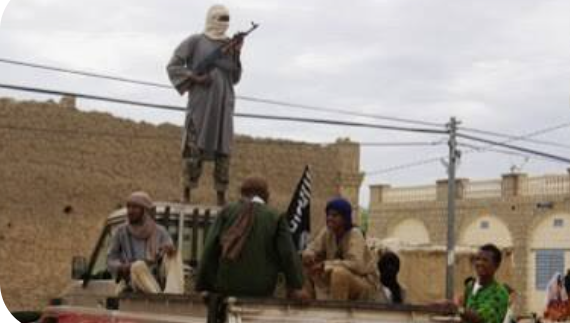
Despite Mali’s transitional authorities banking on a strengthened military alliance with Moscow to restore peace, the security landscape has taken a dramatic turn for the worse. On April 25, a precarious balance emerged: a hastily brokered evacuation deal between Russian-backed forces and rebel factions in Kidal, juxtaposed with a sudden resurgence of violence in Kati—the nerve center of the nation’s power structure. This juxtaposition has cast serious doubt on the effectiveness of Mali’s all-military strategy, heavily reliant on foreign support.
Negotiated withdrawal in Kidal: a desperate compromise
In a symbolic shift in the northern region, reports indicate that an informal agreement was reached between Tuareg rebel groups and Russian-affiliated operatives to facilitate the safe withdrawal of mercenary forces from key areas around Kidal. While officially framed as a humanitarian gesture to reduce civilian casualties, the move reveals a harsh truth: neither Western backers in the past nor Russia today have managed to stabilize this volatile territory long-term. For Bamako, which had staked its legitimacy on reclaiming Kidal as a symbol of national sovereignty, witnessing its allies negotiate an exit rather than a victory underscores the limits of external military intervention in complex insurgencies.
Kati: when insecurity strikes at the heart of power
The southern front is no longer calm. Renewed clashes in Kati, a strategic garrison town just 15 kilometers from the capital, have sent shockwaves through the nation. Kati is more than a military outpost—it is the birthplace of Mali’s current leadership and the epicenter of strategic decision-making. The fact that armed confrontations have flared up again within this fortified zone signals a dangerous expansion of insecurity. It’s no longer confined to distant borderlands; it now threatens the very gates of the presidential palace, despite assurances of an emboldened national army and reinforced support from Moscow.
Why the Russian military model is failing in Mali
The deployment of the Wagner Group, now folded into the Africa Corps, was touted as a game-changer in the fight against terrorism and separatist movements. Yet after years of close cooperation, the results are underwhelming. Violence continues to spread, encroaching ever closer to urban centers. This failure highlights a critical flaw: brute force cannot substitute for political and administrative solutions in remote regions. By pivoting away from traditional regional and international allies in favor of a single foreign patron, Mali has locked itself into a military dependency that yields little tangible progress. Russia, driven by its own geopolitical ambitions, appears ill-equipped to address the asymmetric warfare plaguing the Sahel—a conflict that demands deep intelligence networks and genuine social cohesion, not just firepower.
Key takeaways from Mali’s security dilemma
- Military-only solutions are insufficient: Years of reliance on foreign mercenaries have failed to bring lasting stability.
- Security cannot be outsourced: Outsourcing national defense to external actors risks eroding sovereignty and effectiveness.
- Inclusivity is essential: Without inclusive governance and renewed regional partnerships, the cycle of violence will persist.
The current crisis in Mali serves as a stark reminder: security is not a commodity that can be purchased through mercenary contracts. The stalled operations in Kidal and the fragility of Kati reveal an inescapable reality. The path to peace demands more than military might—it requires a return to inclusive leadership, robust local governance, and a reimagined defense strategy that places Mali’s people, not foreign interests, at the center of the solution.