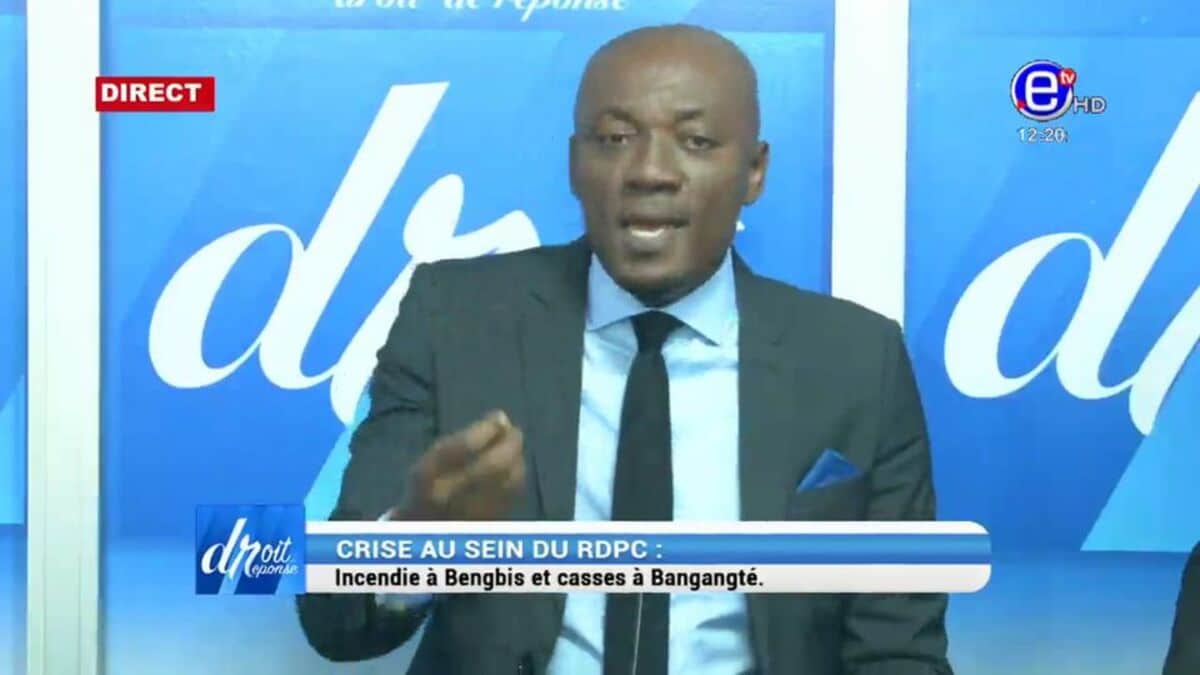
Me Sikati: Cameroon’s gold scandal reveals ministerial ‘magicians’
The political bureau member of Cameroon’s Movement for the Renaissance of Cameroon (MRC) has sharply criticized a recent government press briefing on the country’s gold sector. The remarks follow growing concerns over massive financial losses linked to illegal gold trafficking.
Government responds to gold export discrepancies
The acting Minister of Mines, Industry and Technological Development, Fuh Calistus Gentry, recently held a press conference in Yaoundé alongside Communication Minister René Emmanuel Sadi to address concerns over missing gold reserves. He firmly denied any disappearance of gold belonging directly to the Cameroonian state, attributing the current crisis to widespread fraud by private mining operators who underreport gold extraction volumes.
The government clarified that while no state-owned gold has vanished, private companies have systematically underdeclared production, leading to significant revenue losses through unpaid taxes and export duties. The acting minister emphasized that investigations point to fraudulent practices by mining firms rather than state-level embezzlement.
Massive financial losses revealed
Official records show a staggering discrepancy between Cameroon’s gold export declarations and external trade data. According to the Extractive Industries Transparency Initiative (EITI), Cameroon reported exporting just 22 kilograms of gold in 2023, while UAE customs recorded imports of 15 metric tons from Cameroon during the same period. This glaring disparity suggests massive illicit gold flows.
The National Mining Company (Sonamines) estimates that approximately 44 metric tons of gold have bypassed formal channels between 2021 and 2025. To combat this illegal trade and stabilize the gold sector, the acting minister announced immediate reforms including:
- A permanent joint task force comprising Sonamines, the General Tax Directorate (DGI), and the Customs Directorate (DGD) to conduct on-site inspections at production sites;
- The recruitment of an international expert to assess the true potential of gold deposits and implement independent minimum taxation standards;
- Stricter monitoring of mining activities to prevent underreporting of production volumes.
Me Sikati’s fiery rebuttal
Me Désiré Sikati, a prominent figure in the Movement for the Renaissance of Cameroon (MRC), has dismissed the government’s statements as pure illusion.
“SOME CAMEROONIAN MINISTERS ARE TRUE MAGICIANS”
While Minister Fuh Calistus Gentry claims no state gold has disappeared, the very existence of this scandal proves otherwise. The acting minister’s press conference attempted to downplay the crisis, but the facts speak for themselves.
The Cameroonian Mining Code is crystal clear: all mineral resources, including gold, in the national subsoil belong to the Cameroonian state. If the minister insists that only state-owned gold remains intact, he must explain where the rest of the missing gold has gone.
Is it possible that the minister believes—despite clear legal provisions—that this gold belongs to private individuals? The reality is that these officials are not serving Cameroon’s interests but their own. The Mining Code leaves no room for ambiguity: all gold extracted in Cameroon is state property. Any deviation from this principle represents a betrayal of national sovereignty.
Sikati’s remarks underscore the deep skepticism surrounding government efforts to address the gold trafficking crisis. Many Cameroonians question whether the announced reforms will be sufficient to curb the rampant illegal mining and export activities that have drained state coffers for years.
As the debate intensifies, citizens demand greater transparency and accountability from those entrusted with managing the country’s precious mineral resources.
Join the discussion (3 comments)
Comments