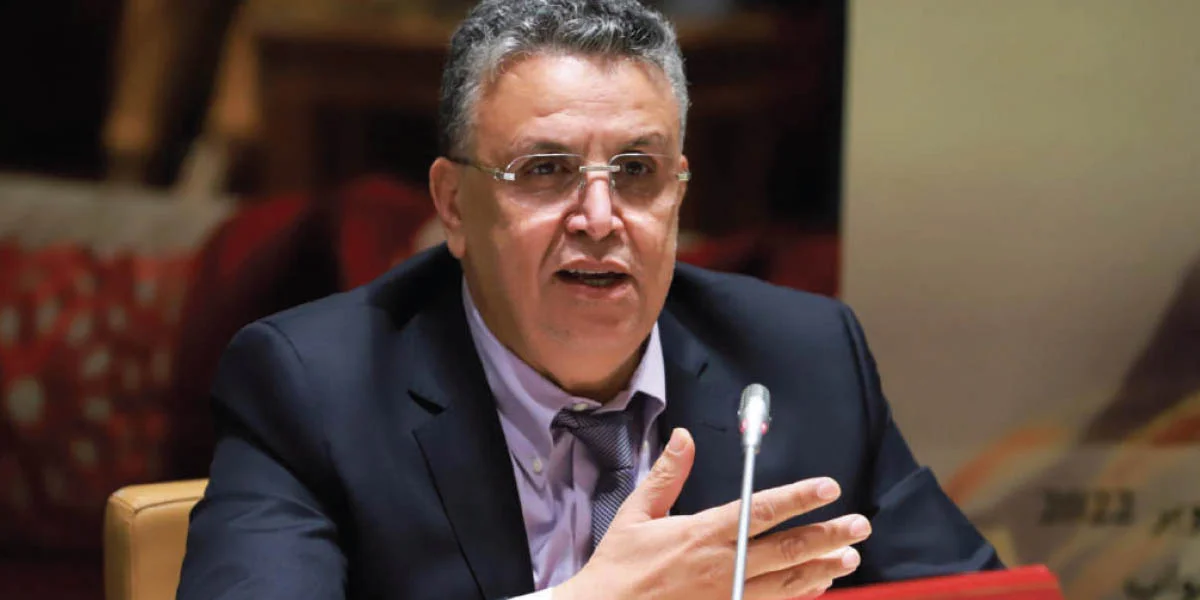
The Moroccan Minister of Justice, Abdellatif Ouahbi, has once again brought up the status of Ceuta and Melilla, asserting that Morocco seeks to engage in negotiations with Spain regarding these cities, which Rabat considers part of its territory. Speaking in an interview, Ouahbi confirmed that the historical claims remain active, with the matter still “on the table” as part of a long-term strategy grounded in dialogue and patience. He noted that these discussions frequently arise during high-level meetings between officials from both nations.
Addressing the recent surge in migrant crossings into Ceuta on July 30 and 31, Ouahbi emphasized Spain’s obligation to take responsibility for the repatriation of unaccompanied Moroccan minors. He also criticized Spain’s expectation for Morocco to curb irregular migration, pointing out that those who successfully reach Spanish soil can pursue legal avenues.
The minister underscored the necessity for both countries to align their legal frameworks and operational mechanisms to combat irregular migration. He stressed that Morocco cannot be expected to act as Europe’s sole enforcer in this regard.
The following day, Spain’s Ministry of Foreign Affairs firmly rejected Morocco’s sovereignty claims over Ceuta and Melilla. Officials reiterated that the status of these territories “has never been discussed and will never be.” The statement reaffirmed that Ceuta and Melilla are “an integral part of Spain’s internationally recognized territorial sovereignty.”
Albares remains diplomatic, Imbroda takes a hardline stance
During a recent visit to Ceuta, Spanish Foreign Minister José Manuel Albares avoided addressing the sovereignty issue in his public remarks. Instead, he focused on the ongoing migration challenges, praising Morocco’s willingness to accept the return of unaccompanied minors who entered during the recent crossings.
Meanwhile, the President of Melilla, Juan José Imbroda, of the People’s Party (PP), took a sharply critical tone toward Morocco’s position. In a media statement, he questioned, “What use are Ceuta and Melilla to you if you cannot manage what you already have and your youth are fleeing?” Imbroda described the current migration situation as an “international embarrassment” for Morocco, urging the country to handle the crisis with greater dignity.
On the same day, Morocco’s Ministry of the Interior highlighted the “shared responsibility” of both nations in managing the surge of crossings toward Ceuta. The ministry cautioned against online content inciting further attempts on August 15, stressing that combating irregular migration and human trafficking cannot rest solely on the efforts of one side.