Yaoundé has quietly but deliberately set up specialized technical task forces to dissect Libya’s offer of a direct air link between Tripoli and Cameroon’s capital. This behind-the-scenes maneuver signals a calculated shift in Yaoundé’s aviation strategy, as officials move from mere discussion to a structured evaluation of the proposal’s feasibility, risks and long-term implications for Cameroon’s air transport sector.
What history reveals about air travel between Cameroon and Libya
Historical records show that direct flights between Tripoli and Yaoundé have been sporadic at best, often disrupted by geopolitical turbulence, fluctuating oil revenues and evolving bilateral relations. Against this backdrop, the current Libyan initiative appears more than just a routine commercial overture—it is being framed as a potential turning point in sub-Saharan aviation connectivity.
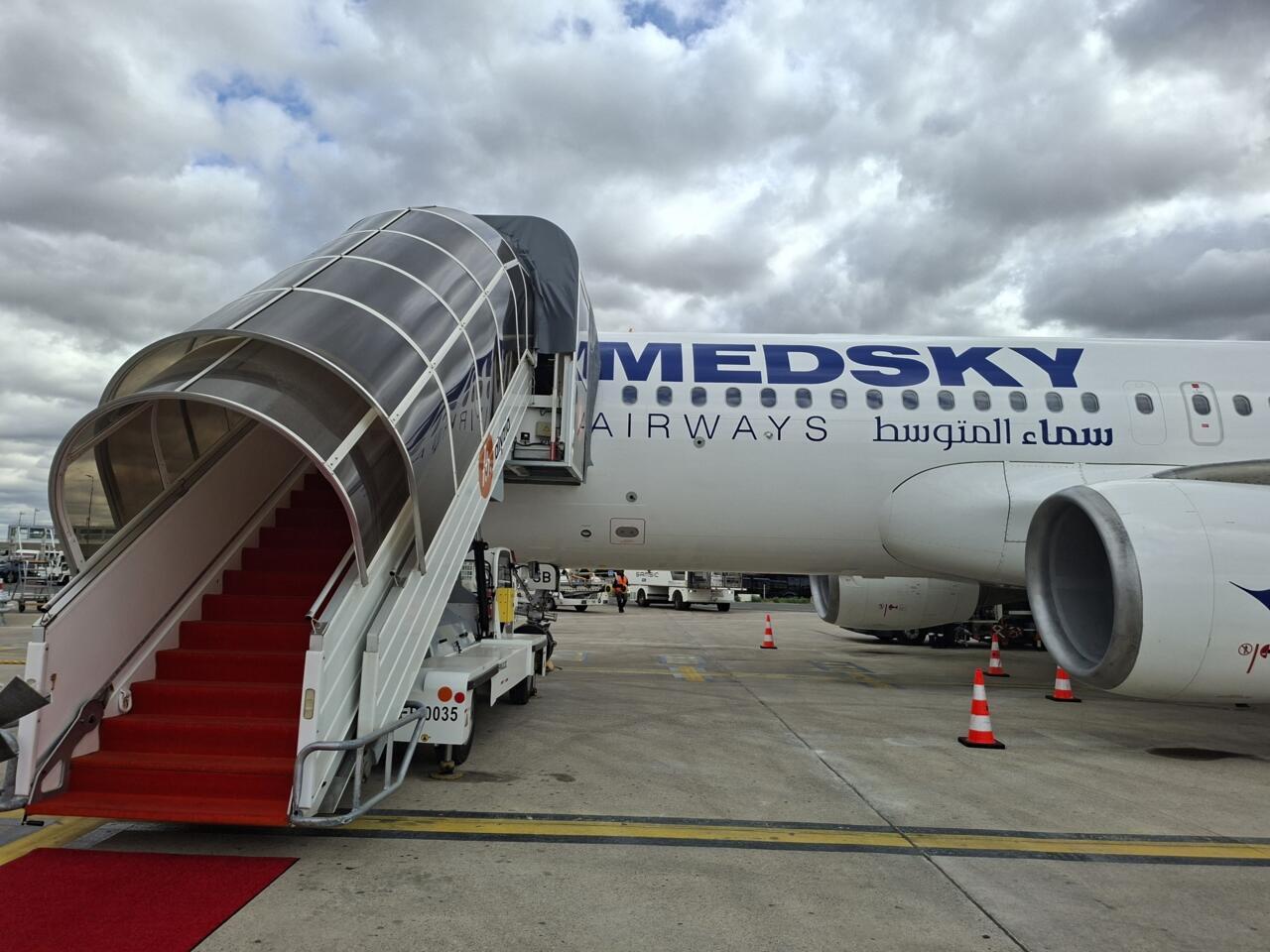
The timing coincides with Libya’s cautious reopening of its airspace after years of restrictions tied to conflict, sanctions and civil strife. The Libyan national carrier MesSky made headlines on September 17, 2026, with its inaugural direct Tripoli–Paris flight, marking a tentative but symbolic resumption of regional and international connectivity. A secondary route from Benghazi was also announced, reinforcing Libya’s intent to rebuild air links with key African and European partners.
Key players and behind-the-scenes negotiations
On September 23, 2026, Cameroon’s Minister of Transport, Jean Ernest Masséna Ngallè Bibèhè, received a high-level Libyan delegation led by Adel Shawi, Charge d’Affaires at the Libyan Embassy in Cameroon. The closed-door meeting was not a mere courtesy call—it was a strategic huddle aimed at mapping out the contours of a potential air corridor that could bridge North and Central Africa.
While no formal agreement was signed, both sides agreed to form joint technical working groups. These groups are tasked with addressing complex issues such as:
- Aviation safety and certification standards — ensuring compliance with both Libyan and Cameroonian civil aviation authorities
- Route viability and traffic demand analysis — evaluating passenger and cargo potential between Tripoli and Yaoundé
- Infrastructure readiness — assessing airport capacities, customs procedures and ground handling capabilities
- Regulatory alignment — harmonizing bilateral aviation agreements and security protocols
Minister Ngallè Bibèhè emphasized that while Cameroon is open to collaboration, any air link must align with national development objectives and contribute to regional integration.
The economic and geopolitical calculus behind the project
At its core, the proposed Tripoli–Yaoundé route is not just about moving passengers—it is about repositioning Cameroon as a pivotal hub in Central Africa. By securing a direct air link with Libya, Cameroon could enhance trade flows, facilitate diplomatic exchanges and strengthen logistical networks with North Africa.
For Libya, the initiative presents an opportunity to diversify its air transport sector, which has been heavily dependent on hydrocarbon revenue and European routes. Opening a corridor to Central Africa could open new markets for trade, labor migration and cultural exchange.
Yet, the path forward is fraught with uncertainty. Libya’s aviation sector remains fragile due to residual security risks, limited financing and ongoing political fragmentation. Cameroon, on its part, faces the challenge of balancing rapid aviation expansion with regulatory prudence and infrastructure limitations.
What happens next: technical teams, timelines and real outcomes
The next phase will be driven by the newly formed Cameroonian-Libyan working groups, which are expected to present their preliminary findings within six to eight weeks. While optimism surrounds the initiative, several critical questions remain unanswered:
- Will Libya’s aviation authorities be able to meet international safety standards in time?
- Can Cameroon’s airports handle increased flight frequency without capacity bottlenecks?
- Will passenger demand justify the operational costs of a new route between Tripoli and Yaoundé?
- How will regional aviation dynamics in West and Central Africa respond to this new corridor?
Without clear answers, the Tripoli–Yaoundé air link remains a bold proposal—one that could redefine Cameroon’s aviation future or stall under the weight of unmet prerequisites.
Bottom line
The Libya–Cameroon air link is no longer just a headline—it is a unfolding policy experiment. Behind the diplomatic courtesies and technical jargon lies a high-stakes gamble: can two nations with divergent aviation legacies and shared ambitions build a sustainable air corridor that benefits both?
As technical teams convene and reports begin to circulate, one thing is certain: the fate of this route will be decided not in the boardrooms of airlines, but in the quiet halls where aviation regulations, economic forecasts and political will intersect.