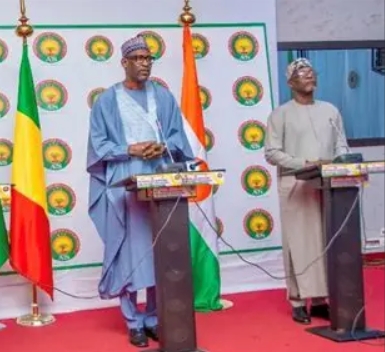
Recent statements from Niger and Mali’s foreign ministers have sent mixed signals. On one hand, they level severe accusations against their West African neighbors in the Economic Community of West African States (ECOWAS), claiming these nations actively support terrorist groups. On the other, they express a willingness to cooperate with the same countries on critical issues. This contradictory stance—oscillating between confrontation and collaboration—underscores a harsh truth: exiting a regional bloc is not as simple as a political gesture.
Contradiction as a Diplomatic Liability
Niger and Mali have accused ECOWAS member states of backing armed insurgencies, a grave allegation that carries serious diplomatic weight. Yet, just days later, they propose joint initiatives with these same nations. Such inconsistency raises immediate questions about credibility.
Diplomatic incoherence undermines trust. If a government publicly brands its regional partners as accomplices in terrorism, proposing economic partnerships with them the following week sends a confusing and contradictory message. In international relations, perception shapes outcomes—acting unpredictably can erode trust faster than it can be rebuilt.
Geography: An Unyielding Constraint on Independence
The declared goal of withdrawing from ECOWAS was to assert “total independence,” yet geography remains an unassailable force. Landlocked nations like Niger and Mali rely entirely on coastal neighbors for trade, supplies, and economic stability.
The ports of Cotonou, Lomé, and Abidjan are not just optional trade routes—they are vital arteries for food (rice, sugar), medicine, and construction materials. Without these lifelines, transportation costs skyrocket, pushing prices beyond reach for struggling populations. By seeking continued cooperation, these nations implicitly admit that their self-declared alliance—the Alliance of Sahel States (AES)—cannot survive in isolation.
A Contradictory Exit: Keeping the Keys Without the Club
Leaving ECOWAS was a bold political statement, aimed at mobilizing domestic support by rejecting regional norms. Yet, the attempt to retain technical benefits while abandoning membership reveals a paradoxical strategy.
Membership entails obligations, but also protections. ECOWAS facilitates free movement of goods, standardized trade regulations, and shared infrastructure. To walk away from the bloc while expecting these systems to remain operational is not just unrealistic—it’s a strategic misstep. Trade cannot flourish where trust is broken. Investors and businesses thrive under stable, predictable legal frameworks. By severing political ties, Niger and Mali risk undermining the very systems their citizens depend on.
From Anger to Strategy: The Need for Pragmatic Leadership
Emotion has no place in foreign policy. Rhetorical attacks may resonate in the short term, but they cannot feed populations, protect borders, or defeat terrorism. Insurgencies do not respect political declarations—they exploit divisions.
Regional security is indivisible. Terrorist networks operate across porous borders, exploiting gaps in intelligence sharing and military coordination. Isolating from ECOWAS weakens regional defense mechanisms and inadvertently strengthens those who threaten stability. True leadership means prioritizing solutions over slogans.
Sovereignty Cannot Be Eaten—Only Delivered
Niger and Mali are discovering that true sovereignty extends beyond political declarations. It means feeding families, ensuring medical access, protecting cities, and fostering economic resilience. These goals cannot be achieved in isolation.
Good neighborliness is not a choice—it is a necessity. Pretending otherwise is a disservice to citizens who bear the cost of political hubris. Real independence is not built on defiance, but on the ability to negotiate, cooperate, and coexist. The harsh reality facing these nations is not isolation—it is the high price of rejecting partnership in a world where no state thrives alone.