A deadly drone strike in Niger’s Agadez region has escalated into a full-blown diplomatic standoff, with the country’s military leadership pointing fingers at neighboring Chad and longtime ally France—but without presenting any public evidence to support the claims.
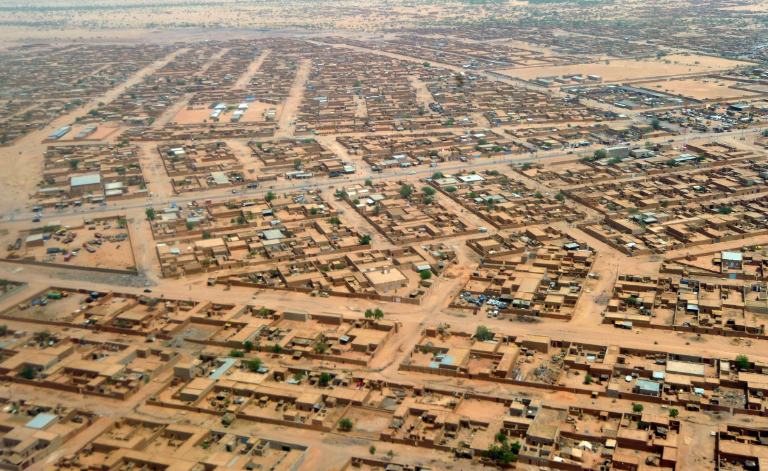
On October 24, an aerial bombing in the Emi Lulu area left two civilians dead and several others injured. The incident has since triggered a flurry of accusations from Niger’s ruling junta, which has singled out N’Djamena as the primary culprit while also implicating Paris in an official statement. Yet, despite the gravity of the allegations, no concrete proof—such as drone specifications, flight data, or verified investigative findings—has been made available to substantiate the accusations against France.
The turning point: when accusations outpace evidence
The stakes couldn’t be higher. In a region already grappling with complex security and political challenges, a strike that kills civilians demands answers. But grave accusations, especially when directed at sovereign nations, require more than just official statements—they demand verifiable facts.
The Nigerien military’s communiqué, broadcasted through national channels, underscored the junta’s position: Chad bore full responsibility for the attack, while France was also named in the allegations. However, the absence of publicly disclosed evidence leaves critical questions unanswered. What type of drone was used? Where did it originate? Who controlled it? Without answers, the accusations risk becoming political tools rather than established truths.
The missing link: where is the hard evidence?
For an accusation to hold weight, it must be backed by material proof—technical data, witness testimonies, or forensic findings. Yet, so far, nothing of the sort has been made public regarding France’s alleged involvement. The junta’s statement, while firm in its tone, stops short of providing the details needed to separate fact from political maneuvering.
This isn’t to say that France’s involvement is impossible—only that it remains unproven in the public domain. The same scrutiny should apply to Chad, which has been directly accused by Niamey. Transparency here is key: without it, the accusations risk deepening distrust rather than resolving the crisis.
The push for an independent investigation
The path forward must prioritize independent, evidence-based inquiries. Investigators would need to analyze debris, reconstruct flight paths, and interview witnesses to determine the strike’s origin and operators. Only then can the truth emerge—free from the distortions of political agendas.
The victims and their families deserve nothing less. Their quest for justice hinges on clarity: Who carried out the strike? Under what circumstances did it occur? And what measures will be taken to prevent future tragedies?
A storm in troubled diplomatic waters
The timing of these accusations is no coincidence. Since the July 2023 coup that overthrew Niger’s elected government, relations with France have deteriorated sharply. The junta’s leadership has systematically distanced itself from its former partner, a shift that has fueled skepticism whenever accusations arise.
Yet diplomatic tensions, however justified, cannot substitute for factual proof. Accusations leveled against a nation must be rooted in verifiable evidence—not in the heat of geopolitical rivalry. Otherwise, the risk is clear: a security incident morphs into a political battle, obscuring the very truth it was meant to uncover.
From accusations to accountability: the road ahead
As the dust settles, all eyes are on Niamey. Will the junta release concrete evidence to back its claims? Or will the accusations remain locked in a cycle of unverified assertions and diplomatic posturing?
For France and Chad, the challenge is equally pressing. Both nations must be given the opportunity to respond to specific, provable claims—not vague and unverified charges. The distinction is vital: accusation is not proof.
In the absence of transparency, the only certainty is this: two lives were lost, and the search for answers must not be overshadowed by political expediency. A transparent, independent investigation is the only path forward—a chance to honor the victims, restore trust, and reclaim the truth.