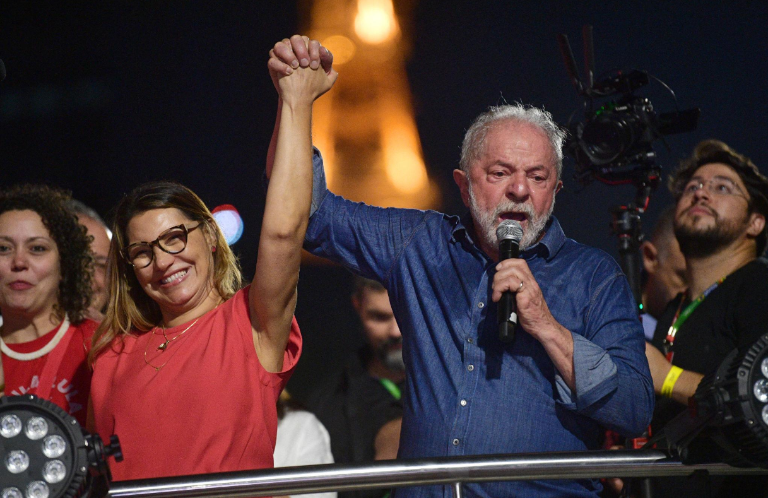
Brazil has entered a defining moment in its political history after Luiz Inácio Lula da Silva secured a historic fourth term as president. Yet, the decisive victory is now overshadowed by a fierce legal challenge from right-wing senator Flávio Bolsonaro, who alleges electoral irregularities and demands the results be annulled. With the nation deeply divided, the outcome of this electoral dispute will shape Brazil’s democratic future.
Lula’s fourth term confirmed amid rising political tensions
The Brazilian electorate spoke decisively on October 25, 2026. According to the Superior Electoral Court (TSE), Luiz Inácio Lula da Silva won the presidential race with 51.79% of the vote, totaling 64,256,232 ballots — a margin of over four million votes over his opponent. This marks an unprecedented return to power for the 80-year-old leftist leader, whose political journey includes two earlier terms in office (2003–2010) and a comeback victory in 2022.
Flávio Bolsonaro, son of former President Jair Bolsonaro, received 48.21% of the vote, but refused to concede. Instead, he announced a legal challenge aimed at overturning the election. The move plunges Brazil into a period of uncertainty, where constitutional norms and electoral integrity are being tested.
Controversial vote extension sparks legal showdown
The heart of the dispute lies in a last-minute decision by Supreme Court Justice Cristiano Zanin to extend voting hours until 7 PM Brasília time in certain polling stations facing logistical delays. While intended to accommodate voters facing transportation issues — particularly in São Paulo and Bahia — this decision became a lightning rod for controversy.
Flávio Bolsonaro’s campaign argues that the extension disrupted the fairness of the election, claiming it created unequal conditions for voters. “The election took place under irregular circumstances that undermine its legitimacy,” the senator stated, vowing to pursue legal action. His team has filed a formal request for the vote to be annulled, citing alleged breaches in electoral procedure.
It’s worth noting, however, that both campaigns had previously requested extensions in certain regions — Bolsonaro’s team citing heavy rains in southern Brazil. This dual origin of the voting-time adjustment complicates the narrative of deliberate manipulation and adds legal complexity to the challenge.
Brazil at a crossroads: democracy put to the test
This electoral dispute is not just about numbers or procedural rules — it reflects a nation torn between two visions of the future. On one side stands Lula’s legacy of social programs and inequality reduction, a path built over decades in power. On the other, Flávio Bolsonaro represents a continuation of the right-wing, traditional-values movement associated with his father’s controversial tenure.
The refusal to accept defeat exacerbates concerns about democratic resilience. While Lula has called for national unity, acknowledging that not all Brazilians voted for him, the legal battle risks deepening polarization. Already, Congress remains divided, with conservative forces holding significant influence — a reality that could constrain Lula’s ability to implement sweeping reforms.
What’s next in the legal and political arena?
The Superior Electoral Court must now weigh Flávio Bolsonaro’s arguments. Legal experts agree that mere allegations of procedural issues are not sufficient to overturn an election absent concrete evidence of fraud. The burden of proof lies with the challenger, and the court’s response will set a critical precedent for future contests.
At present, Lula’s victory stands. The election results have been certified. The legal process may continue, but it does not alter the official outcome. Yet the ripple effects are already visible: heightened distrust in institutions, a polarized public, and a government preparing to govern under a cloud of contention.
Can Brazil heal its divisions?
The question now is whether Brazil can move forward. Lula faces the monumental task of uniting a fractured nation, one where nearly half the electorate rejected his vision. With a conservative Congress and a deeply skeptical opposition, his fourth term begins not with broad consensus, but with a legal storm on the horizon.
The events of October 2026 may mark not just the end of an election, but the beginning of a new chapter — one where democracy is not just celebrated in words, but defended in deeds.