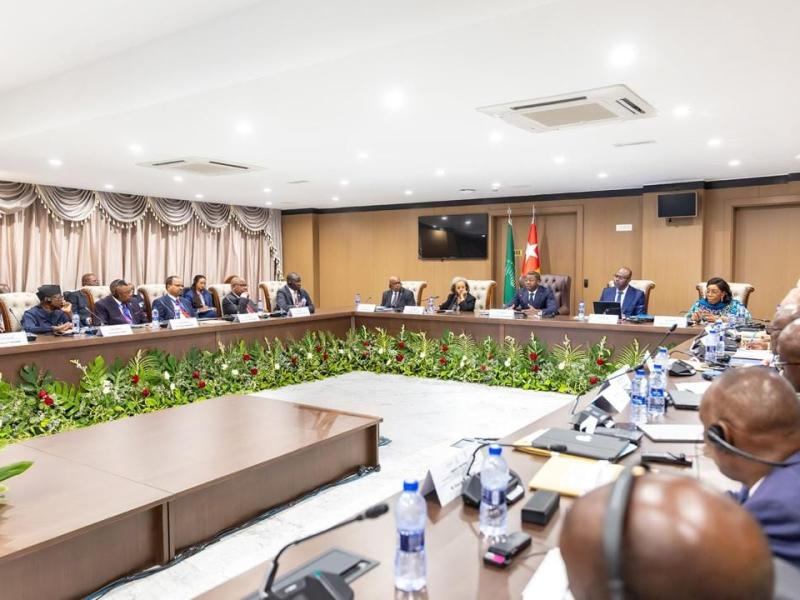
The Nigerien government, led by General Abdourahamane Tiani, is advancing a sweeping administrative reform to counter the persistent threat posed by jihadist groups across the country. On May 12, 2026, in Niamey, the Ministry of Interior, Public Security, and Territorial Administration unveiled a bold proposal to expand the nation’s administrative structure from eight regions to nineteen, and increase departments from 63 to 82. Presented to the Council of the Refoundation Consultative Body (CCR) by Abdoulkader Hama, Director General of Territorial Administration, the plan aligns with the Refoundation doctrine spearheaded by Tiani and his Interior Minister, General Mohamed Toumba.
Breaking up large regions to strengthen state control
Under the proposed restructuring, existing regions such as Maradi, Zinder, and Tahoua would each be divided into three smaller units; Tillabéri, Agadez, and Diffa would each be split into two. The capital district of Niamey would also be reorganized into two separate departments. Additionally, the number of communes would rise to 255. The stated purpose of this reorganization is to bring government services closer to citizens and strengthen state presence in underserved areas, particularly those vulnerable to insecurity.
General Toumba had already laid the groundwork for this reform in a late April interview, framing the creation of new regions as a strategic move to enhance security operations. The rationale is directly tied to the jihadist threat: a finer administrative grid is expected to support the deployment of defense and security forces in high-risk zones, including the tri-border area where the Islamic State in the Sahel operates, as well as the Lake Chad basin, a hotspot for Boko Haram and ISWAP activity.
Local opposition emerges over new region names and boundaries
Not all communities are welcoming the proposal. In the east, residents of Nguigmi are voicing strong objections to the creation of a region called Komadougou, with Diffa as its capital. Critics argue that their department has been overlooked for regional status and that the chosen name fails to reflect the realities of the Lake Chad landscape. Meanwhile, in the west, leaders in Say are warning that the new layout could push some residents farther from their regional capitals—a concern that runs counter to the government’s stated goal of improving accessibility.
While the financial implications—including costs for new governorates, administrative buildings, and staffing—were not disclosed during the CCR presentation, the proposal remains a work in progress. Further refinements are expected as consultations proceed, before the plan moves to formal approval by the transitional authorities.