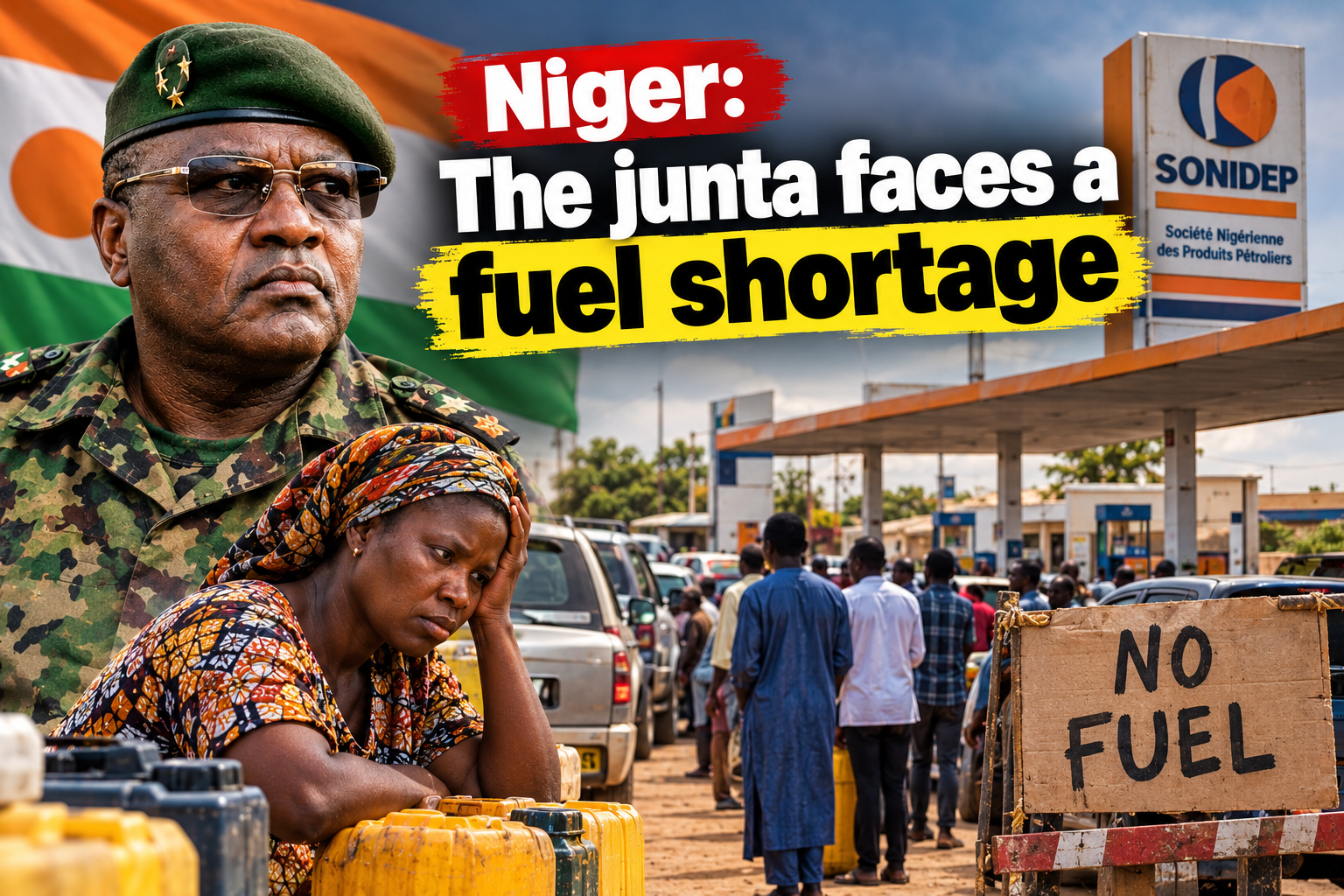
The sudden scarcity of fuel in Niger has escalated into a full-blown crisis, now disrupting daily life in Niamey and casting a harsh light on the challenges facing the military-led government. As queues lengthen at pumps and transportation grinds to a halt, a troubling question emerges: how can a nation rich in oil resources struggle so severely to meet its own energy demands?
From oil fields to empty tanks: the paradox of Niger’s fuel supply
Niger, despite being a producer of crude oil, now faces critical shortages of gasoline and diesel. The disruptions are no longer confined to the outskirts of the capital; they have infiltrated the heart of Niamey, paralyzing taxis, commercial transport, and small businesses. The paradox is glaring: a country with vast hydrocarbon potential cannot secure a stable flow of fuel to its citizens.
Fuel shortages ripple through the economy, straining livelihoods and stifling commerce. Commuters spend hours waiting for limited supplies, while artisans and market vendors face rising transport costs. For many Nigeriens, the inability to access fuel is not just an inconvenience it is a barrier to economic survival in an already strained environment.
Logistics, demand, and system failures: where supply breaks down
The root of the crisis is not the absence of oil production but the failure of a system meant to deliver fuel to consumers. Several factors contribute to this breakdown:
Insufficient refining and storage capacity, which limits the ability to process domestic crude into usable products
Logistical bottlenecks in fuel distribution, particularly from inland oil fields to urban centers
Sudden spikes in demand outpacing supply due to seasonal agricultural or commercial activities
Geopolitical constraints affecting imports of refined petroleum products
While the exact origins of the current shortage require detailed analysis, the visible consequence is clear: a country that could fuel its own progress now finds itself at the mercy of supply chain failures and external dependencies.
Sovereignty under scrutiny: the junta’s defining moment
The military government, which came to power in July 2023, has framed its leadership around promises of restored dignity, economic revival, and national independence. Yet, fuel shortages threaten to undermine these ambitions. In the eyes of the public, sovereignty is not measured by declarations of self-sufficiency but by the tangible ability to meet basic needs.
Can a nation claim true independence if its people cannot reliably access the energy that powers their daily lives? This question hangs over the junta as frustration grows. The inability to ensure fuel supply an essential commodity risks eroding public trust and exposing the limitations of slogans like
By Yacouba Boukari — Journalist