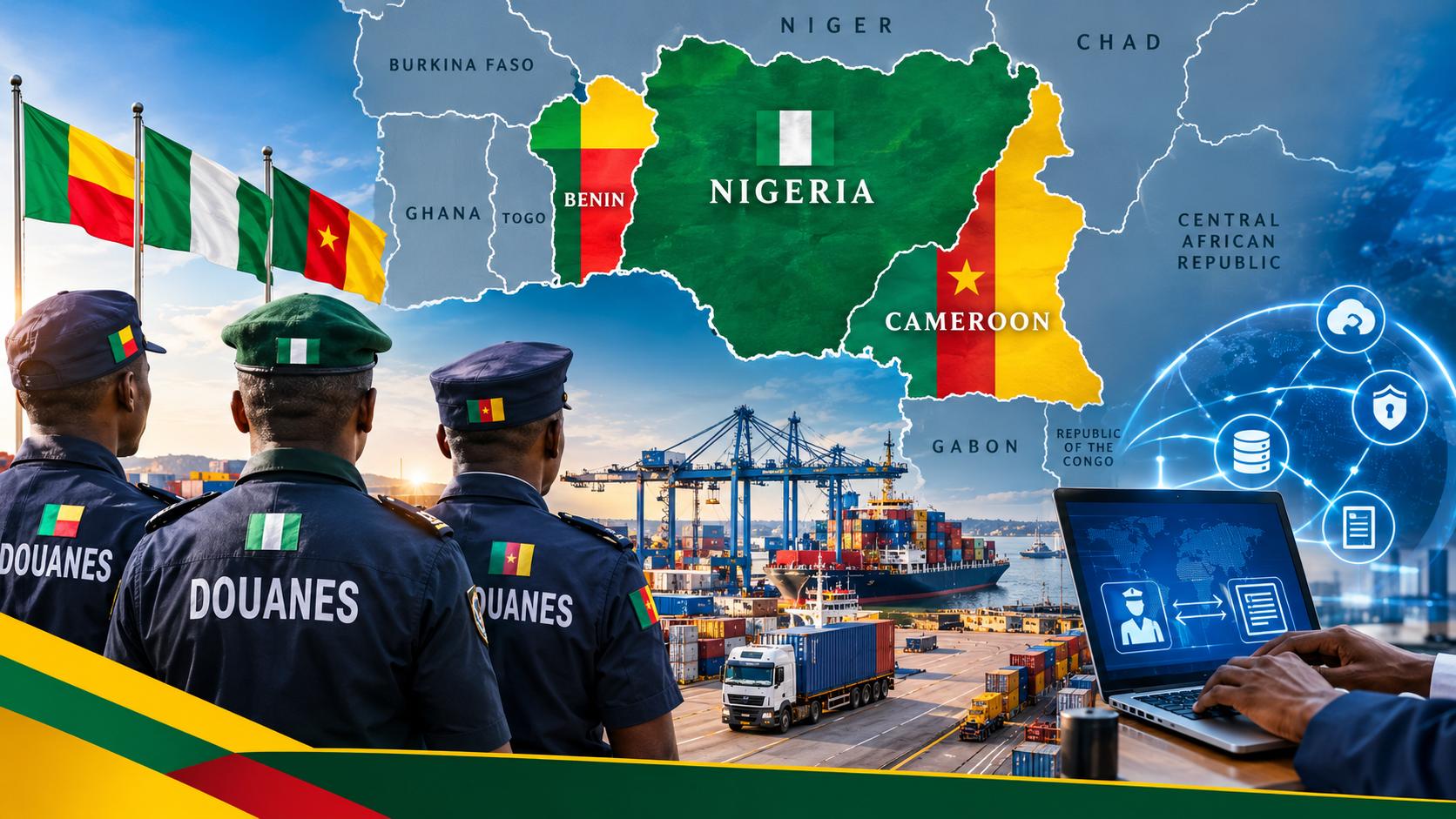
The Benin, Nigeria, and Cameroon customs authorities are on the cusp of a transformative shift as they finalize plans to digitally interconnect their systems a move poised to redefine trade efficiency and economic resilience across the region.
Supported by Afreximbank, this groundbreaking initiative aims to dismantle long-standing barriers at border crossings by streamlining data exchange, accelerating clearance processes, and fostering unprecedented collaboration among customs administrations. The breakthrough was solidified during high-level discussions in Cairo, Egypt, on October 12, 2026, marking a decisive step toward a more integrated and competitive West African trade ecosystem.
Ending bureaucratic delays at borders with smart integration
The current patchwork of customs procedures across Benin, Nigeria, and Cameroon often results in duplicated data entries, inconsistent documentation, and protracted clearance times—costs that ripple through supply chains, stifling business competitiveness and inflating consumer prices. By establishing a unified digital interface, the three nations seek to eliminate these inefficiencies by enabling real-time information sharing between customs agencies.
This digital leap is expected to:
Drastically cut processing times through automated verification and reduced manual interventions
Enhance traceability of goods moving across borders, minimizing fraud risks and discrepancies
Reduce operational redundancies by eliminating duplicate document submissions
Improve transparency for traders, who will gain clearer visibility into clearance statuses
Yet, the success of this initiative hinges on more than just technology. Harmonized operational protocols, robust cybersecurity frameworks, and continuous staff training will be critical to ensuring seamless adoption and avoiding new bottlenecks.
Benin’s strategic gain in a regional trade revolution
For Benin, a nation whose Port of Cotonou serves as a vital artery for neighboring landlocked countries, the digital customs alignment represents more than an administrative upgrade it’s a strategic imperative. By synchronizing customs data flows with Nigeria (Abuja) and Cameroon (Yaoundé), Benin stands to:
Bolster its role as a logistics hub by attracting higher volumes of transit trade
Lower transaction costs for regional businesses relying on Benin’s port infrastructure
Strengthen supply chain predictability with faster, more reliable clearance processes
Enhance fraud detection through improved data consistency and cross-border verification
These improvements could translate into tangible competitive advantages, positioning Benin as a gateway for regional commerce and reinforcing its economic influence.
Afreximbank’s pivotal role in reshaping African trade
The initiative’s alignment with Afreximbank’s broader mission underscores a continent-wide push toward reducing intra-African trade barriers. The bank’s involvement signals a commitment to funding and structuring digital trade facilitation tools that align with the African Continental Free Trade Area (AfCFTA) objectives.
Key considerations that will shape the project’s impact include:
Implementation timeline: A clear roadmap for phased rollout across all three countries
Data governance: Defined protocols for information sharing while safeguarding sensitive trade data
System compatibility: Ensuring interoperability between disparate customs IT infrastructures
Performance metrics: Establishing benchmarks to measure reductions in clearance times and cost savings
Without these guardrails, even the most advanced technological integration risks falling short of its potential.
From vision to reality: measuring the transformation
The true test of this customs revolution will lie in measurable outcomes. Will traders experience faster turnaround times? Will inspection procedures become more efficient rather than simply digitized? Will the system’s benefits extend beyond major ports to smaller border crossings? These questions will define whether the initiative achieves its ambitious goals.
As West African economies vie for greater integration into global supply chains, the timing of this digital customs overhaul couldn’t be more critical. For Benin, Nigeria, and Cameroon, the next phase demands a laser focus on execution turning digital connectivity into a catalyst for sustainable trade growth, economic diversification, and regional unity.
The journey from concept to operational reality has just begun, but the stakes for Africa’s commercial future have never been higher.
By Yacouba Boukari — Journalist