Nigeria confirms imported Ebola case amid escalating regional urgency
In a decisive moment for public health preparedness, Nigeria has confirmed its first case of Ebola in several years. The announcement, delivered by Health Minister Muhammad Ali Pate, marks a critical turning point in the continent’s battle against a resurgent viral threat. The infected individual—an Abuja resident who traveled through East Africa—has been isolated and is receiving medical care, but the detection underscores the fragility of regional health security.
Public health experts warn that this imported case could signal broader challenges. The outbreak, caused by the Bundibugyo virus, has already crossed borders from Central Africa, with confirmed cases in multiple countries. Nigeria’s detection as the fifth nation affected in 2026 amplifies concerns over transcontinental transmission pathways, particularly as travel and trade continue to facilitate viral spread.
From detection to swift containment: Nigeria’s high-stakes response
The infected woman, who developed symptoms on October 7 before seeking care in Abuja on October 11, tested positive for Ebola on October 20. Health authorities have since launched a rigorous contact tracing operation, identifying 44 individuals who may have been exposed. Their monitoring is now a top priority to prevent new transmission chains.
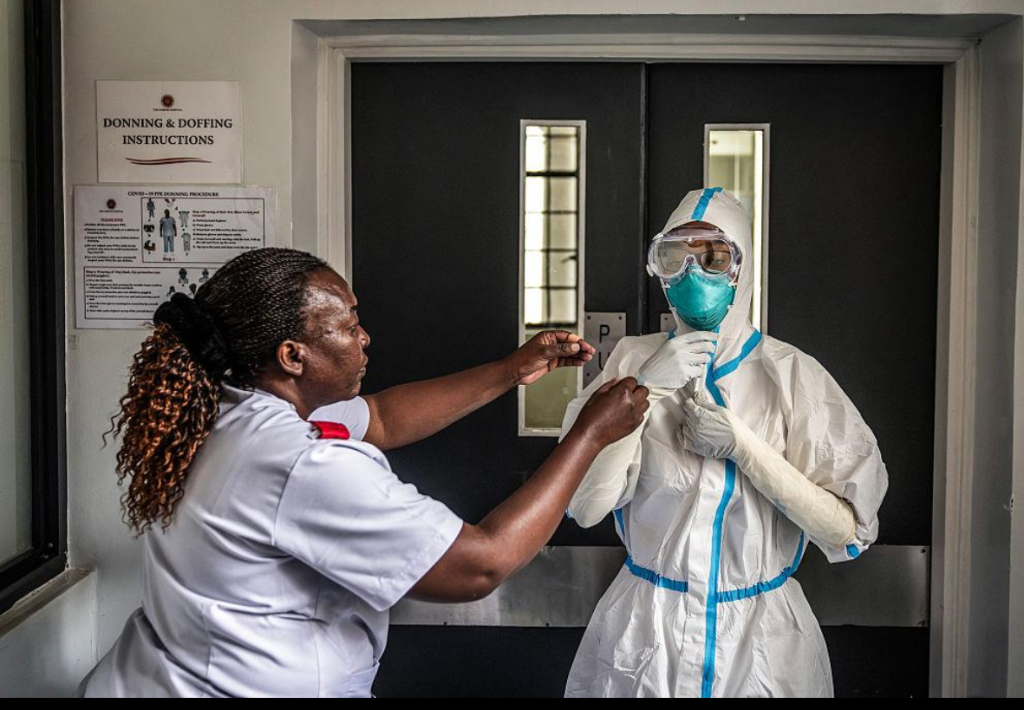
« She remains in isolation under strict medical supervision, » stated Muhammad Ali Pate, emphasizing the government’s commitment to preventing further spread. The multi-agency response includes Nigeria’s federal health ministry, the Nigeria Centre for Disease Control (NCDC), the Abuja Health Department, the World Health Organization (WHO), and the Africa Centres for Disease Control and Prevention (Africa CDC). Key measures include enhanced border surveillance, laboratory diagnostics, and public health education campaigns.
Bundibugyo virus: a new strain complicates containment efforts
Unlike the Zaire strain responsible for the devastating 2014–2016 West Africa Ebola outbreak, the Bundibugyo variant presents distinct epidemiological challenges. Declared in the Democratic Republic of the Congo (DRC) in May 2026, this strain has since spread to multiple provinces and neighboring countries. Kenya, for instance, has reported nine cases as of October 20, all linked to travelers from the DRC.
The Nigerian patient’s travel history reveals a complex itinerary: while she transited through Uganda en route from a professional assignment in eastern DRC, Kampala officials have clarified that the infection was not contracted there. Epidemiologists are now reconstructing her journey to pinpoint the likely location of exposure—a process complicated by regional mobility patterns.
Lessons from history: can Nigeria replicate its 2014 success?
Nigeria’s rapid containment of Ebola during the 2014–2016 crisis demonstrated its ability to mobilize health resources effectively. With over 200 million people, the country’s densely populated urban centers and porous borders make it particularly vulnerable to viral importation. Yet its experience in tracking contacts and isolating cases provides a blueprint for today’s response efforts.
Health officials must now demonstrate the same agility in detecting secondary cases, protecting healthcare workers, and ensuring rigorous follow-up of exposed individuals. The stakes are high: a single missed case could trigger a localized outbreak, especially in crowded cities like Lagos or Kano.
Ebola’s silent advance: why vigilance is non-negotiable
Ebola’s symptoms—fever, severe fatigue, muscle pain, vomiting, and diarrhea—often mimic other illnesses, delaying diagnosis. In severe cases, internal and external bleeding can occur, with fatal outcomes if untreated. Transmission requires direct contact with bodily fluids from an infected person or contaminated objects; it does not spread through casual proximity.
Public awareness is critical. Authorities are urging residents to seek immediate medical attention if symptoms arise, rather than self-medicating or avoiding healthcare facilities. Misinformation and stigma could undermine containment efforts, making transparent communication essential.
West Africa on high alert: a continent braces for impact
The arrival of Ebola in Nigeria, Africa’s most populous nation, elevates the threat level across West Africa. Neighboring countries are reviewing their surveillance systems, screening protocols at airports and land crossings, and coordination mechanisms with the WHO and Africa CDC. The lesson from history is clear: early intervention is the difference between containment and catastrophe.
For Nigerian authorities, the challenge is twofold: proving their readiness to handle imported cases while preparing for the possibility of local transmission. With 44 contacts under active monitoring and no additional cases detected, the coming days will determine whether this case remains isolated—or becomes the spark for a wider crisis.
The outcome hinges on speed, coordination, and the unwavering commitment of health systems at every level. In the fight against Ebola, hesitation is not an option.