From crisis to crackdown: How extreme penalties reshape Burkina Faso’s justice system
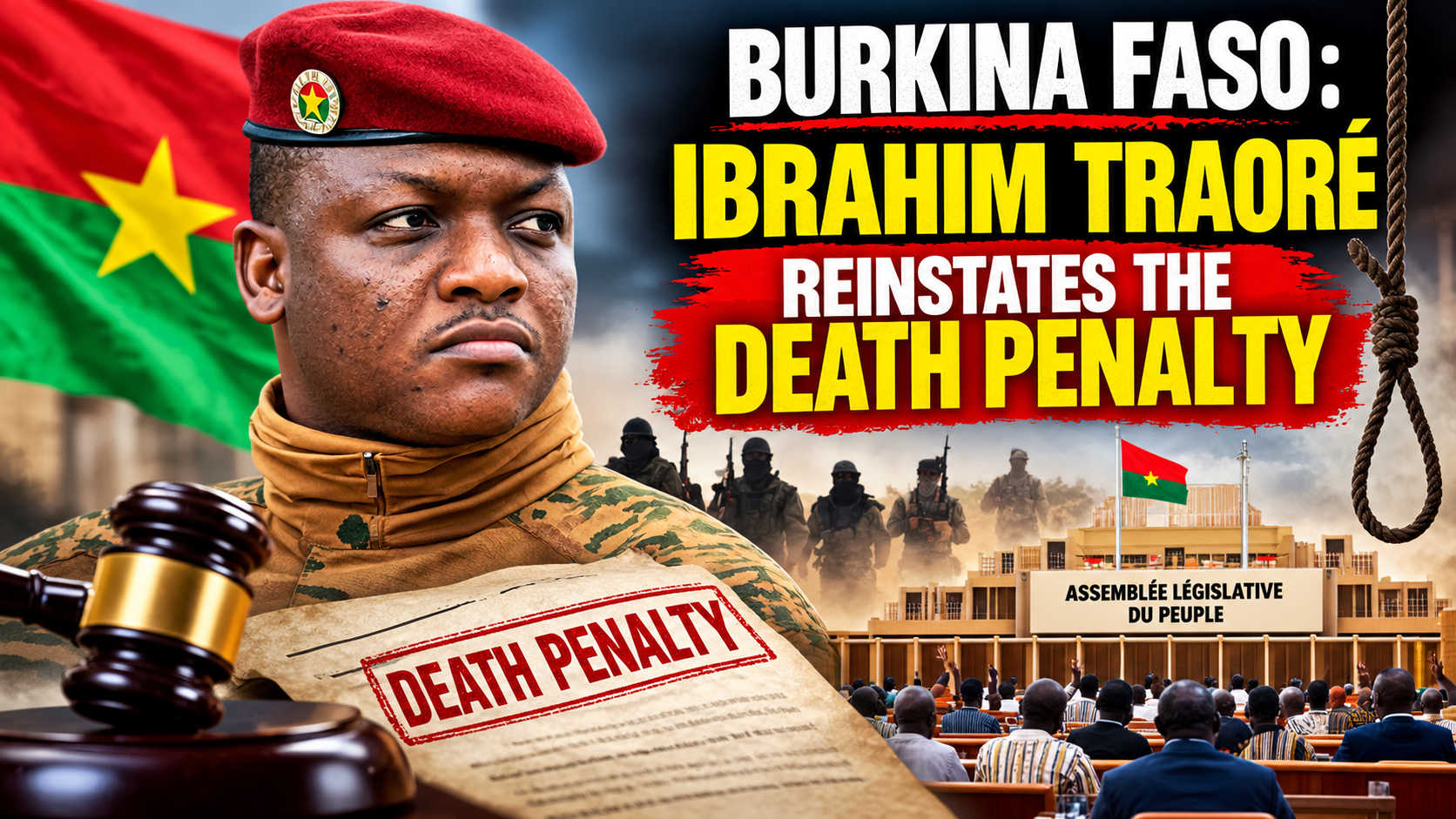
The Burkina Faso government has taken a bold and controversial step to address worsening security threats. By reinstating the death penalty, authorities are signaling a major policy shift one that underscores their determination to restore order through stricter enforcement. But will this approach strengthen national security, or will it deepen divisions in a nation already grappling with deep social and political fractures?
On the surface, the move appears to respond directly to the escalating threat of armed extremist groups. Yet beneath that justification lies a larger debate: can justice be measured solely by the harshness of its penalties, or must it also be rooted in fairness, transparency, and effectiveness?
The new penal code, approved by the legislative assembly and signed into law, heralds a clear departure from recent years of judicial reform. It reintroduces capital punishment for crimes including terrorism, treason, and espionage offenses now classified as existential threats to national stability. While supporters argue this sends a strong deterrent message, critics warn that such drastic measures risk undermining public trust in institutions that are already fragile.
Does severity translate to security?
At the heart of the controversy is a fundamental question: will harsher penalties actually reduce violence, or will they become a symbolic act disconnected from the realities on the ground?
The timing of the reform is telling. After years of enduring deadly attacks by armed groups, many citizens long for tangible protection safe markets, functioning schools, and government presence in remote zones. Yet the death penalty alone cannot patrol borders, intercept armed convoys, or prevent suicide bombings. Those capabilities depend on intelligence, rapid response forces, and sustained territorial control resources that no legal decree can instantly provide.
The new law also extends capital punishment to cases involving the importation of expired or banned substances that result in death, a provision aimed at curbing illicit trade networks linked to insecurity. While such measures target harmful activities, they raise concerns about proportional justice and the potential for misuse in politically charged cases.
Accountability vs. ‘justice by decree’
Proponents of the reform insist that no crime especially those targeting national security should go unpunished. They argue that terror attacks demand proportionally severe consequences to deter future violence. But the concept of justice is not served by severity alone. It requires due process, access to counsel, and rigorous evidence before life can be ended by the state.
An irreversible sentence demands an unshakable judicial process. Yet Burkina Faso’s justice system has been operating under emergency conditions for years. Reports of prolonged pretrial detention, restricted defense rights, and summary proceedings fuel skepticism about whether fair trials can be guaranteed especially when military courts play a dominant role.
Key risks of capital punishment in fragile states:
Judicial errors: In high-pressure environments, mistaken convictions become irreversible tragedies.
Politicization: High-profile cases may be used to project strength rather than uphold impartiality.
Chilling effect: Fear of prosecution could silence legitimate dissent, eroding civic participation.
Silencing dissent under the banner of security
The revival of capital punishment coincides with a broader tightening of civic space. Independent reporting has flagged restrictions on media, curbs on public assembly, and reports of enforced conscription into state-aligned defense units. These developments suggest a broader strategy: using security imperatives to justify tighter control over civil society.
Journalists, activists, and even magistrates have reportedly faced intimidation or detention under national security laws. Such measures, when paired with punitive justice, create a climate where criticism is conflated with subversion. This is not governance by accountability, but governance by fear a pattern that rarely leads to long-term stability.
In a functioning democracy, security is not achieved by suppressing dissent but by fostering inclusive dialogue. When citizens feel safe to speak, they are more likely to report suspicious activity. When the press operates freely, corruption and mismanagement are exposed before crises escalate. But when fear replaces trust, the state isolates itself from the people it claims to protect.
The ultimate test: can the state deliver real protection?
The death penalty marks a turning point in Burkina Faso’s approach to justice. Yet the real measure of success lies not in courtroom outcomes, but in the streets and villages of the countryside.
Can farmers cultivate their land without fear of ambush? Can children attend school without risk of abduction? Can families attend markets without dreading explosions or gunfire? These are the questions that will determine whether the new penal code succeeds or backfires.
For Ibrahim Traoré’s administration, the challenge is clear: enforce harsh laws without forfeiting public confidence. Governance built on coercion rarely outlasts the coercive moment. True security arises when institutions earn the people’s trust not when they instill fear.
As the nation moves forward, one truth remains: no punishment, no matter how severe, can restore what has been lost nor guarantee what has yet to be built. The path ahead requires both strength and wisdom, judgment and justice. The people’s future depends on it.
A crossroads for Burkina Faso: security or control?
The reinstatement of capital punishment is more than a legal reform it is a political statement. It signals a leadership prepared to wield maximum force in the face of crisis. But the test of leadership is not in declaring war on crime; it is in winning the peace for its citizens.
Will Burkina Faso’s future be defined by the weight of its sentences or the depth of its reforms? By the silence imposed or the trust it restores? The answers will shape the nation long after the headlines fade.
By Ramatou Soumana — Journalist