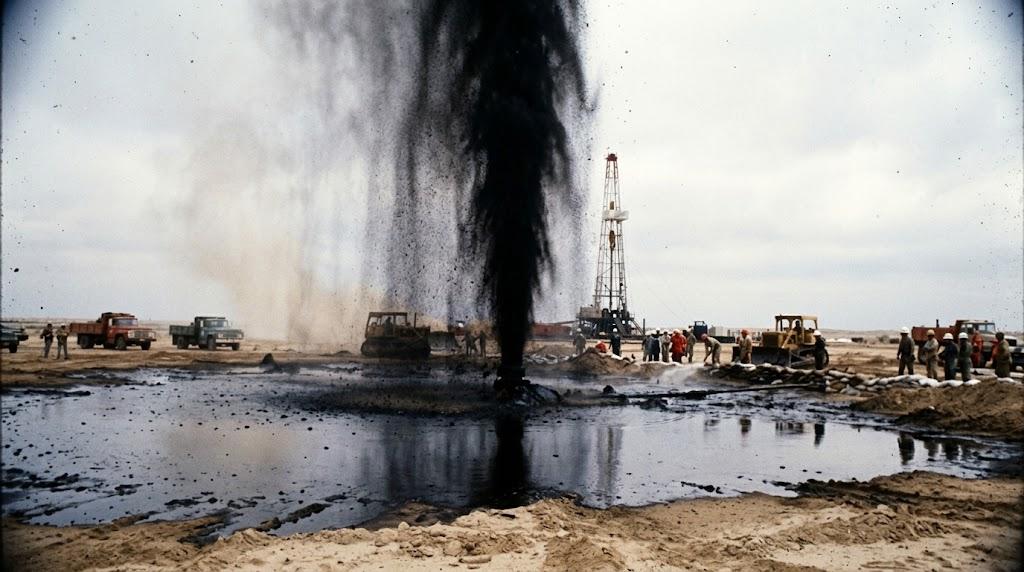
The unchecked rush for oil in Niger’s Agadem block has culminated in an unprecedented environmental disaster, one that now threatens both local ecosystems and global climate stability. Since September 25, 2026, an uncontrolled gusher of crude oil and toxic gases has erupted from the Goumeri W8 well, transforming a remote stretch of the Sahara into a poisoned landscape of blackened sand and suffocating fumes.
From industrial oversight to environmental emergency
What began as a technical malfunction has metastasized into a full-blown ecological crisis, all while regulators and corporate operators failed to act with urgency. For a staggering seventeen days, toxic gases surged unabated into the atmosphere, creating a silent yet devastating impact that authorities were slow to acknowledge. It wasn’t until October 12—after weeks of denial—that the government quietly acknowledged what it termed an “exceptionally severe environmental incident.”
Behind the scenes, the Chinese national oil company CNPC, which operates the Goumeri W8 well, maintained a policy of deliberate silence. No public statements. No transparency regarding the scope of the leak or its environmental consequences. This corporate opacity underscores a disturbing pattern: when profit trumps accountability, the consequences are borne by people and the planet, not the extractive industries that profit from them.
The invisible threat: methane at 40 tons per hour
The true scale of the disaster only became clear once satellite data—specifically from the European Sentinel-5P mission under the Copernicus program—revealed the magnitude of what had been hidden for weeks. The Goumeri W8 well is not merely leaking oil. It is venting a colossal, invisible plume of methane at a rate exceeding 40 metric tons per hour. Over three weeks alone, this single incident released over 17,000 tons of methane into the atmosphere—potent gas with a global warming potential more than 80 times greater than carbon dioxide over a 20-year span.
Despite official claims of “partial control,” satellite observations confirm the gas flow has never subsided. The leak continues unchecked, a living symbol of industrial arrogance amid fragile ecosystems.
When oil ambitions eclipse safety
This is no isolated accident. It is the foreseeable result of a relentless drive for oil extraction at any cost. The Nigerien government, eager to meet production targets of 90,000 barrels per day to supply the pipeline bound for Benin, has prioritized output over safety, maintenance, and environmental stewardship. The result? Two workers gravely injured in the initial blast and a frantic, last-minute appeal to Algerian experts from Sonatrach to drill a relief well—a glaring admission of technical and regulatory failure.
The Sahara is not a waste dump. The absence of immediate human fatalities does not absolve corporations or governments of their responsibility. A slow-motion environmental poisoning is unfolding under clear skies, and the window to act is rapidly closing.
What comes next: can Niger break the cycle?
As the crisis deepens, the nation faces a stark choice. It can double down on its extractive model, repeating the same mistakes that led to this disaster—or it can pivot toward sustainable energy, stringent regulation, and international accountability. The methane plume over Goumeri W8 is not just a plume. It is a warning flare, signaling the urgent need for change in how Africa’s natural resources are harnessed and protected.
The time for decisive action is now—and Africa’s climate future may well hinge on the choices made today.