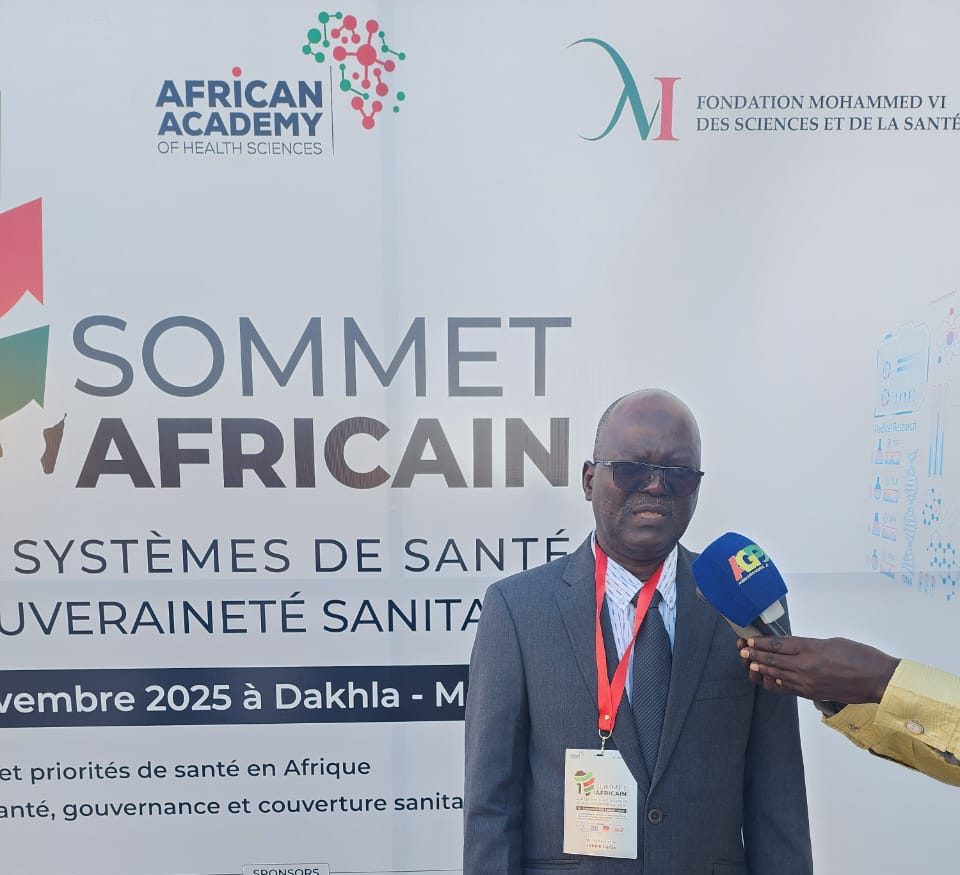
At the first African Summit on Health Systems and Health Sovereignty held in Dakhla, Morocco, Niger’s Minister of Public Health and Hygiene, Colonel Major Garba Hakimi, underscored the country’s commitment to achieving health sovereignty. Speaking on November 29 at the close of the two-day event, he emphasized that Niger is actively advancing toward this goal under the leadership of President Abdourahmane Tiani and Prime Minister Ali Lamine Zeine, both of whom have prioritized significant investments in the health sector.
building a robust health infrastructure
The minister highlighted recent progress, including the construction of hospitals and integrated health centers across Niger. These facilities are designed to strengthen primary healthcare at the community level, a critical foundation for a resilient health system. ‘Without strong infrastructure, we cannot deliver effective primary care,’ Hakimi stated, noting that these developments are essential for improving healthcare access nationwide.
investing in cutting-edge technology and human capital
In addition to infrastructure, Niger has invested in advanced medical equipment and high-tech diagnostic tools to enhance curative care. Equally important, the government has prioritized training and continuous professional development for healthcare workers. ‘Equipment alone is not enough,’ Hakimi explained. ‘We must ensure our medical staff are skilled and specialized to utilize these resources effectively.’ Many healthcare professionals are currently benefiting from specialized training programs to meet evolving healthcare demands.
policy reforms to expand healthcare access
Niger has implemented key policy reforms to make healthcare more affordable and accessible. These include subsidized care for vulnerable populations, a 50% reduction in public healthcare fees, and free services for critical procedures such as childbirth and care for children under five. These measures aim to move Niger closer to universal health coverage, a goal supported by national leaders. ‘Our vision is clear: healthcare should be a right, not a privilege,’ Hakimi affirmed. ‘With these policies, we are building a system that works for all citizens.’
addressing africa’s health challenges and opportunities
During the summit, African health experts reviewed the continent’s health systems, identifying both progress and persistent challenges. Key issues include weak health systems, governance gaps, and financial constraints. ‘The real challenge is not recognizing these problems but implementing solutions that make our systems stronger, more resilient, and more efficient,’ Hakimi noted. He stressed the importance of adopting innovative strategies to overcome these obstacles.
a shared vision for african health sovereignty
Hakimi praised the vision of His Majesty King Mohammed VI of Morocco, which emphasizes African health sovereignty. This vision includes the establishment of the African Academy of Health Sciences, inaugurated during the summit. The Academy aims to develop high-quality human resources, a cornerstone of a robust healthcare system. ‘No health system can succeed without skilled professionals,’ Hakimi said. ‘The King’s vision is one that all African leaders should embrace to advance our continent’s health independence.’
financing and governance: pillars of health sovereignty
The minister reiterated the need for African nations to allocate at least 15% of their national budgets to health, a recommendation endorsed by several African heads of state. He also advocated for innovative financing mechanisms beyond traditional funding. ‘Health sovereignty is within our reach,’ he declared. ‘We must rely on our own resources and innovations to build systems that meet our needs without external dependency.’
the five pillars of the dakhla declaration
The Dakhla Declaration outlines a five-point roadmap for achieving health sovereignty: epidemiology, human capital and training, research and innovation, financing and governance, and equitable infrastructure access. ‘If we focus on these five areas, health sovereignty is not just possible—it is inevitable,’ Hakimi concluded. ‘The time for action is now. Our future depends on it.’