The imminent ruling from South African courts on the fate of Kémi Séba—arrested in April while attempting to enter Zimbabwe clandestinely—has sparked fresh debate on whether the activist, a self-proclaimed panafricanist with 1.5 million social media followers, truly embodies the movement’s ideals. This moment offers a chance to reflect on the evolution of panafricanism and its current manifestations.
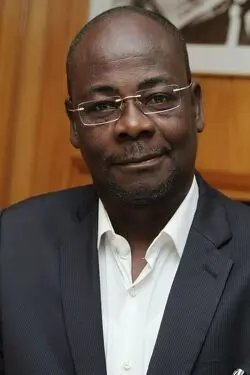
What ties together a black panafricanist activist and a white South African apartheid nostalgic? Kémi Séba, born Stellio Gilles Robert Capo Chichi in Benin but holding a Nigerian diplomatic passport, was recently detained in South Africa with his 18-year-old son and François Van der Merwe, a white supremacist linked to apartheid-era movements.
Leader of the Urgences Panafricanistes NGO, Séba is best known for his anti-French rhetoric, fierce opposition to the CFA franc, and controversial statements that led to the loss of his French citizenship. According to reports, he was attempting to illegally enter Zimbabwe—possibly en route to Europe—while facing charges in Benin for “incitement to rebellion and glorification of state security crimes” after endorsing soldiers involved in a failed December coup. An international arrest warrant has been issued against him.
Russian propaganda and Sahel dictatorships
Kémi Séba, along with figures like Franklin Nyamsi and Nathalie Yamb, represents the most vocal panafricanist voices in Francophone Africa. Yet these activists paradoxically align with Russian propaganda while defending military juntas in the Alliance of Sahel States (AES)—Mali’s Assimi Goïta, Burkina Faso’s Ibrahim Traoré, and Niger’s Abdourahamane Tiani. Is modern panafricanism now about rejecting France only to embrace Russian influence and authoritarian regimes that reject democracy?
From anticolonial roots to fractured ideals
Panafricanism emerged in the early 20th century among Black intellectuals in the Americas and Caribbean, fueling anticolonial struggles across Africa. Leaders like Ghana’s Kwame Nkrumah, Guinea’s Sékou Touré, and Congo’s Patrice Lumumba championed the movement, which inspired organizations like the Fédération des Étudiants d’Afrique Noire en France (FEANF). This student group, founded in 1950, became a powerful force for decolonization and African unity, enduring French repression including reduced scholarships and surveillance. It was dissolved in 1980.
The independence wave of 1960 was seen as a triumph of panafricanism, leading to the creation of the Organization of African Unity (OAU). However, post-independence, micro-nationalisms took hold. Conflicts erupted—such as Eritrea’s secession and Sudan’s division—while attempts at unity, like Libya’s Mouammar Kadhafi push to transform the OAU into the African Union (AU) in 2002, ultimately failed. The AU’s New Partnership for Africa’s Development (NEPAD), launched in 2001 to accelerate integration, has since faded into obscurity.
Empty rhetoric and real-world contradictions
Today, panafricanism is invoked widely—from Côte d’Ivoire’s Laurent Gbagbo, who founded a new panafricanist party, to Senegal’s ruling PASTEF party. Yet actions often contradict words. African nations frequently engage in xenophobic crackdowns on migrants—South Africa’s treatment of other Africans is a stark example—or adopt hostile stances toward neighbors, as seen in tensions between Sahel states and ECOWAS members.
Where are today’s panafricanists? Séba, Nyamsi, and Yamb dominate social media, portraying themselves as persecuted voices against Western domination. Yet their alignment with Russian interests and authoritarian regimes raises critical questions: Can liberation come through servitude to foreign powers? Are the atrocities committed by Russian-backed militias in the Sahel not a stark warning? Where is the panafricanist commitment to democracy when leaders suppress dissent, jail opponents, or silence critics?
According to leaked conversations, Séba has accused Nyamsi and Yamb of being “opportunists” working for Togo’s Faure Gnassingbé. Séba himself, despite his anti-French stance, has lamented the loss of his French citizenship. The truth is clear: this version of panafricanism is hollow, corrupt, and exploitative. Yet as global predators reshape the world order, Africa faces a stark choice: unite swiftly or face further fragmentation and decline.