Venance Konan examines the modern face of pan-africanism amid Kémi Séba’s legal crisis
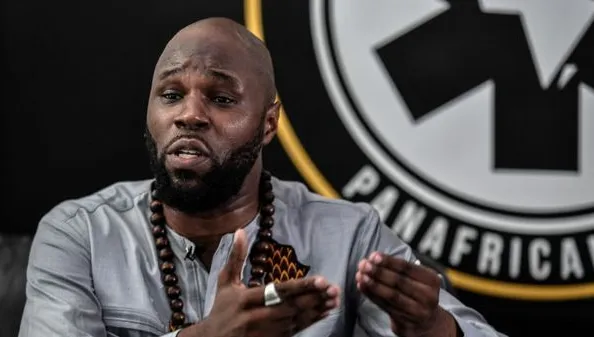
The imminent judicial decision in South Africa regarding the fate of Kémi Séba, the controversial panafricanist activist arrested in mid-April while attempting to enter Zimbabwe illegally, has reignited debates about whether he truly embodies contemporary panafricanism. With over 1.5 million social media followers, Séba’s case serves as a lens to explore the evolution—and contradictions—of this historic movement.
Born Stellio Gilles Robert Capo Chichi in Benin, Séba holds dual citizenship—Beninese and Nigerian—and boasts a diplomatic passport. His arrest in South Africa, alongside his 18-year-old son and François Van der Merwe, a white supremacist advocate of apartheid nostalgia, raises questions about his alliances. While leading the Urgences Panafricanistes NGO, Séba is notorious for his fiery anti-French rhetoric, opposition to the franc CFA, and antisemitic remarks, which led to the revocation of his French nationality. Authorities in Benin have charged him with “apology for state security crimes and incitement to rebellion” for endorsing soldiers involved in a failed December coup, resulting in an international arrest warrant.
Propaganda for Russia and backers of Sahel dictators
Séba joins a trio of prominent voices—alongside Franklin Nyamsi and Nathalie Yamb—who dominate Francophone African panafricanism. Collectively, they spearhead opposition to French influence in Africa while serving as Kremlin mouthpieces and staunch supporters of the Alliance of Sahel States (AES) junta: Assimi Goïta (Mali), Ibrahim Traoré (Burkina Faso), and Abdourahamane Tiani (Niger). Does this modern panafricanism prioritize liberation from France only to submit to Russia, embracing putschists who reject democracy?
The shifting sands of a historic movement
Panafricanism emerged in the early 20th century among Black American and Caribbean intellectuals, evolving into a cornerstone of anti-colonial struggles. Pioneers like Kwame Nkrumah (Ghana), Sékou Touré (Guinea), and Patrice Lumumba (Congo) galvanized African unity through organizations like the Fédération des Étudiants d’Afrique Noire en France (FEANF), founded in 1950. This student syndicate rapidly politicized, demanding decolonization and continental unification—earning it severe repression from French authorities, including reduced stipends and surveillance. Dissolved in 1980, FEANF’s legacy persists in the independence of Ghana (1957) and the 1960 wave of African sovereignties, symbolized by the creation of the Organization of African Unity (OAU).
Yet post-independence, panafricanism fractured under micro-nationalisms. Secessionist movements—Eritrea from Ethiopia, Biafra in Nigeria, or Casamance in Senegal—dominated headlines. Efforts to revive unity, such as Muammar Gaddafi’s 2002 push to transform the OAU into the African Union (AU), ultimately failed. The AU’s 2001 New Partnership for Africa’s Development (NEPAD) also faded into obscurity amid persistent continental divisions.
From civil wars to xenophobic policies
Today, the term panafricanism is often invoked rhetorically. Political figures across Africa—from Laurent Gbagbo of Côte d’Ivoire and his Parti des Peuples Africains-Côte d’Ivoire (PPA-CI) to Senegal’s ruling PASTEF—brandish the label. Yet in practice, African nations oscillate between civil conflict (e.g., Sudan, Great Lakes region) and xenophobic policies, as seen in South Africa, or diplomatic standoffs like those between Sahel states and ECOWAS.
The urgency of authentic pan-African unity
Where do today’s panafricanists stand? Séba, Nyamsi, and Yamb dominate social media with anti-Western, particularly anti-French, narratives. While they portray themselves as victims of persecution, their alignment with Russian interests—and support for repressive Sahel regimes—undermines their claims. Can liberation coexist with subjugation to foreign powers or dictatorships that crush dissent? Leaked communications allegedly reveal Nyamsi and Yamb’s opportunism, with Séba accusing them of serving Faure Gnassingbé of Togo. Séba himself has lamented losing his French citizenship, exposing the contradictions of this panafricanism: rancid, counterfeit, and ultimately exploitative.
In a world dominated by predatory global actors, Africa’s survival hinges on genuine unity. The time for urgent panafricanism is now—before predation erodes the continent entirely.
Figure: Venance Konan, Beninese writer and analyst, examines the contradictions of modern panafricanism in light of Séba’s legal crisis.