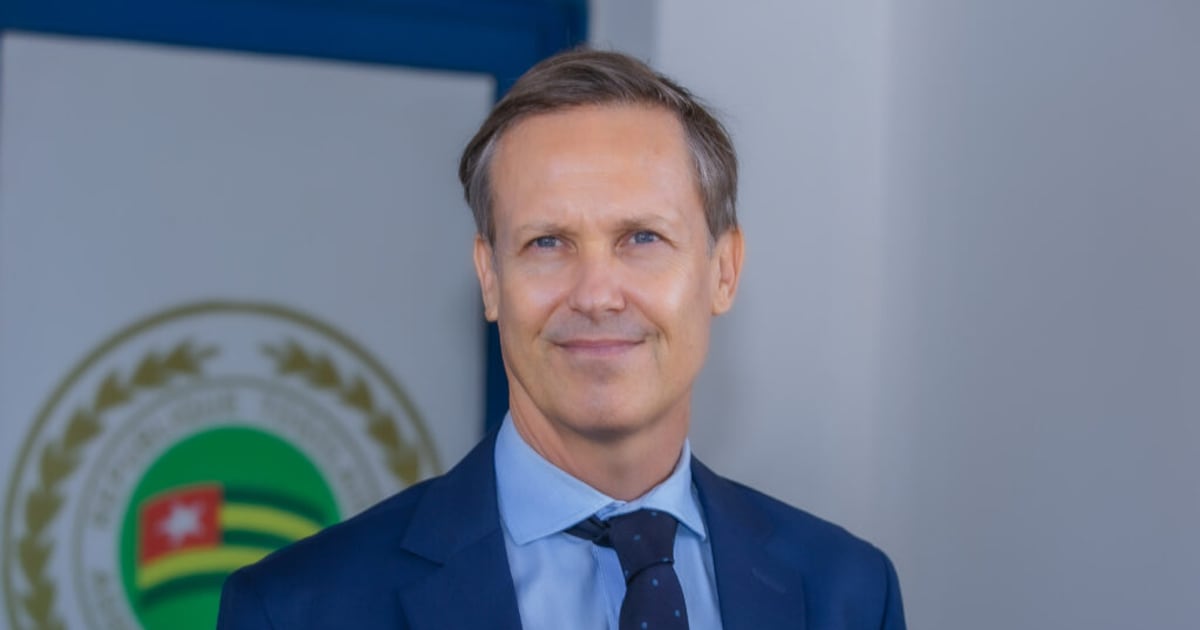
The European Union (EU) has reaffirmed its commitment to strengthening its partnership with Togo amid escalating global tensions. This announcement was made in Lomé by Gwilym Ceri Jones, Head of the EU Delegation to Togo, during Europe Day celebrations on May 9. The event highlighted both European achievements and the geopolitical and security challenges facing the world today.
The diplomat emphasized the EU’s role as a steadfast and reliable partner for African nations, particularly Togo, in these turbulent times. «In an era of instability and uncertainty, the EU remains a solid and dependable partner, dedicated to cooperation grounded in international law,» he stated. He also highlighted the tangible outcomes of EU-Togo collaboration, including public development aid programs and initiatives supporting economic and social progress.
Key EU-Togo cooperation initiatives driving progress
EU support has had a measurable impact on Togo’s development:
- Over 1.3 million Togolese now have access to electricity thanks to EU-funded electrification programs.
- More than 2.5 million people benefit from improved waste collection and treatment systems.
- The ongoing rehabilitation of the RN2 highway (connecting Lomé to Aného and the Bénin border) is enhancing regional connectivity.
The EU has also pledged to help Togo increase its electricity production by 18%, with a focus on renewable energy sources. Additionally, Gwilym Ceri Jones praised Togo’s humanitarian efforts, including hosting 60,000 refugees in the northern region, its mediation role in the Sahel and Great Lakes, and the effectiveness of its defense and security forces in countering terrorism.
The strategic importance of Togo in EU security and economic policy
By positioning Togo as a key partner, the EU is reinforcing its geopolitical strategy in West Africa. While neighboring Sahel nations face rising instability, Togo serves as a stabilizing force—absorbing refugee flows, mediating regional conflicts, and maintaining security along critical corridors. This relationship goes beyond development aid; it reflects a mutual dependence where economic integration and energy access are intertwined with long-term stability.
The EU’s recognition of Togo’s contributions underscores a broader agenda: securing influence in Africa while mitigating risks such as terrorism, migration crises, and economic disruptions. As instability spreads across the Sahel, the partnership between Brussels and Lomé becomes increasingly vital—not just for Togo, but for the entire Gulf of Guinea region.