
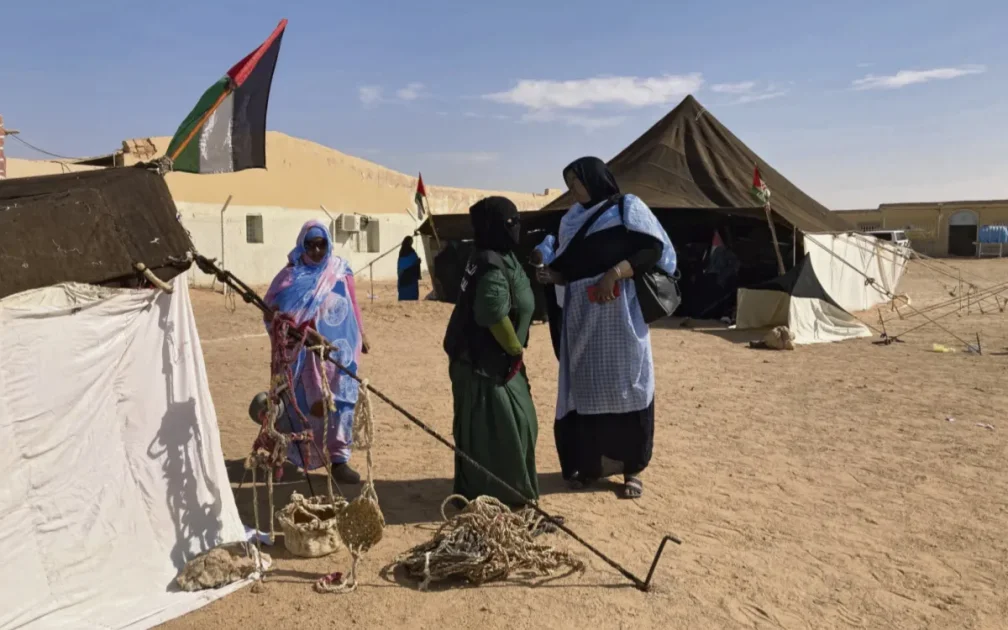

The Polisario Front continues to pursue dialogue with Rabat despite the killing of one of its senior commanders in a Moroccan strike. This contradictory stance reveals the desperation of a movement that is militarily outclassed and diplomatically isolated.
The death of Lahbib Mohamed Abdelaziz, a prominent figure in the Sahrawi army and son of the movement’s former leader, starkly exposes the reality on the ground. He was struck by a precision-guided aircraft during a withdrawal operation, joining dozens of others killed by drones in recent years. This technological edge overwhelms the separatists’ capabilities, historically limited to modified Spanish Land Rovers. Facing such an asymmetric disadvantage, the delegate in Madrid, Jalil Mohamed Abdelaziz, resignedly speaks of the “high price” needed to defend their dignity.
Despite these deadly vulnerabilities, the Polisario maintains an ambivalent stance. Abdoullah Arabi, its representative in Spain, claims the group “is used to dialoguing in all possible contexts,” refusing to close the door on bilateral contacts. This fluctuating approach was evident in April from the Algerian region of Tindouf, where 175,000 people live. There, leader Brahim Ghali softened the martial rhetoric, asserting that his camp wants to act as a peaceful partner for neighbours, including Morocco, while demanding respect for UN decisions.
This tactical contradiction stems from growing isolation on the global stage. While the conflict draws little geostrategic attention worldwide, Rabat has secured backing from major Western powers such as the United States and France. Spain itself shifted position in 2022 when President Pedro Sánchez described Morocco’s autonomy plan as the most serious basis. Abdoullah Arabi condemned this reversal, denouncing Madrid’s deafening silence and double standards when victims are Sahrawi.
Geographically, this confinement is reinforced by a fortified sand wall built in the 1980s. This massive military scar cuts the region’s 250,000 square kilometres in two, leaving most of the coastline under firm Moroccan control. Confined to the remaining 20% of inland territory, the separatists face an impassable physical barrier. Although activist Aminatou Haidar insists that popular determination remains unbroken, intimate knowledge of the desert is no longer enough to counter Morocco’s powerful military machine.

More Stories
Gabon : la participation citoyenne devient un enjeu de gouvernance
Gabon : Force ouvre sa rentrée associative à Akanda sur des propositions citoyennes
Dakar 2026 : Diomaye Faye invite la jeunesse sénégalaise à incarner l’Afrique