Turning the tide: Russia’s african gamble lacks the economic clout to match its ambitions
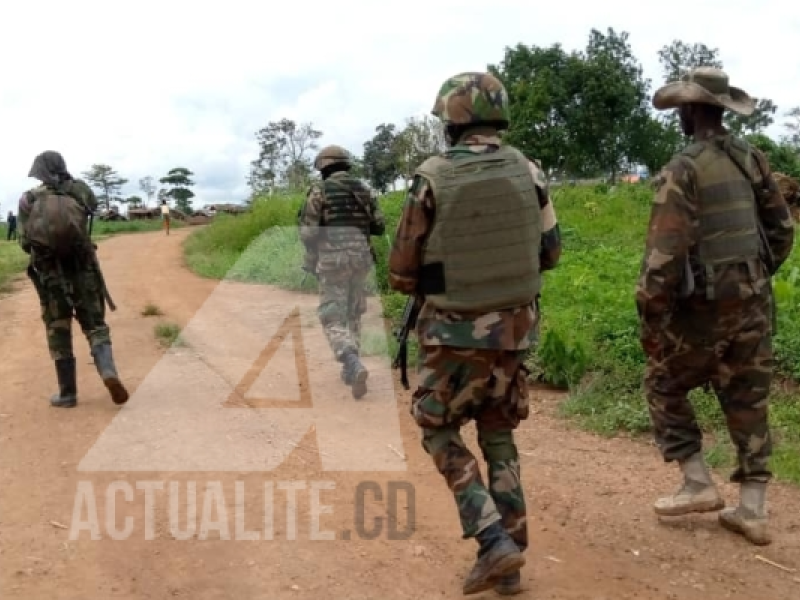
The global chessboard is shifting, and Russia is making bold moves to expand its influence across Africa. Through aggressive diplomacy, defense pacts, and private security deployments, Moscow is positioning itself as a key partner on the continent. Yet, beneath the rhetoric of a sovereign partnership lies a glaring mismatch between Russia’s far-reaching geopolitical ambitions and its limited economic foundations. The Kremlin’s strategy, driven by extractive rather than developmental motives, risks leaving African nations trapped in a cycle of dependency rather than securing true progress.
Measuring Russia’s economic footprint: a stark disparity
The numbers tell a sobering story about Russia’s actual economic weight in Africa. While its diplomatic and military engagements command headlines, Moscow’s macroeconomic indicators reveal a different reality:
- A GDP far below global heavyweights: Russia’s nominal GDP hovers around $2.0 to $2.5 trillion—comparable to mid-sized European economies like Italy or Canada, but dwarfed by giants such as the United States ($28 trillion) and China ($18 trillion). This places Russia at roughly 2% of global GDP, severely constraining its ability to fund large-scale development aid or concessionary loans.
- A trade presence overshadowed by rivals: Russia’s annual trade volume with Africa stands at a modest $27 billion—a fraction of China’s $280 billion and the European Union’s $300 billion. This means Moscow accounts for less than 3% of Africa’s total external trade.
- Foreign direct investment in the shadows: Russian FDI in Africa represents under 1% of total incoming investments. Unlike partners that finance critical infrastructure, Russia’s rare financial flows are overwhelmingly tied to mining concessions and security contracts.
This economic asymmetry exposes a strategy that prioritizes narrow geopolitical gains over sustainable partnership.
A trade profile built on extraction, not transformation
Russia’s commercial ties with Africa are dominated by raw materials and low-value goods, reinforcing extractive relationships rather than fostering industrial growth. Key exports include:
- Wheat: Roughly 14 to 20 million tons annually, feeding into Africa’s food supply while doing little to support local agriculture.
- Mineral fertilizers: Approximately 1.5 million tons shipped each year, primarily benefiting European and Asian agricultural markets rather than African soil fertility.
- Refined petroleum products: Around 10 to 12 million tons of diesel and fuel oil delivered annually, sustaining energy needs without catalyzing local refinery or industrial capacity.
Critically, Russia’s trade fails to include high-value goods such as machinery, technology, or infrastructure equipment. Instead, African nations import essential energy and food staples from Moscow while exporting mineral wealth—gold, diamonds, uranium, and hydrocarbons—back to Russia under opaque arrangements. This dynamic leaves local economies starved of technology transfer, job creation, and long-term value addition.
The extractive trap: how mineral wealth fuels new dependencies
In countries across Sub-Saharan Africa and the Sahel, Russian-backed arrangements often revolve around access to strategic minerals in exchange for political or military support. The consequences are far from developmental:
- Opportunities for elite capture: Revenue from mineral extraction frequently bypasses national budgets, enriching intermediaries and external networks rather than funding public services.
- Limited local transformation: While agreements may stabilize regimes or secure resource access for Moscow, they rarely empower African nations to refine, process, or add value to their own resources.
- A cycle of rent-seeking: Local communities remain mired in poverty despite abundant natural wealth, while external actors—including Russian-linked entities—siphon off profits through opaque channels.
This pattern mirrors the “resource curse,” where abundance breeds mismanagement and underdevelopment, leaving populations impoverished amid wealth they cannot harness.
From extraction to empowerment: can Africa break the cycle?
The limitations of Russia’s approach offer an opportunity for African nations to reassess their partnerships. Rather than substituting one form of dependence for another, the continent must demand models that prioritize:
- Equitable resource governance: Transparent frameworks for mineral and energy contracts that ensure fair revenue sharing and reinvestment in public infrastructure.
- Local value addition: Policies that encourage onshore processing, manufacturing, and skill transfer to build industrial capacity.
- Diversified alliances: Exploring partnerships that balance security cooperation with investments in education, technology, and sustainable development.
The path forward requires African leaders and civil society to insist on outcomes that serve their citizens—not just the interests of foreign powers. Without this shift, the promise of sovereignty and shared prosperity will remain out of reach.
Beyond the rhetoric: what Russia’s model delivers—and what it takes away
Russia’s engagement in Africa is not inherently flawed—it is pragmatic, targeted, and deliberately asymmetric. The model favors immediate geopolitical leverage over long-term partnership, exploiting crises in fragile states to secure resource access and political alignment. But for African nations, this comes at a cost: weaker fiscal bases, stunted industrialization, and persistent underdevelopment.
The turning point lies not in rejecting engagement with Russia, but in redefining its terms. True sovereignty demands more than military support or mineral concessions—it requires the power to shape one’s own economic future. Africa’s challenge is to channel growing geopolitical interest into tangible development, ensuring that every partnership contributes to resilience, innovation, and inclusive growth.