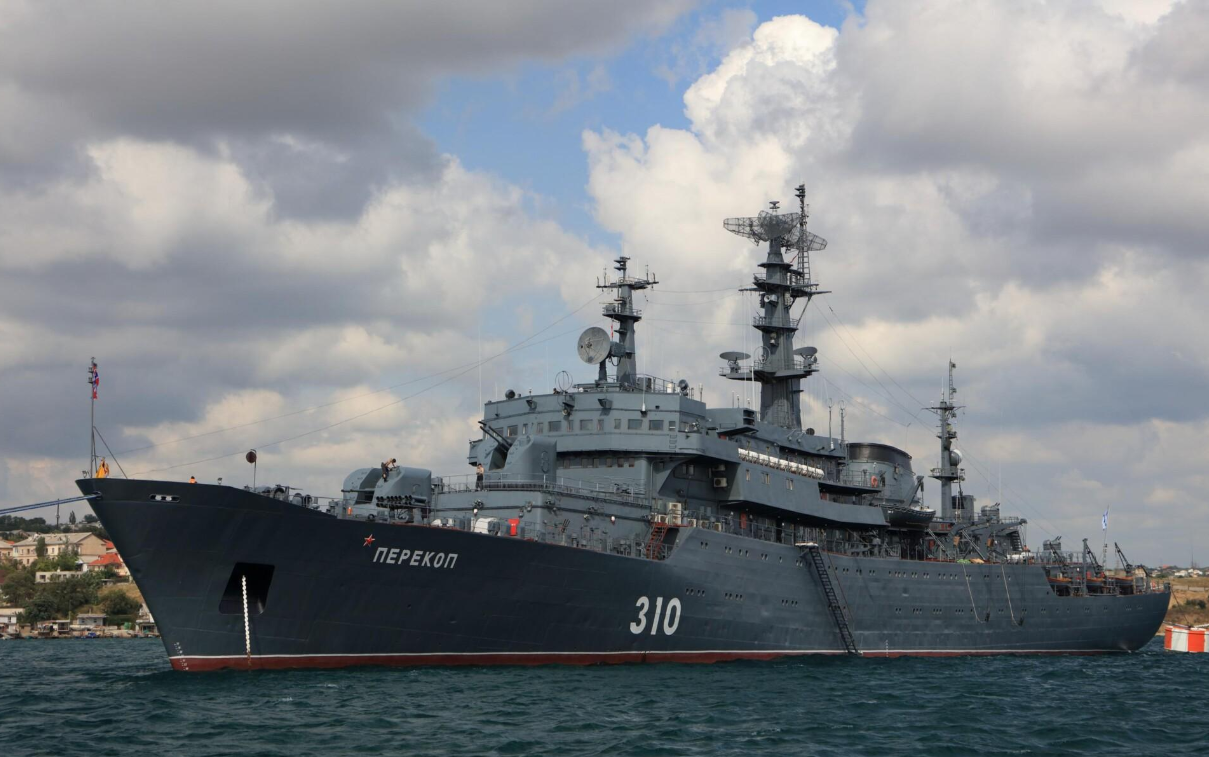
The arrival of Russia’s naval training vessel Perekop at Walvis Bay, Namibia, on October 20, 2026, marks more than just another stop in its global maritime training mission. While Moscow presents it as routine naval education, the timing and context reveal a broader strategy—one aimed at deepening its influence across Africa’s Atlantic coast.
The turning point in Namibia’s naval diplomacy
At first glance, the Perekop’s visit appears to be a standard training exercise, a chance for cadet officers to practice long-distance navigation and port logistics. After all, the Baltic Fleet’s vessel has spent months circumnavigating Eurasia and the African continent, conducting drills and familiarizing crews with diverse maritime conditions. But this escale stands out—not because of the training itself, but because of the strategic momentum it creates.
Such deployments do more than teach navigation; they reinforce diplomatic ties, extend Russia’s visibility in distant waters, and lay the groundwork for future cooperation. In Walvis Bay, a key port in southern Africa, the visit was not just symbolic—it was an opening move in a longer-term play for influence.
A port with strategic value
Walvis Bay is more than Namibia’s primary maritime gateway; it’s a logistical hub for regional trade and military support. Situated on the Atlantic Ocean, the port offers deep-water access, repair facilities, and storage—precisely the kind of infrastructure that enables extended naval operations. For Russia, which lacks permanent bases in Africa, temporary access agreements and port visits are critical to sustaining long-range naval presence.
While no permanent Russian base has been established in Namibia, the country’s officials have engaged in bilateral discussions with Russian naval representatives during the visit. These meetings, while official, were framed around technical cooperation and training—not new defense accords. Yet even without formal agreements, the momentum is building: each visit, each exchange, builds familiarity between militaries and increases the likelihood of future engagements.
From training to diplomacy: the unstated agenda
Russia has long used naval diplomacy to project power and counter Western influence across Africa. The Perekop’s presence in Walvis Bay fits into a pattern: military cooperation agreements, arms sales, and joint exercises have steadily grown in recent years. These efforts are not purely operational—they serve a broader ambition: to reinforce Russia’s status as a global power while challenging Western dominance in international affairs.
For Namibia, this visit presents an opportunity. As a nation seeking to diversify its partnerships, it can leverage interest from multiple foreign powers—Russia, China, Western allies—to secure investment, training, and infrastructure support. But it also raises a question: does this mark the beginning of deeper collaboration, or is it merely a diplomatic gesture?
A message across the globe
The timing of the Perekop’s arrival is more than coincidental. In an era of rising geopolitical tensions, naval deployments serve as visible reminders of Moscow’s reach. While the ship carries cadets, not missiles, its journey—from Europe to Africa—sends a signal: Russia remains active beyond its borders, even as Western powers tighten their own presence in contested regions.
Some analysts suggest such missions are designed to counter U.S. or European influence in Africa. Others argue they are primarily logistical, aimed at enabling future operations. What’s certain is that the Perekop’s presence adds another layer to the strategic narrative: Africa is no longer a backwater—it’s a theater where multiple powers compete for influence.
What’s next for Russia and Namibia?
As the Perekop departs, the real test begins. Will this visit lead to sustained cooperation? Will Namibia permit recurring port calls, or joint exercises with Russian naval forces? Or will the interaction remain limited to training activities?
History suggests that military diplomacy evolves gradually. Agreements often begin with technical exchanges before expanding into broader defense cooperation. If Walvis Bay becomes a regular stop for Russian vessels—or if future ships conduct operational exercises in Namibian waters—then the current visit could be seen as a turning point. Until then, it remains a strategic signal—one that Moscow may hope will set the stage for deeper engagement.
Key takeaways: a mission with multiple layers
- Training mission first: The Perekop’s primary role is education—cadets gain real-world experience.
- Diplomatic tool: The visit strengthens relations with Namibia and signals Russia’s ongoing presence in Africa.
- Strategic positioning: Walvis Bay’s port infrastructure positions the country as a potential logistical hub for future naval activity.
- No certainty yet: While the visit is significant, its long-term impact depends on follow-up actions—more visits, agreements, or operational activities.
Walvis Bay has become more than a destination. It’s now a potential inflection point in Russia’s African strategy—a small step that, if repeated, could redefine the geopolitical landscape along the Atlantic coast.