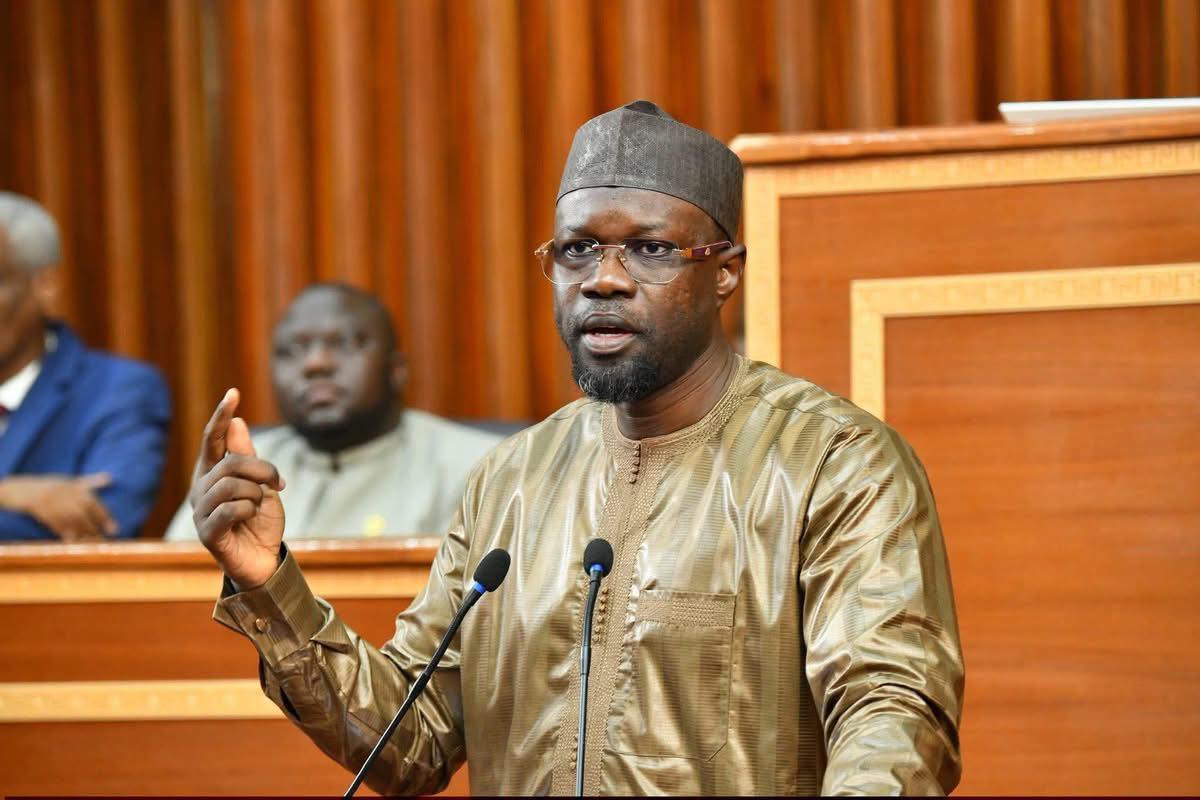
The rapid succession of political events unfolding in Senegal has left few observers indifferent. Following a series of institutional maneuvers that defy chronological coincidence, Ousmane Sonko has ascended to the presidency of the National Assembly, thereby consolidating his influence within the legislative framework.
Dismissed from his prior governmental role, Sonko’s absence from the political stage proved fleeting. His re-emergence was as swift as it was unexpected: within days of the incumbent Assembly President’s sudden resignation, Sonko assumed the position, effectively securing the helm of the legislative branch. The timing, devoid of any apparent transitional logic, has prompted scrutiny regarding the underlying motivations.
By occupying this pivotal institutional role, Sonko now wields significant authority over legislative proceedings, budgetary allocations, and legal frameworks. Critics argue that this strategic positioning serves as a direct challenge to the executive branch, potentially creating an environment of institutional gridlock. The control over legislative agendas, coupled with the power to obstruct key policies, positions Sonko as a formidable adversary to presidential authority.
Institutional tactics or democratic evolution?
The swift consolidation of power raises fundamental questions about Sonko’s objectives. While his supporters view this move as a legitimate assertion of political influence, detractors accuse him of employing institutional tactics to undermine governance. The narrative of a crusader against systemic corruption now clashes with the reality of a politician maneuvering to secure a stronger foothold in the corridors of power.
Observers suggest that Sonko’s ascent reflects a calculated strategy rather than a spontaneous political evolution. By seizing the presidency of the National Assembly, he has not only expanded his sphere of influence but also positioned himself as a central figure in the ongoing power dynamics. Whether this development will serve the broader interests of the Senegalese people or merely serve as a precursor to heightened political confrontation remains an open question.
The political landscape in Senegal is undergoing a significant reconfiguration, with the battle for institutional control intensifying. As the dust settles on this latest power shift, one certainty emerges: the trajectory of the nation’s governance is poised for further transformation.