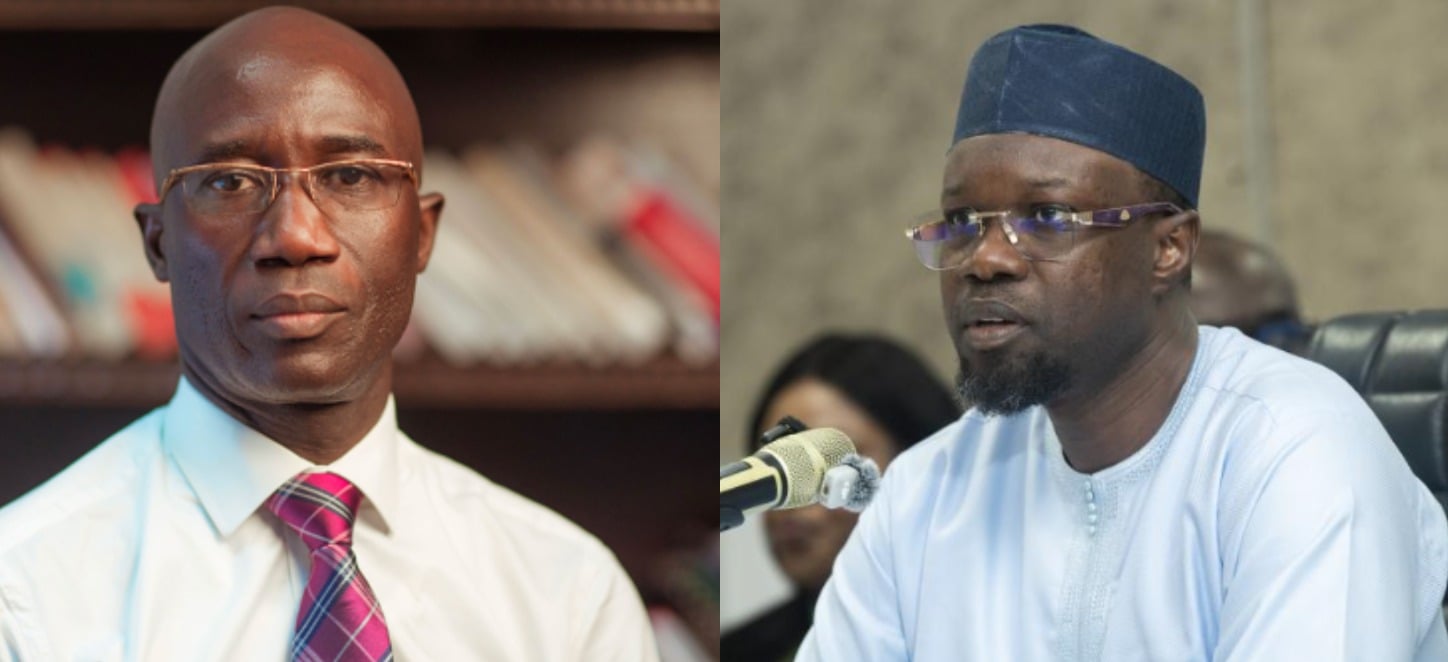
The appointment of lawyer Moussa Sarr as Senegal’s Minister of Justice has already sparked sharp reactions within the Pastef movement led by Ousmane Sonko. The opposition leader is voicing serious concerns about the new Guardian of the Seals, questioning whether the choice reflects the government’s commitment to judicial independence or serves other interests.
Sonko’s skepticism stems from Moussa Sarr’s past involvement in several high-profile legal cases that have shaped — and sometimes strained — the relationship between Pastef and Senegal’s judicial system. In a rare public statement, the Pastef president pointedly highlighted the unease within his party:
« The selection process for the Justice portfolio has not reassured us. This appointee was central to cases handled by certain courts, raising legitimate questions about impartiality and fairness. »
While Sonko refrained from preemptive condemnation, he made it clear that Pastef will be watching the new minister’s actions closely. Awaiting concrete policy shifts, the party has signaled its intention to monitor developments from the National Assembly, reserving the right to respond if warranted.
Tensions extend beyond Justice Ministry
Sonko’s criticism did not stop at the appointment of Moussa Sarr. He also took aim at Prime Minister Al Amine Lô, urging him to remain strictly in a technocratic role and refrain from political maneuvering. The Pastef leader went so far as to suggest he possesses detailed knowledge of the Prime Minister’s activities — a warning that left little room for ambiguity.
« I know a great deal about what is happening and what he is doing. Out of courtesy, I have been restrained until now. But he should not provoke me further. »
This unusually direct message underscores growing friction between the executive and the opposition, especially within a government formed under complex political circumstances.
Internal party discipline questioned
The discord has now spilled into Pastef’s ranks. Sonko publicly singled out party members who accepted ministerial positions, including Balla Moussa Fofana, Ibrahima Sy, and Yankoba Diémé. He accused them of acting independently, without consulting the movement’s leadership, and warned that their decisions would be addressed in due course.
« I want to be clear: those who have taken seats in the government are there on their own. And they will be held accountable when the time comes. »
With these remarks, Sonko has set the tone for what could become a prolonged period of scrutiny over the new administration’s actions — particularly in the justice sector, where trust remains fragile.