the plight of mayo-tsanaga villagers under boko haram’s reign of terror
For over a decade, the people of Mayo-Tsanaga in Cameroon have been trapped in a nightmare of violence, displacement, and abandonment. What began as sporadic incursions has escalated into a full-blown humanitarian crisis, with villages reduced to ashes and lives shattered under the relentless attacks of Boko Haram.
a region under siege
Boko Haram, originating from Nigeria’s Borno state in the early 2000s, first crossed into Cameroon in 2014. The Mount Gossi in the village of Tourou, just 35 kilometers from the town of Mokolo, became the first Cameroonian locality to fall victim to their brutality. Since then, the group has entrenched itself in the region, turning once-thriving communities into ghost towns.
The attacks follow a grim pattern: villages are razed, families are torn apart, and survivors are left to fend for themselves in a landscape of smoldering ruins. Fields, markets, places of worship, security posts, schools, and health centers have all become targets. The once-vibrant agricultural heartland of Mayo-Tsanaga now bears the scars of war, with fields lying fallow and livelihoods destroyed.
villages left in ruins
The scale of destruction is staggering. More than 50 villages across Mayo-Tsanaga have been abandoned, their inhabitants either massacred or forced to flee. Among the devastated areas are Gossi, Tourou, Vizik, Ldamang, Magoumaz, Dinglding, Chougoulé, Oupai, Houdahai, Vouzoud, and many others. In Mokolo, Koza, and Mayo-Moskota, the exodus has left entire communities hollowed out, their futures hanging by a thread.
In May 2022, the fifth deputy mayor of Mokolo, Mahadek Nicolo Nouhou, presented a harrowing account to the Minister of Public Health, Manaouda Malachie, during a local gathering in Tourou and Mokolo. His report highlighted ten villages completely deserted, two occupied by Boko Haram, and seven others subjected to regular assaults. The terrorists have set up permanent strongholds in Gossi, Toufou 1, Toufou 2, Roum, and Hitawa, forcing residents to abandon their homes in a desperate bid for survival.
a population living in fear
The terror has seeped into every aspect of daily life. By night, men flee their homes, seeking refuge in mountain caves to escape the violence. By day, they return to till their fields or salvage what little remains of their communities. The fear is palpable, the uncertainty unrelenting. Children are left without schools, families without homes, and communities without hope.
The Cameroonian state’s response has been woefully inadequate. Despite the deployment of a handful of soldiers in areas like Ldamang and Ldubam, the military presence is a mere shadow of what’s needed. During a recent attack on June 18, 2026, just two soldiers were stationed in the area when heavily armed terrorists struck at 2 a.m., wounding and abducting villagers. The local vigilance committees, armed with little more than machetes and sticks, are left to fend off an enemy equipped with assault rifles. The disparity in firepower is glaring, and the civilians bear the brunt of the violence.
the silence of the elite
While the people of Mayo-Tsanaga scream for help, the silence from local and national leaders is deafening. Elites, including high-ranking administrators, have the power to amplify these cries, yet they remain conspicuously quiet. During election campaigns, promises are made in abundance, but when Tourou burns or Koza mourns its dead, these same voices fall silent. The absence of action speaks volumes—it is not an oversight but a deliberate choice.
Ministers have visited the region, held meetings, and made declarations. Yet, these gestures have yielded no tangible change. The attacks persist, the villages continue to empty, and the displaced grow in number. The people of Mayo-Tsanaga are left to wonder: Do we not count as true Cameroonian citizens?
the human cost of displacement
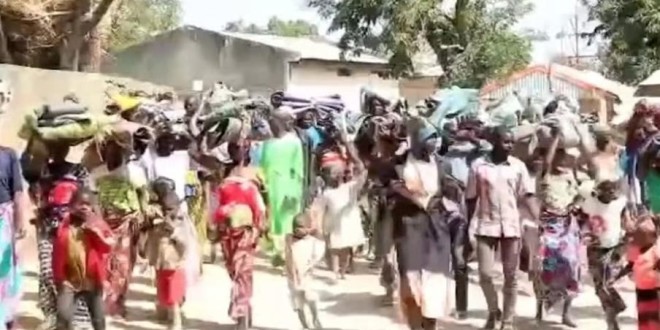
The crisis has displaced over 9,000 people, a number that continues to climb as fresh attacks force more families to flee. In early June 2026, the International Organization for Migration recorded 482 new displacements in the districts of Mokolo, Koza, and Mayo-Moskota. The exodus has spilled over into neighboring regions, with nearly 300 displaced individuals arriving in Kalfou, a town in Mayo-Danay, located over 210 kilometers from Mokolo. The journey underscores the desperation of those fleeing, leaving behind homes, land, and livelihoods in search of safety.
The human toll extends beyond physical displacement. Families are torn apart in the chaos of attacks, with parents forced to flee without their children. Many young survivors are left to navigate a world without protection, education, or stability. Some abandon their studies, while others turn to crime or early marriages out of sheer desperation. The future for these young people is bleak, their dreams reduced to ashes along with their villages.
The agricultural backbone of Mayo-Tsanaga is collapsing. Schools are shuttered, markets are deserted, and the local economy is in freefall. If the cycle of violence and neglect continues, the region faces irreversible depopulation. The question looms large: How many more villages must be abandoned before the crisis in Mayo-Tsanaga becomes a national priority?