
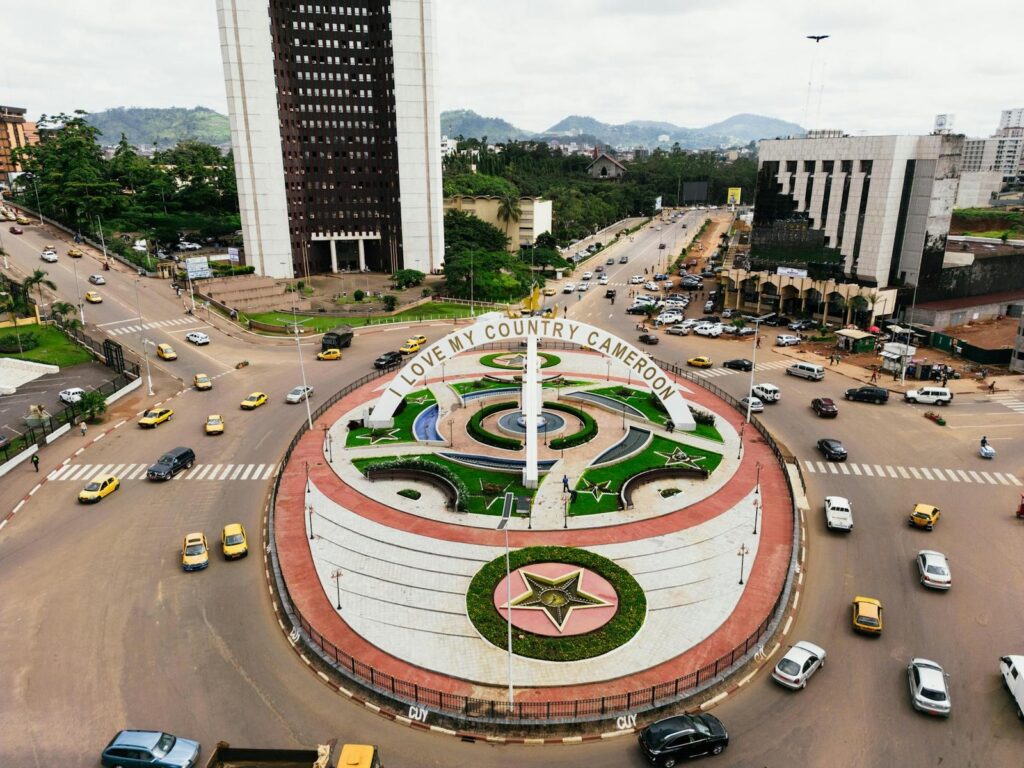
Cameroon is once again opening its doors to public service employment. Minister Joseph Lé revealed on June 5, 2026, the availability of 2,090 positions across various administrative departments. While this figure might seem modest compared to pre-2021 levels, it signifies a significant shift, ending a four-year period of stringent hiring freezes aimed at controlling the state’s burgeoning wage bill.
Health and education drive Cameroon’s 2026 public sector hiring
The majority of these new opportunities are concentrated in two strategically vital sectors. Public health is allocated a special quota of 200 positions specifically for specialist doctors, addressing a critical shortage as Cameroonian hospitals struggle to meet the demand for advanced technical expertise. Education, meanwhile, secures 1,000 spots designated for teachers recruited under the “auditeurs libres” system, which integrates graduates into training programs while they begin their service.
A detailed linguistic breakdown demonstrates the balanced approach adopted for the two sub-systems, a legacy of Cameroon’s constitutional bilingualism. Francophone general education will gain 322 posts, while its Anglophone counterpart receives 285. Technical education sees 193 positions for the Francophone system and 200 for the Anglophone. Beyond the health and education sectors, the number of available positions remains considerably lower, indicating that a rationing approach persists for other governmental departments.
This milestone of surpassing 2,000 public service posts has not been seen since 2023, when the government approved 2,235 recruitments. At that time, Minister Joseph Lé had explained this increase as essential to fulfilling personnel requirements articulated by various administrations, aligning with the National Development Strategy 2020-2030.
A decade of budget restrictions in Cameroon’s public service
The stark contrast with the preceding decade is undeniable. In 2018, the Cameroonian state offered 5,179 positions, followed by 5,411 in 2019, and 3,700 in 2020. The significant shift occurred in 2021, with only 1,536 posts announced, followed by a dramatic drop below 1,000 in 2022. Even in 2024, openings barely exceeded 1,200, underscoring a sustained commitment to workforce control.
This ongoing compression aligns with a critical macroeconomic imperative. According to data from the Ministry of Finance, Cameroon’s state wage bill surged from 706.1 billion FCFA in 2012 to 1,080.1 billion FCFA by 2021. This represents an increase of over 50% in less than a decade, consuming an ever-larger share of tax revenues and consequently limiting public investment capacity.
Authorities attribute this escalating trend primarily to several categories of public employees, notably secondary school teachers and military personnel, who were historically recruited in substantial numbers. The reintroduction of secondary education into the scope of the 2026 recruitment drive, following a two to three-year suspension, could potentially reignite pressure on personnel expenditures.
Cemac wage bill ceiling continuously exceeded by Cameroon
Fiscal discipline in Cameroon is not merely a sovereign choice; it is also dictated by the multilateral surveillance criteria of the Economic and Monetary Community of Central Africa (Cemac). These guidelines cap the ratio of personnel expenditures to fiscal revenues at a maximum of 35%. Yaoundé consistently surpasses this sustainability threshold.
This observation is now a collective concern. Cemac’s most recent surveillance report noted that in 2024, none of its six member states adhered to the established norms for fiscal pressure and wage bill management. For Cameroon, the zone’s largest economy, the ratio remained stubbornly above the community ceiling, underscoring a deeply entrenched structural budgetary constraint.
The strategic decision for 2026 reflects this complex equation. It aims to address critical deficiencies within public health and education services without reigniting a wage spiral, a matter closely monitored by multilateral lenders as the nation continues its program with the International Monetary Fund. For prospective candidates, this opening represents a rare opportunity after five years of stringent restrictions. For the executive, it serves as a crucial test of its ability to balance pressing social demands with sound financial orthodoxy. The official announcement was made on June 5, 2026.


More Stories
Is Chad truly heading towards political appeasement?
Bradley Barcola will adapt faster than Florian Wirtz at Liverpool, says Jermaine Pennant
Togo eyes nuclear power to secure future energy sovereignty