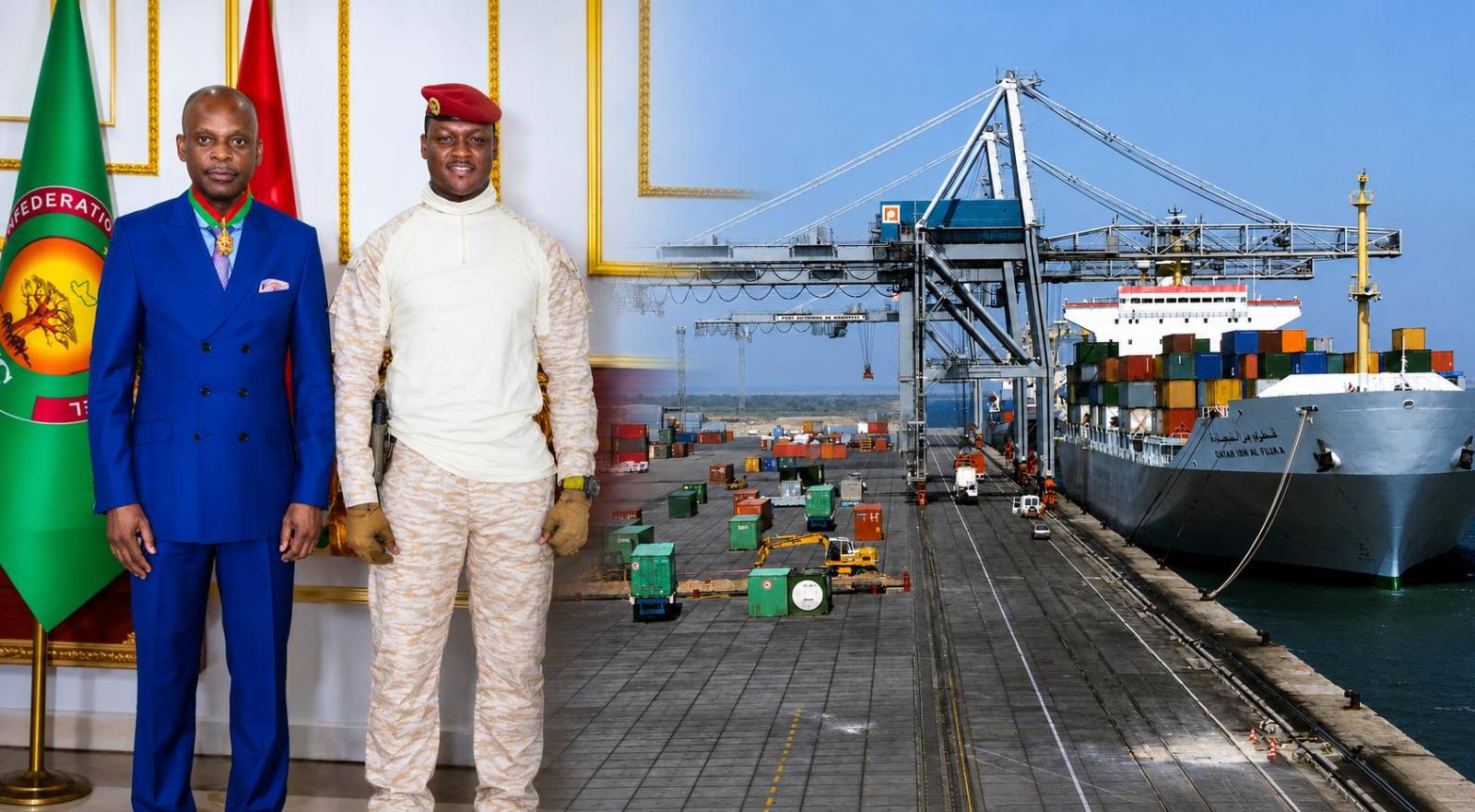
The recent conferment of the highest honor in Burkina Faso upon Togo’s Minister of Foreign Affairs has been framed by official channels as a testament to Lomé’s « diplomacy of openness, solidarity, and proximity » toward its neighbors. Yet, beneath the celebratory rhetoric lies a political landscape far less harmonious than the ceremony suggests.
Diplomacy guided by pragmatism over principles
The awarding of the Order of the Stallions raises a critical question: does this distinction honor diplomatic excellence or merely reflect a convergence of interests between two regimes navigating shared political and economic challenges? In international relations, such honors often serve to strengthen alliances, but they can also convey subtle political messages to regional partners.
The timing of this accolade follows a period marked by political betrayal, casting a shadow over the purported « solidarity » between the two nations. Togo’s decision to grant asylum to former Burkina Faso President Roch Marc Christian Kaboré was swiftly followed by a pragmatic reversal when Lomé prioritized economic agreements over the exiled leader’s safety. This calculated move underscored the regime’s willingness to subordinate ethical considerations to strategic interests.
A partnership rooted in mutual economic dependence
For Togolese authorities, regional solidarity appears conditional upon economic advantages. By surrendering Kaboré, Faure Gnassingbé’s government secured favorable trade terms with Burkina Faso’s new leadership, particularly regarding the transit of goods through the Port of Lomé (PAL). This port serves as a critical gateway for Burkina Faso, a landlocked nation heavily reliant on maritime corridors for trade.
The interdependence between the two countries is undeniable. While Ouagadougou benefits from Lomé’s logistical infrastructure, Togo derives substantial revenue from regional transit fees. This economic symbiosis explains the rapid thaw in relations between the two capitals. The exchange of political asylum for commercial guarantees epitomizes a transactional diplomacy that prioritizes financial gain over moral or ethical commitments.
Diplomatic alliances shaped by transactional logic
The timing of this distinction coincides with lingering concerns over governance, political freedoms, and human rights in the subregion. Critics argue that the honor reflects strategic alignment rather than a recognition of democratic values or principled cooperation. This episode reflects a broader trend in West African diplomacy: a shift toward transactional relationships where economic and security imperatives overshadow traditional political or moral commitments.
In this evolving landscape, alliances are forged and dissolved based on commercial interests, logistical needs, and security priorities. The gap between official discourse and political reality becomes increasingly apparent, eroding public trust in institutional narratives of solidarity and fraternity.
The disconnect between image and reality
While authorities celebrate this distinction as proof of exemplary bilateral relations, the official narrative clashes with the stark realities of Togo and Burkina Faso’s diplomatic conduct. When decisions are so clearly tied to economic incentives, the rhetoric of African unity loses credibility among observers and citizens alike.
Ultimately, this honor exemplifies a relationship governed by political realism, where state interests prevail over ideological or ethical considerations. States prioritize strategic gains, trade agreements, and political stability—even if it means attracting criticism for the disparity between their words and actions. Behind the polished ceremonies and medals lies a cold pragmatism, where commercial partnerships take precedence over ethical principles. This divergence between perception and reality continues to fuel debates about the true nature of Lomé and Ouagadougou’s relationship.