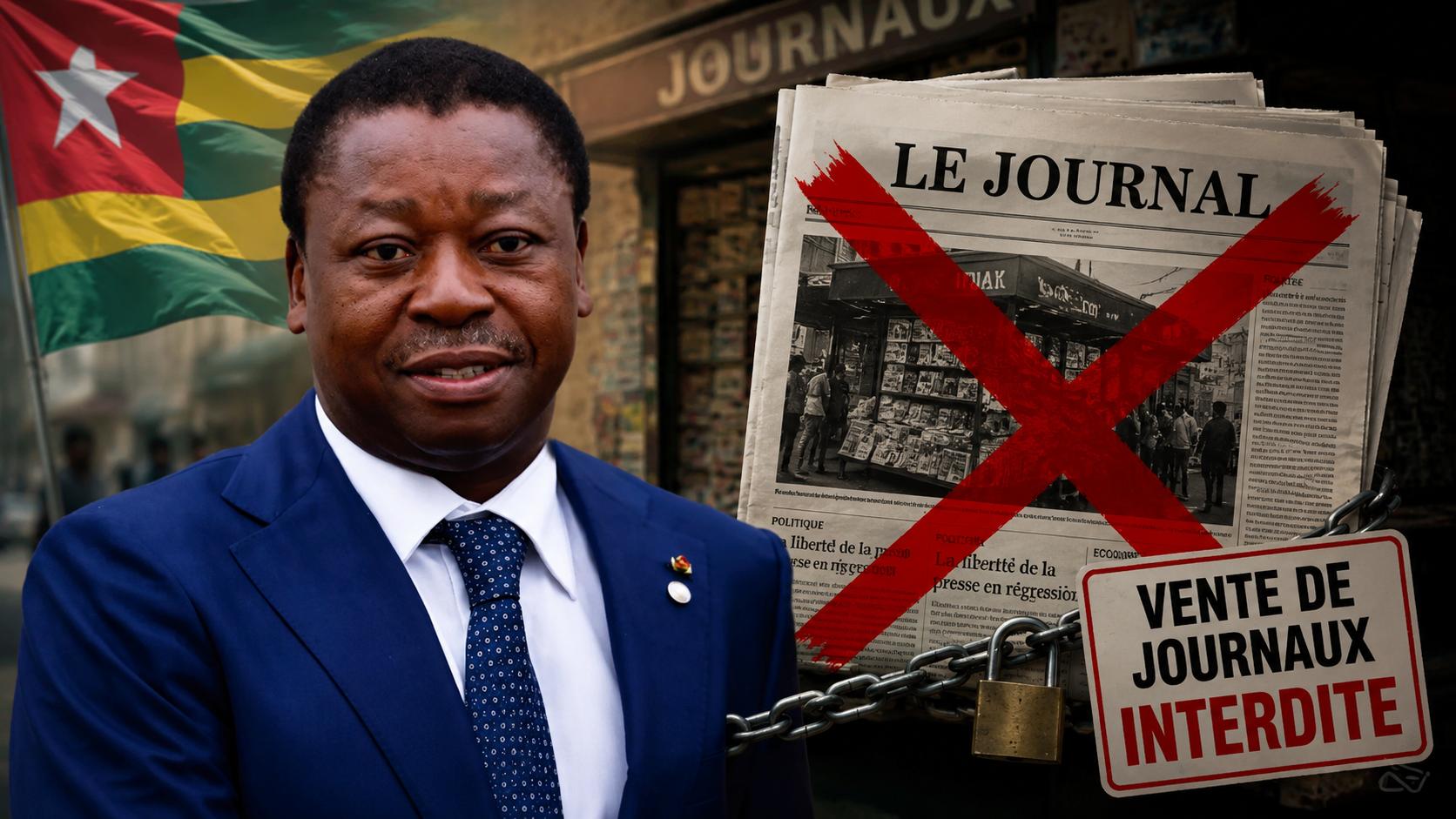
The erosion of press freedom in Togo is no longer confined to the pages of NGO reports or regulatory bulletins. Today, it plays out on street corners and sidewalks, where distributing a newspaper has become a dangerous act. By targeting even the most precarious link in the news chain—street vendors—Faure Gnassingbé has crossed a troubling threshold: the systematic, operational silencing of dissenting voices.
Street vendors bear the brunt of repression
For years, press control in Togo relied on familiar institutional tools: summons, temporary publication bans, revoked press cards, and threats of defamation charges. While these tactics gradually forced many newsrooms into self-censorship, they failed to extinguish the public’s hunger for critical information.
The recent wave of arrests targeting independent newspaper distributors and street vendors in Lomé signals a shift in strategy. By focusing on the most vulnerable players—those who earn a living by selling single copies—the authorities aren’t just punishing content; they’re severing the direct link between the press and its readers.
Targeting distribution isn’t just about intimidation—it’s a calculated strike against the economic lifeblood of struggling media outlets. The message is unmistakable: instill enough fear in vendors, and they’ll refuse to stock opposition or investigative titles, creating an invisible but devastating commercial blockade.
The regulator’s double standard
The Haute Autorité de Régulation de la Communication (HARC), tasked with safeguarding free expression and balancing the media landscape, now faces mounting criticism from press unions and the Patronat de la Presse Togolaise. What was meant to be a guardian of pluralism is increasingly seen as an enforcer of editorial conformity.
Under the guise of “public health,” “sector cleanup,” or combating “misinformation,” sanctions disproportionately punish outlets that scrutinize governance, financial dealings, or political management. Meanwhile, pro-government media face no such scrutiny, exposing a stark double standard that has hollowed out public discourse. The result? An official media landscape that distorts reality rather than reflects it.
A democracy suffocating under repression
As official narratives tout institutional modernization and economic progress, the open assault on media actors exposes a grim truth: democratic space in Togo is shrinking. Press freedom isn’t a privilege granted to journalists—it’s a fundamental right for citizens.
By stifling the few remaining avenues for dissent and hounding those who distribute independent news, the government isn’t achieving stability—it’s manufacturing a false calm. Suppressing independent information doesn’t erase social or political tensions; it simply denies society the legitimate channels to address them.